
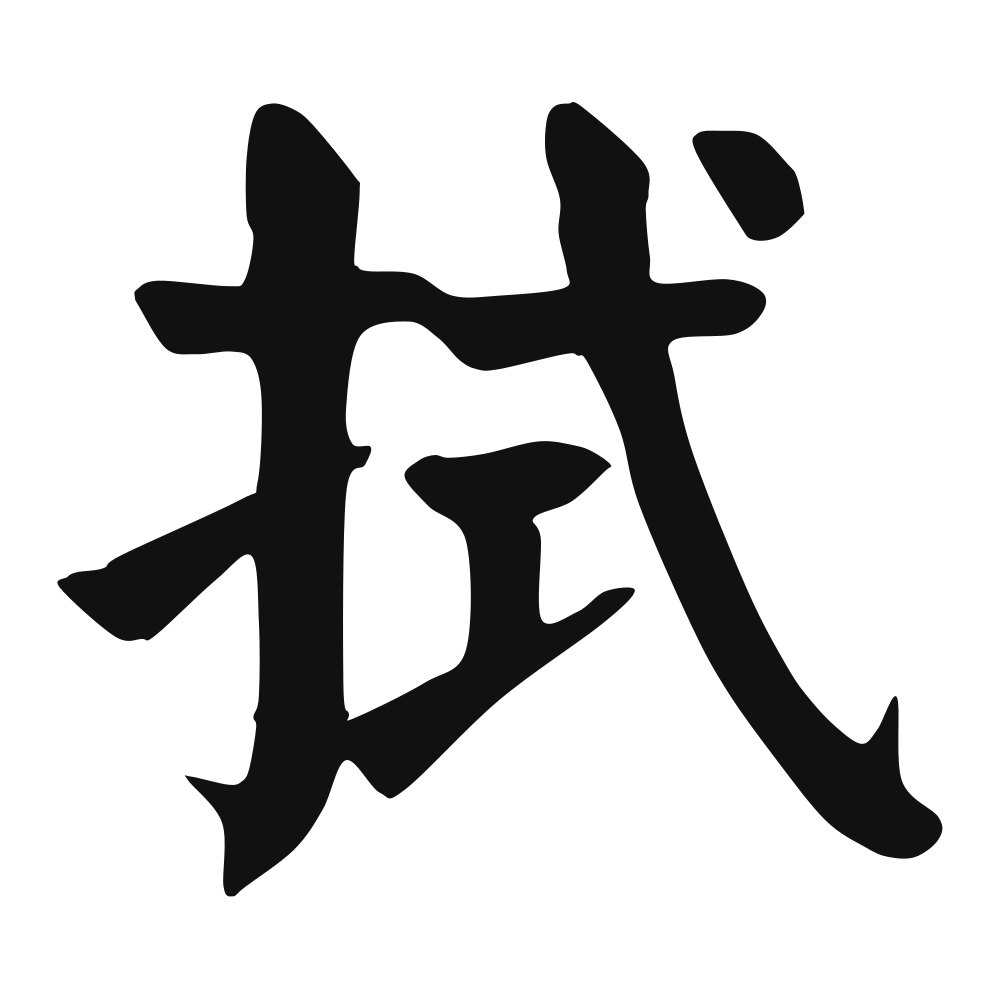
The Calligrapher — Yán Zhēnqīng 颜真卿
Tang master of robust regular script; co-creator of the enduring 'Yan style'.
Tang calligrapher (709–784), master of regular script/running script — the Tang moral paragon whose upright, muscular regular script became the model of Chinese integrity in writing. Tang dynasty
Cultural Story
In the mourning poems of the Tang, a widow 拭淚 with the hem of her sleeve, the small repeated wipe that outlasts the weeping. The gesture is older than any single elegy; the Shi Jing dirges already know it. 拭 is grief's tidiest habit, the one mourning custom that requires no priest and leaves no stain the laundress cannot later lift.
Common words & phrases
- 擦拭 wipe · clean
- 拭泪 wipe away tears
- 拭目以待 wait and see · expect with anticipation
Read the story behind the character
You 擦拭 a smudge from the glass; an investor 拭目以待, wipes his eyes to watch and see, the phrase now used of markets awaiting a rate. The sleeve is a tissue; the anticipation is the same. The word keeps the old promise that something worth seeing is coming, whether it is a dead husband's ghost or merely the central bank's afternoon decision.
Why this character belongs on skin
After the long cry, there is the cloth. Someone presses it to your face, and the salt is gone, and the world returns in clean lines. The character puts a hand to a token of cleansing — shì, to wipe, to brush away what should not stay. The Buddhists speak of wiping the mirror of the mind until it reflects without distortion; the Christians, of feet washed clean. Release is not forgetting. It is the deliberate hand that clears the surface so you can see again. To carry this is to choose the cloth over the grudge, the clearing over the scar. Let it rest on your skin as a small act of mercy you perform on yourself. And when you are ready, let the needle wipe it into ink — the stain removed, the mark remaining.
Own this character
Purchase delivers the original SVG of this glyph, brushed by Yán Zhēnqīng 颜真卿, ready to place on skin, paper, or screen.