
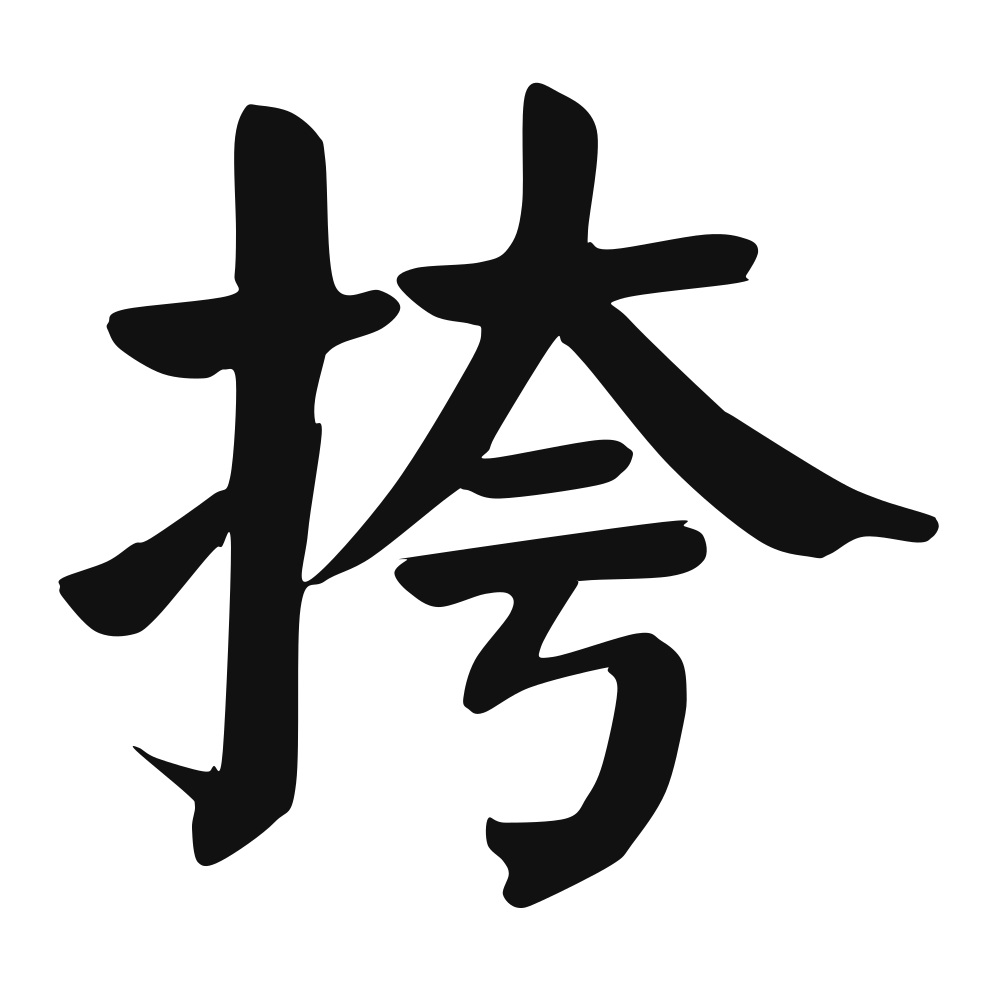
挎
to carry (esp. slung over the arm, shoulder or side)
Closest English meanings
carry on arm·slung
The Calligrapher — Yán Zhēnqīng 颜真卿
Tang master of robust regular script; co-creator of the enduring 'Yan style'.
Tang calligrapher (709–784), master of regular script/running script — the Tang moral paragon whose upright, muscular regular script became the model of Chinese integrity in writing. Tang dynasty
Cultural Story
A plainly spoken word, 挎 is the arm slipped through a loop, the basket or the satchel hung at the hip. The literary books said 負 or 荷; 挎 is the market woman's term, the soft diagonal line of a body carrying something light against the side, and the painter loved that diagonal because it told you the woman was going somewhere, unhurried.
Common words & phrases
- 挎包 shoulder bag · satchel
Read the story behind the character
A woman wears a 挎包; a child 挎著 his grandmother's arm. The word is pure posture, the diagonal of a strap from shoulder to hip, never written in a poem and never needing to be. It names a way of standing crooked under a small weight, and the grandmother's arm is only the strap the child has chosen to wear.
Why this character belongs on skin
She loops the basket over one elbow and the morning becomes hers — the market, the bread, the small kingdom of errands carried against the body. The character puts a hand to a crossing of the limb — kuà, to carry on the arm or shoulder, the load held close to the side. It is the most ordinary of motions and the most telling: what we sling against ourselves we have chosen to keep near. Love lives here, in the daily carrying, the warm weight you refuse to set down. To wear this is to honor the burden that is also a blessing. Let it rest on your skin as a quiet warmth, the arm that never empties. And when you are ready, let the artist ink the basket at your elbow — the carrying, made permanent.
Own this character
Purchase delivers the original SVG of this glyph, brushed by Yán Zhēnqīng 颜真卿, ready to place on skin, paper, or screen.