
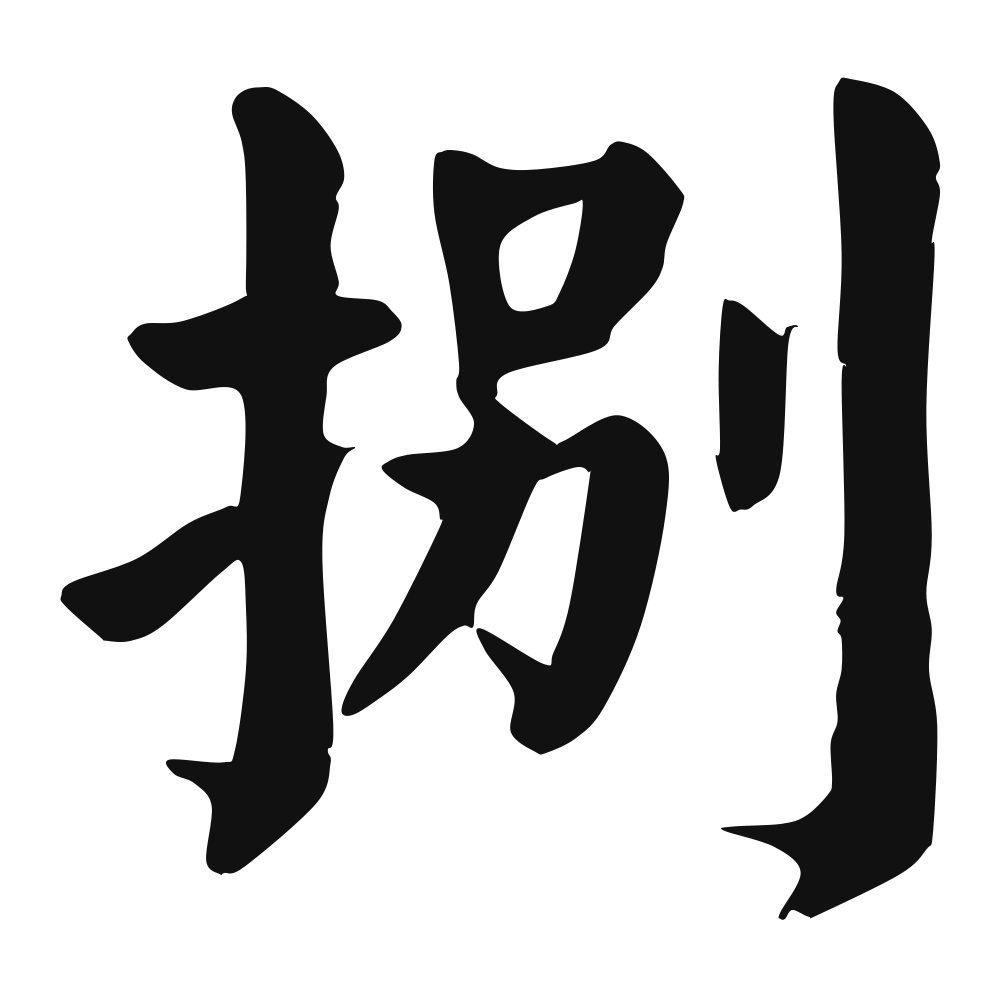
捌
eight (banker's anti-fraud numeral); split
Closest English meanings
eight (formal numeral)
The Calligrapher — Yán Zhēnqīng 颜真卿
Tang master of robust regular script; co-creator of the enduring 'Yan style'.
Tang calligrapher (709–784), master of regular script/running script — the Tang moral paragon whose upright, muscular regular script became the model of Chinese integrity in writing. Tang dynasty
Cultural Story
One of the ten grand numerals, 捌 is the anti-forgery form of eight, written on bonds and land deeds beside 壹 and 柒 so a forger's pen cannot turn a field into a fortune. The character is a clerk's lock, a picture meant to be hard to alter, and the forger who tried to add a stroke to 捌 usually added one to himself instead, in prison.
Common words & phrases
- 捌 eight (anti-forgery form)
- 捌月 eighth month (written)
Read the story behind the character
A contract reads 捌月 for the eighth month; a cheque spells the sum in 捌. Nobody says it aloud — they say 八 — but the written form still guards the paper. The lock the clerks forged against fraud now signs your rent, invisible and unpronounceable, and the landlord trusts the picture more than he would trust the sound.
Own this character
Purchase delivers the original SVG of this glyph, brushed by Yán Zhēnqīng 颜真卿, ready to place on skin, paper, or screen.