
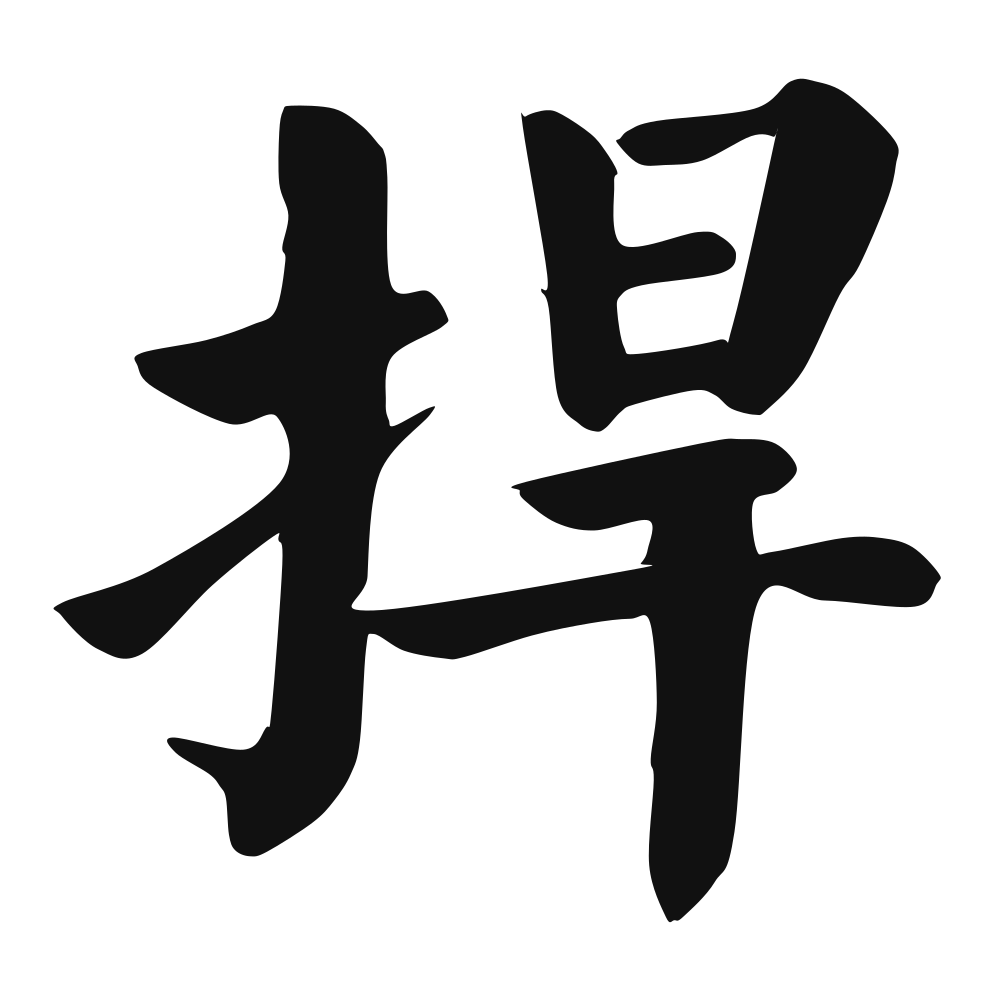
捍
to ward off (a blow); to withstand; to defend
Closest English meanings
defend·guard·protect
The Calligrapher — Yán Zhēnqīng 颜真卿
Tang master of robust regular script; co-creator of the enduring 'Yan style'.
Tang calligrapher (709–784), master of regular script/running script — the Tang moral paragon whose upright, muscular regular script became the model of Chinese integrity in writing. Tang dynasty
Cultural Story
To 捍 is to ward off at the border of the body or the state, the shield-arm raised against the incoming. The ritual books and the annals use it for the guard at the wall; the character is the boundary defended before it is crossed, and the guard at the wall slept with the shield still raised, having learned that the border was only as honest as his own awake arm.
Common words & phrases
- 捍卫 defend · safeguard · protect
- 捍御 resist · ward off
Read the story behind the character
A soldier 捍衛s the frontier; a lawyer 捍禦s a client's right. The shield-arm is a constitution now. The ward at the wall is the same, whether keeping out a raider or a bad precedent, the boundary the hand refuses to let anything cross, and the constitution is only the shield, written down and laminated.
Why this character belongs on skin
Stand at the gate with your body and ask nothing but the right to stay. This is the defense, the guarding of what cannot be replaced — a wall against the flood, an arm around the small. The warrior's honor was never in the killing but in the keeping, the holding of the hearth while others burned. Confucius spoke of defending the way itself, the doctrine held against the age's forgetting. There is a tender ferocity in it: the mother who becomes a wall, the friend who will not let you fall. To ink this is to swear protection as a form of love. Not conquest — keeping. Let the skin wear the boundary you will not let anything cross. Some things are worth the wound. Guard the small flame. Stand.
Own this character
Purchase delivers the original SVG of this glyph, brushed by Yán Zhēnqīng 颜真卿, ready to place on skin, paper, or screen.