
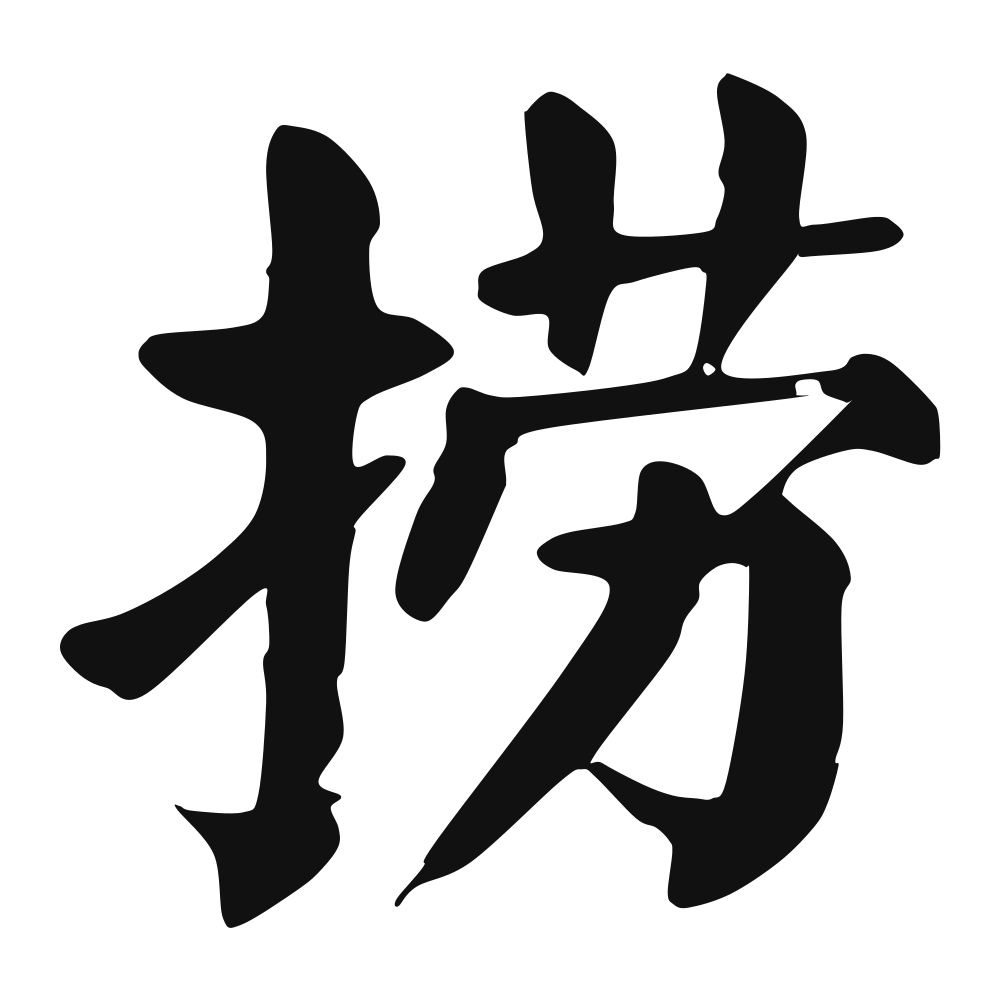
捞
to fish up; to dredge up
Closest English meanings
scoop·fish for
The Calligrapher — Yán Zhēnqīng 颜真卿
Tang master of robust regular script; co-creator of the enduring 'Yan style'.
Tang calligrapher (709–784), master of regular script/running script — the Tang moral paragon whose upright, muscular regular script became the model of Chinese integrity in writing. Tang dynasty
Cultural Story
A spoken character, 撈 is the scoop from below, the hand or the net bringing up what sank. The books said 取 or 汲; 撈 is the river and the kitchen, the word for salvage before it was a word for gain. It rose from the water, not the scroll, and the cook who fished the dropped spoon from the pot named the motion before the scribe ever did.
Common words & phrases
- 打捞 salvage · fish up
- 捞取 scoop up · grab
- 捞鱼 catch fish
- 捞钱 make money
- 捞到 get hold of
Read the story behind the character
Divers 打撈 the wreck; a fisherman 撈魚; a speculator 撈錢; you 撈到 the last seat. The scoop from below is profit now. The hand bringing up what sank is the same, whether it fetches a drowned ring or merely a fortune off someone else's loss, and the last seat is only the ring, still warm from the previous owner.
Why this character belongs on skin
Reach into the black water and you may come up with nothing, or with something the river kept for you alone. This is the hand dipped into depths — to scoop, to salvage, to pull fortune from where it sank. Fishermen know the patience: the net goes down empty a hundred times before the silver thrashes. Buddhism speaks of drawing the drowned mind up from the sea of sorrow; the Bodhisattva lowers a hand without judgment. There is a lover's meaning too — to fish a person back from the edge of giving up. Ink this and you confess a faith in retrieval, in the second chance pulled dripping from loss. Not everything sunk is gone. Some things wait, cold and patient, for the hand that will not stop reaching.
Own this character
Purchase delivers the original SVG of this glyph, brushed by Yán Zhēnqīng 颜真卿, ready to place on skin, paper, or screen.