
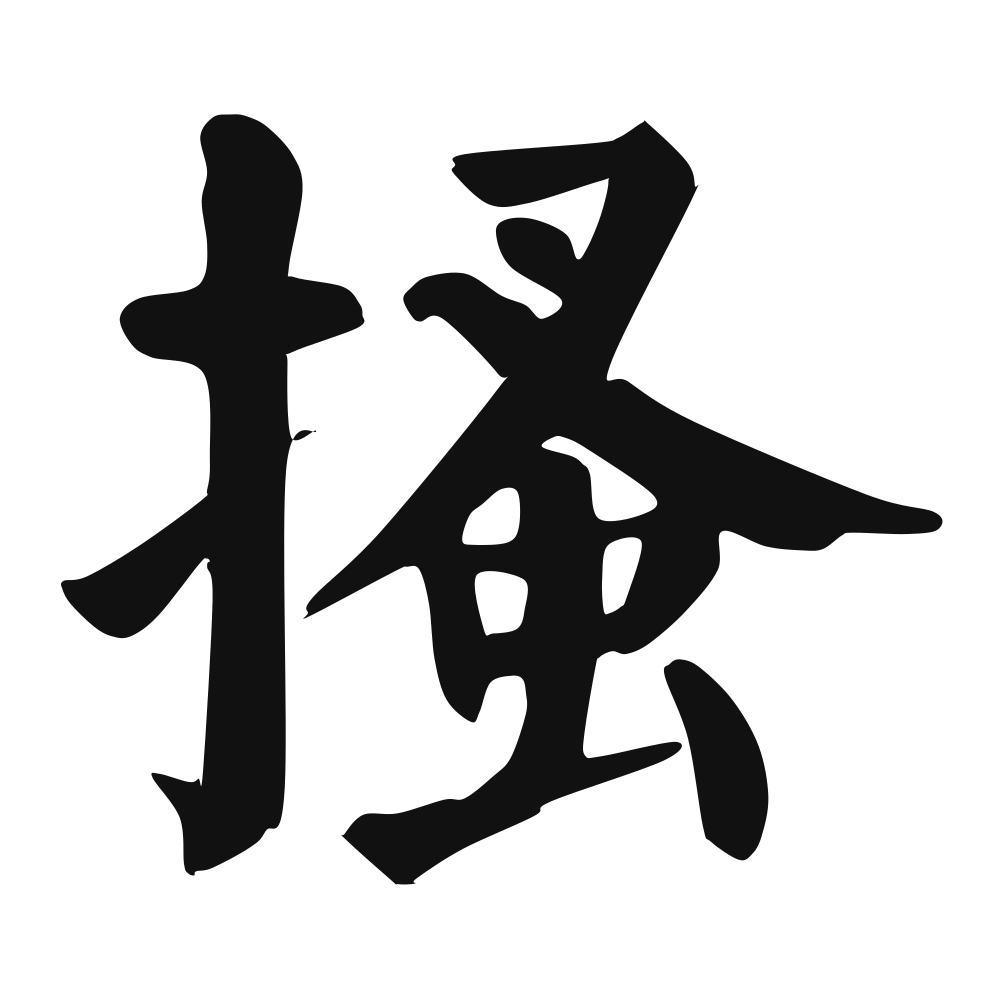
The Calligrapher — Yán Zhēnqīng 颜真卿
Tang master of robust regular script; co-creator of the enduring 'Yan style'.
Tang calligrapher (709–784), master of regular script/running script — the Tang moral paragon whose upright, muscular regular script became the model of Chinese integrity in writing. Tang dynasty
Cultural Story
The Book of Songs, in 靜女, shows the lover who cannot find his girl and 搔首踟躕, scratches his head and hesitates, the oldest portrait of a man undone by his own longing. 搔 is the idle scratch of a mind that has nowhere else to go, and the head that got scratched was really only confused about which way the girl had last been seen leaning.
Common words & phrases
- 搔痒 scratch an itch
- 搔头 scratch one's head (in puzzlement)
Read the story behind the character
You 搔癢 at the bite; a thinker 搔頭 at the puzzle. The love-struck head is a riddle now. The idle scratch is the same, whether it eases an insect or merely marks the moment a brain admits it has, for the present, lost the thread entirely, and the riddle is only the girl, hidden behind a harder door than a hedge.
Why this character belongs on skin
There is a small torment the body keeps to itself—the itch just beyond the shoulder blade, maddening in its nearness, until the nail finds it and the whole spine loosens in relief. To scratch is to answer the private complaint the skin makes against the world, the small honesty no dignity can quite suppress. The poet Li Bai scratched his head and watched the white hairs fall, counting the years by what the fingers found. We carry itches of the spirit too: the nagging truth, the unresolved slight, the restless wanting that will not be ignored. To wear this is to honor the body's plain wisdom, its refusal to pretend the irritation is not there. Some relievements are humble and necessary. Scratch the truth. The relief is real, even when the itch was small.
Own this character
Purchase delivers the original SVG of this glyph, brushed by Yán Zhēnqīng 颜真卿, ready to place on skin, paper, or screen.