
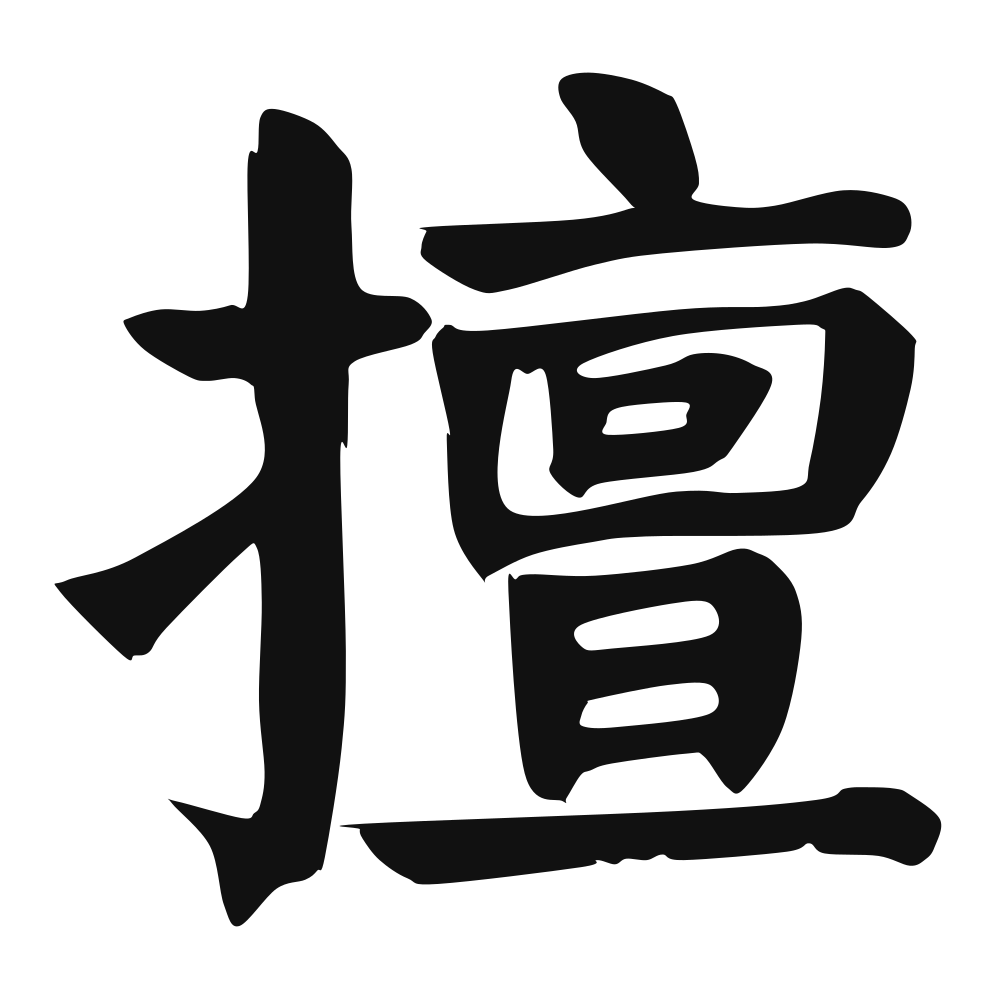
擅
without authority; to usurp; to arrogate to oneself; to monopolize; expert in; to be good at
Closest English meanings
monopolize·be good at·assume
The Calligrapher — Yán Zhēnqīng 颜真卿
Tang master of robust regular script; co-creator of the enduring 'Yan style'.
Tang calligrapher (709–784), master of regular script/running script — the Tang moral paragon whose upright, muscular regular script became the model of Chinese integrity in writing. Tang dynasty
Cultural Story
擅 began as 'to monopolize' and kept that edge. The minister who 擅权 ruled without the throne's leave; 擅离职守 is desertion of the post. Yet the same root gives 擅长, 'to be skilled,' as if mastery were a kind of quiet possession. The Classic of Documents already warns against the official who acts on his own authority.
Common words & phrases
- 擅长 be good at · be skilled in
- 擅自 without authorization · arbitrarily
- 擅权 usurp power · arbitrary rule
- 擅离职守 leave post without permission
Read the story behind the character
A coach says the striker 擅长 finishing; HR notes who 擅自 opened the file without clearance. 擅 is the line between competence and overreach — the engineer good at his bench, the clerk who 擅改 the form. It names both the gift and the presumption, and the résumé hopes you read only the first. The second line is for the court.
Why this character belongs on skin
Talent is loud only in others; in yourself it whispers. 擅 means to monopolize a skill, to excel at something so completely the field knows your name—擅长, to be master of a craft. The character began less softly: hand radical beside a phonetic of seizure, the power to claim a thing for oneself, to act without asking. Both meanings were always the same. Every artist who 擅长 his art first seized it—stole the hours, trespassed on the tradition, dared to sign the work. The world calls this arrogance until it calls it mastery, usually in that order. There is fire in the word, the confidence of someone who has stopped apologizing for competence, who walks into the room with the quiet of a person holding aces. To wear 擅 is to give yourself permission: to claim your gift without shrinking, to take up the space your skill earns. Ink it on the back of the shoulder, where the hand that works begins, and let it keep its old meaning alive in you—take what is yours.
Own this character
Purchase delivers the original SVG of this glyph, brushed by Yán Zhēnqīng 颜真卿, ready to place on skin, paper, or screen.