
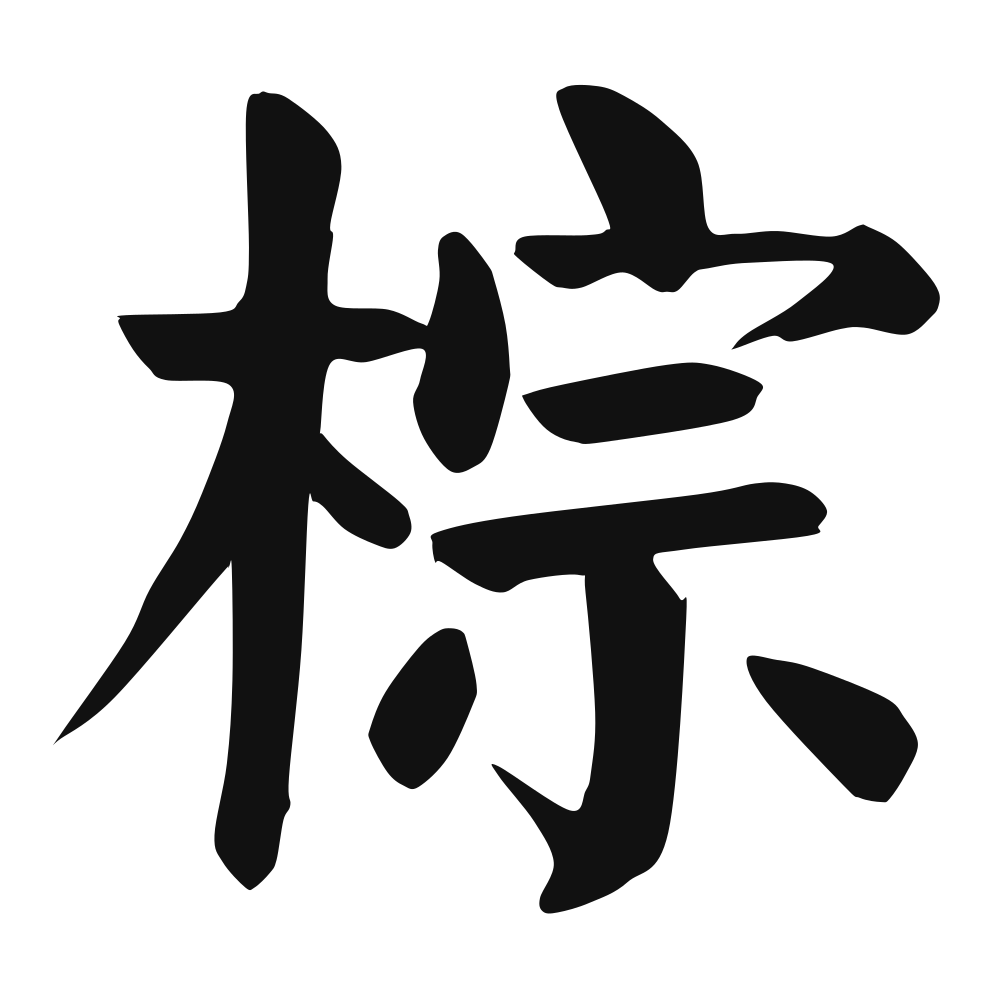
棕
palm; palm fiber; coir (coconut fiber); brown
Closest English meanings
palm·brown
The Calligrapher — Yán Zhēnqīng 颜真卿
Tang master of robust regular script; co-creator of the enduring 'Yan style'.
Tang calligrapher (709–784), master of regular script/running script — the Tang moral paragon whose upright, muscular regular script became the model of Chinese integrity in writing. Tang dynasty
Cultural Story
棕 is the palm, the 棕榈 whose coarse fiber is stripped to make rope, brooms, and rain-capes — the tree of the southern coast. The character is the bristly useful plant, the one whose leaves thatch a hut and whose fiber laces a sandal. Utility before beauty, the tree that dresses a fisherman.
Common words & phrases
- 棕榈 palm tree
- 棕色 brown
- 棕熊 brown bear
- 棕树 palm
Read the story behind the character
棕 is the palm and the color: 棕榈 the tree on a resort postcard, 棕色 the brown of a package and a bear, 棕熊 the brown bear of the northwest, 棕树 the fiber plant a villager strips. The character is the coastal tree and the earthy hue, the bristle and the bear that shares its name.
Why this character belongs on skin
The palm does not ask for gentle soil. It roots in poor earth and lifts its fronds toward a sky it cannot name, and from its husk we twist the coarse fiber — zong — that binds, that brushes, that ropes a boat to shore. There is a stubborn patience in the palm, a refusal to be anywhere but upright. Sailors trusted its fiber to hold them through the night tide; builders laid its leaves across the rafters. To wear zong is to claim that coarse, dependable strength — not the polished wood of the court but the working fiber of the sea. Let it rest on the forearm, the part that pulls and ties, a quiet pledge that you are the kind of strength others can be lashed to when the water turns.
Own this character
Purchase delivers the original SVG of this glyph, brushed by Yán Zhēnqīng 颜真卿, ready to place on skin, paper, or screen.