
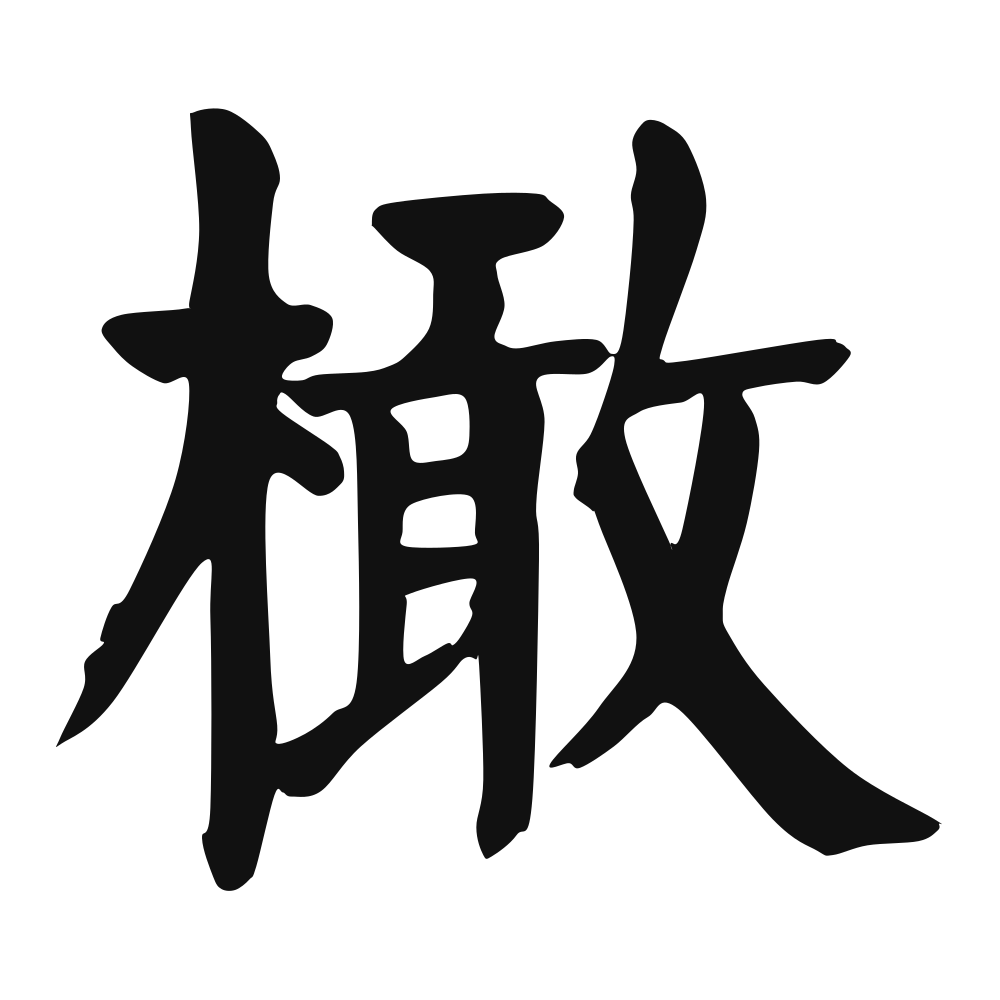
橄
usually seen in: virgin olive oil (原生橄榄油); Chinese olive (橄榄); Mount of Olives (in the Christian passion story) (橄榄山); peridotite (geology) (橄榄岩)
Closest English meanings
olive (in compound)
The Calligrapher — Yán Zhēnqīng 颜真卿
Tang master of robust regular script; co-creator of the enduring 'Yan style'.
Tang calligrapher (709–784), master of regular script/running script — the Tang moral paragon whose upright, muscular regular script became the model of Chinese integrity in writing. Tang dynasty
Cultural Story
橄 appears almost only in compounds, above all 橄榄 the olive, a tree and bitter-sweet fruit long valued in the south. Though the olive was not native to classical China in the Mediterranean sense, the character carried the idea of a tough, oily fruit, and 橄榄 came to mean something chewed slowly for hidden sweetness. Its bitter-then-sweet taste made it a metaphor for patience and reflection in later writing.
Common words & phrases
- 橄榄 olive
- 橄榄油 olive oil
- 橄榄球 rugby · American football
Read the story behind the character
Today 橄 is a everyday word on shelves: people buy 橄榄油 olive oil for healthy cooking, snack on 橄榄 olives, and watch 橄榄球 rugby or American football on weekend TV. A fitness fan swaps butter for olive oil, a kid tries a salty olive and puckers up, and a sports bar fills for the 橄榄球 match. From the kitchen to the stadium, 橄 links an ancient fruit to modern health and play.
Why this character belongs on skin
The tree radical beside the sense of feeling, of being moved: the olive, character of peace and stubbornness. The dove brought its leaf back to the drowned ark and the world began again — no image has outlived that one. Olives are bitter until cured, patient until pressed; their oil fed lamps, anointed kings and bodies, burned in lamps for the saints. The trees themselves outlive every empire that quarreled beneath them — some in the Mediterranean are older than the languages describing them. There is a sensuality in the fruit, salty and slow, and a politics in the branch: still, after millennia, the only thing every side will accept from another. Ink it on the forearm or the ankle, the traveler's places. It is for the one who would rather end a war than win one — who keeps a branch, and believes in the dove's return.
Own this character
Purchase delivers the original SVG of this glyph, brushed by Yán Zhēnqīng 颜真卿, ready to place on skin, paper, or screen.