
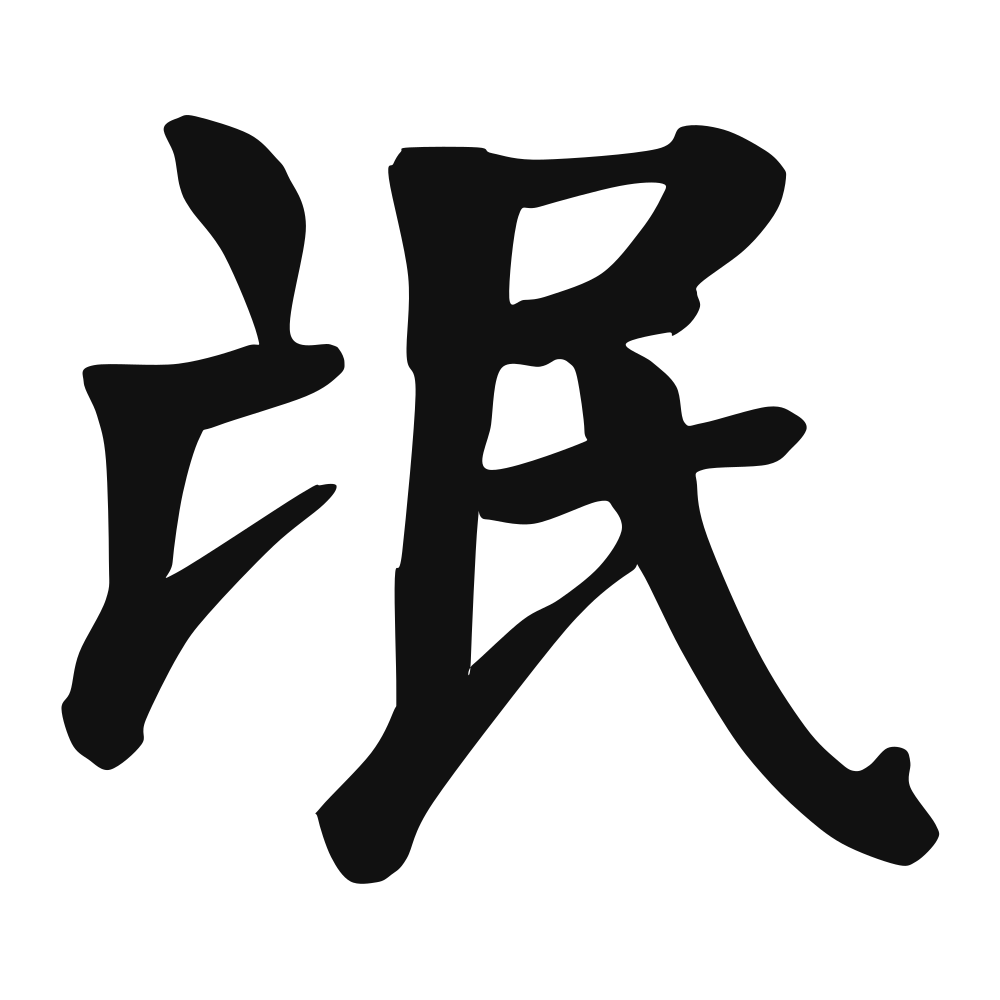
氓
(literary) common people
Closest English meanings
common people·commoner
The Calligrapher — Yán Zhēnqīng 颜真卿
Tang master of robust regular script; co-creator of the enduring 'Yan style'.
Tang calligrapher (709–784), master of regular script/running script — the Tang moral paragon whose upright, muscular regular script became the model of Chinese integrity in writing. Tang dynasty
Cultural Story
氓 originally meant a migrant commoner, one who left his fields to settle elsewhere; the 說文解字 says '民之外曰氓'. The 詩經 opens '氓之蚩蚩', 'the simple rustic', in a poem of love and betrayal. It carried a faint edge — the outsider, the rustic — but always a member of the common 民.
Common words & phrases
- 流氓 rogue · hoodlum
- 氓隶 common slaves
- 群氓 the masses
Read the story behind the character
氓 survives mostly in compounds: a 流氓 (rogue, hoodlum) disturbs the street, 群氓 (the masses) appears in old political writing, and 氓隸 (common slaves) in historical texts. Though rare alone, the character still colors words about disorderly people and the uncouth crowd in both news and literature.
Why this character belongs on skin
Read it in the street tongue and 氓 is the rogue — 流氓, the one who answers to no gate, who walks the night market with a grin the magistrates can't read. Older, it was simply the people, the common folk at the river's edge, unnamed by history but alive in every age. To be a 氓 is to belong to no register, to owe your loyalty to something older than the law. The West fears him; the poem remembers he is also the lover, the singer, the man who won't be counted. Carry 氓 where you keep your own ungovernable part, the pulse that refuses the schedule. Let the ink sit like a dare at the wrist, a quiet pull toward the freedom of the one who answers only to the road, and to himself.
Own this character
Purchase delivers the original SVG of this glyph, brushed by Yán Zhēnqīng 颜真卿, ready to place on skin, paper, or screen.