
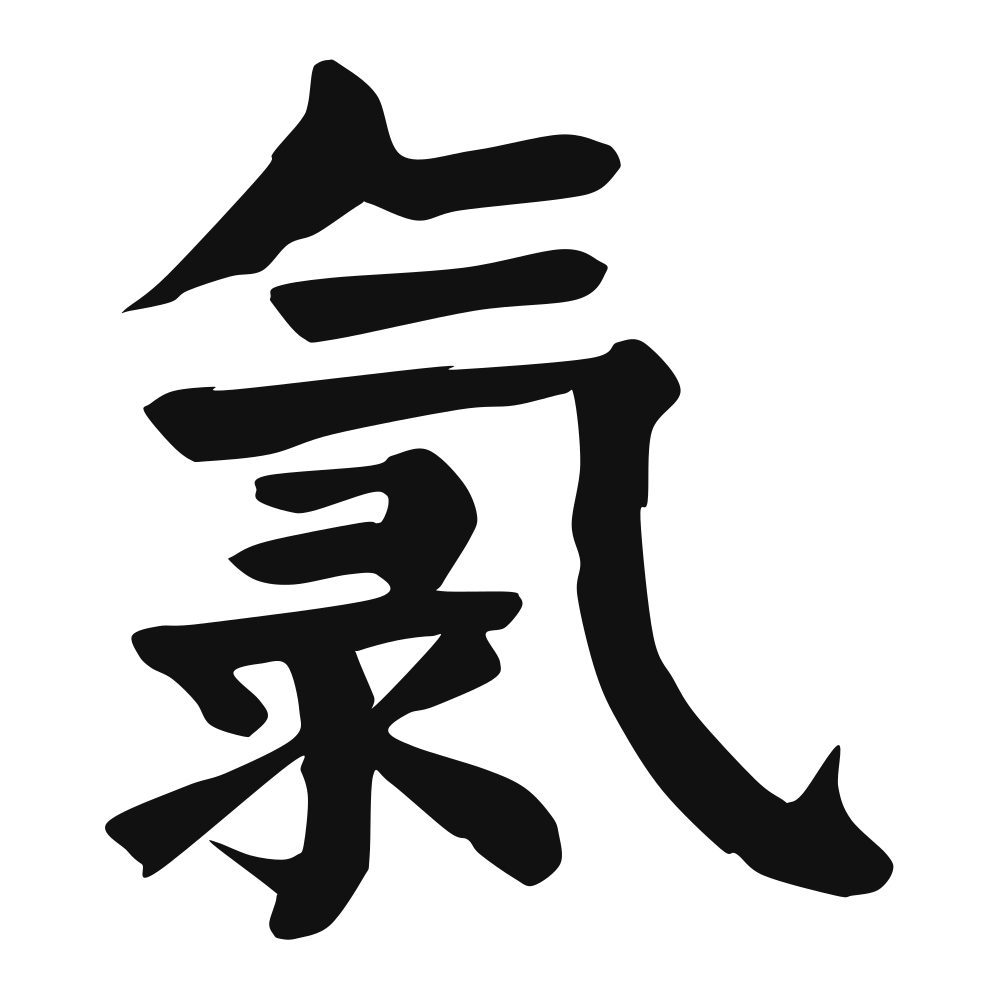
The Calligrapher — Yán Zhēnqīng 颜真卿
Tang master of robust regular script; co-creator of the enduring 'Yan style'.
Tang calligrapher (709–784), master of regular script/running script — the Tang moral paragon whose upright, muscular regular script became the model of Chinese integrity in writing. Tang dynasty
Cultural Story
氯 is a modern chemical character from 气 (gas) with 彔 (lü) as phonetic — 'chlorine.' It has no place in the classics; it was coined for chemistry in the 19th century. The name marks a greenish, reactive gas first isolated in the West and later named in Chinese by its gaseous nature.
Common words & phrases
- 氯气 chlorine gas
- 氯化 chlorination
- 氯仿 chloroform
- 氯酸 chloric acid
Read the story behind the character
氯 guards health: 氯氣 (chlorine gas) disinfects pools, 氯化 (chlorination) treats drinking water, and 氯仿 (chloroform) once put patients to sleep in surgery. 氯酸 (chloric acid) sits in the lab. The character names the sharp green gas behind clean water and old operating rooms.
Why this character belongs on skin
The fierce cleanser: 氯, chlorine—again the breath radical 气, air made element. The name comes from the Greek for pale green, the color of the gas itself, beautiful and dangerous in equal measure. Chlorine disinfects the water you drink, keeps the pool that summer-blue, scours what filth claimed for itself. It is the element with no patience for the unclean; contact and correction are the same act. Every civilization has needed a word for this—lustration, the Romans called it; the ritual washing that makes a thing safe to approach. There is shadow in it too, as all purifying forces have; intensity is never safe. But done right, 氯 is simply clarity: the willingness to burn away what fouls the water. Some people are like that. It is a gift, worn carefully.
Own this character
Purchase delivers the original SVG of this glyph, brushed by Yán Zhēnqīng 颜真卿, ready to place on skin, paper, or screen.