
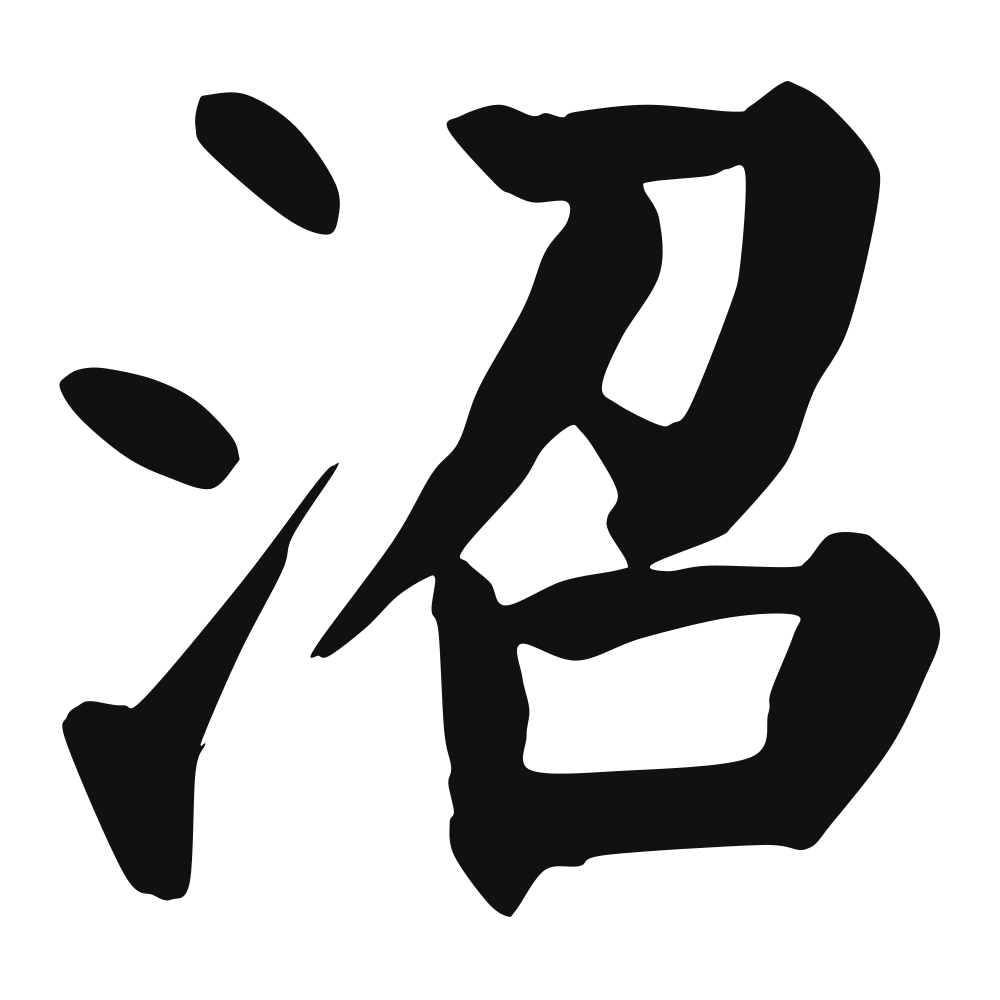
The Calligrapher — Yán Zhēnqīng 颜真卿
Tang master of robust regular script; co-creator of the enduring 'Yan style'.
Tang calligrapher (709–784), master of regular script/running script — the Tang moral paragon whose upright, muscular regular script became the model of Chinese integrity in writing. Tang dynasty
Cultural Story
沼 means a small, still wetland; the 說文 says a pond. Ancient hunters tracked birds through the 沼泽, and peasants burned 沼气 from rot as crude fuel. The 沼地 was both a larder and a feared, sinking frontier of the settled land.
Common words & phrases
- 沼泽 marsh · swamp
- 沼气 marsh gas · methane
- 沼地 marshland
Read the story behind the character
Hikers avoid the 沼泽 (marsh, swamp) on the nature trail. A farm captures 沼气 (methane) from waste to power its lights. A biologist samples the 沼地 (marshland) for frogs at dawn. On a school trip kids learn the 沼泽 (swamp) breathes and stores carbon.
Why this character belongs on skin
Beneath the innocent grass the ground is water, and the foot that trusts it goes down. 沼 is the marsh, the shallow death that wears the face of a meadow, beautiful from the path, patient at the edge. The strategists knew the marsh as the trap disguised as refuge; the poets knew it as the place where the lotus and the serpent share one root. To carry this character is to respect the deceptive calm, the beauty that can take you. Place it where the ribs meet, the soft underside. You have walked its rim and lived; the mark is your warning and your pride. The green lies. The deep remembers. Step carefully, or do not step at all, but never mistake the pretty surface for the ground that holds you.
Own this character
Purchase delivers the original SVG of this glyph, brushed by Yán Zhēnqīng 颜真卿, ready to place on skin, paper, or screen.