
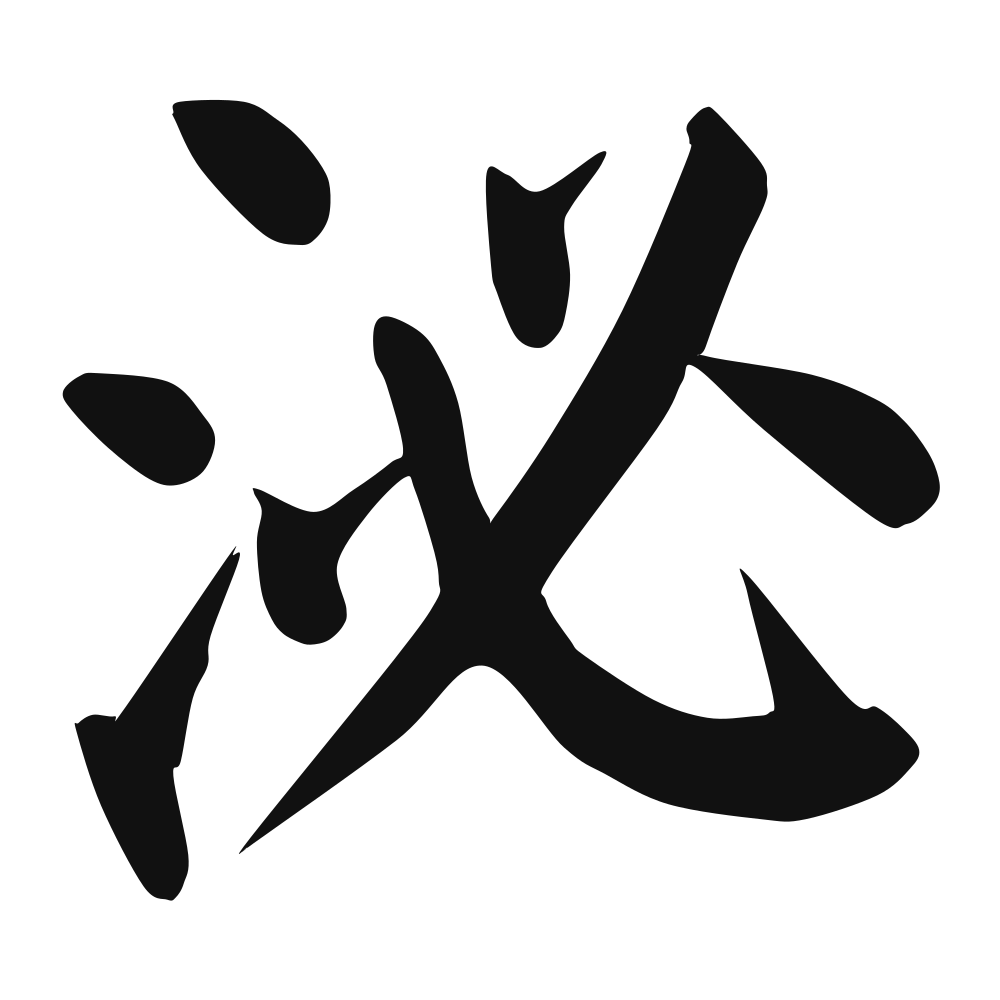
泌
(bound form) to secrete
Closest English meanings
secrete·ooze
The Calligrapher — Yán Zhēnqīng 颜真卿
Tang master of robust regular script; co-creator of the enduring 'Yan style'.
Tang calligrapher (709–784), master of regular script/running script — the Tang moral paragon whose upright, muscular regular script became the model of Chinese integrity in writing. Tang dynasty
Cultural Story
泌 means water seeping and dividing; the 說文 says to ooze, to branch. Physicians observed the body 分泌 fluids to keep life balanced. Though a later classical term, it captured the quiet inner springs—tears, sweat, humors—that the body 泌 without our knowing.
Common words & phrases
- 分泌 secrete · secretion
- 泌尿 urinary · urological
Read the story behind the character
The gland 分泌 (secretes) insulin after a sweet meal. He visits a 泌尿 (urological) clinic for a check-up. A leaf 泌 (oozes) resin when broken. Nurses explain how cells 分泌 (secrete) hormones, and the body's quiet 泌 (oozing) keeps us alive daily.
Why this character belongs on skin
Deep in the body, unseen, the glands do their patient work, a film on the eye, a salt on the skin, the slow manufacture of what keeps us alive. 泌 is to secrete, to yield from within without any act of will. It is the quiet chemistry of survival, the way the self sustains itself in the dark. We romanticize the visible gesture, the shout, the leap; 泌 is the humbler truth, that most of what saves us is made in secret, drop by drop. To mark yourself with this character is to honor the unseen labor of your own continuation. Wear it close to the chest, over the place where things are made and never shown. The body keeps its promises without telling you.
Own this character
Purchase delivers the original SVG of this glyph, brushed by Yán Zhēnqīng 颜真卿, ready to place on skin, paper, or screen.