
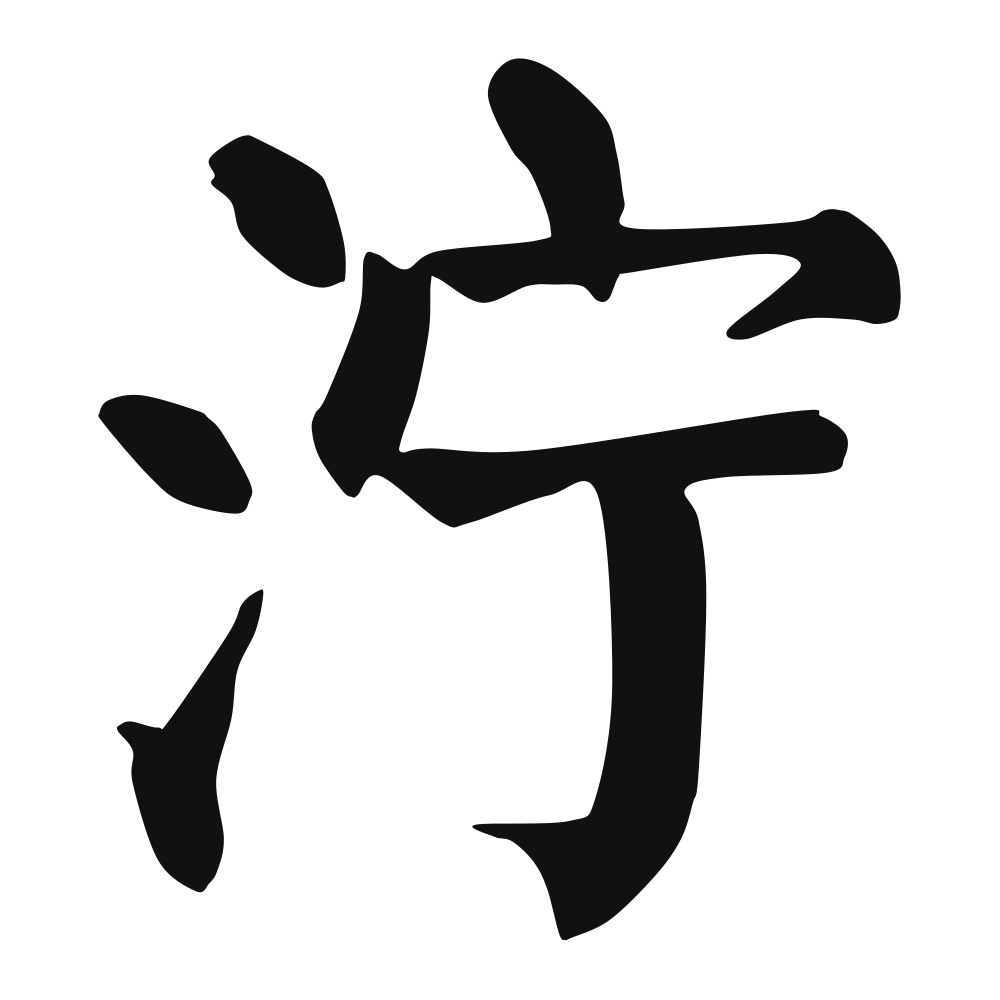
The Calligrapher — Yán Zhēnqīng 颜真卿
Tang master of robust regular script; co-creator of the enduring 'Yan style'.
Tang calligrapher (709–784), master of regular script/running script — the Tang moral paragon whose upright, muscular regular script became the model of Chinese integrity in writing. Tang dynasty
Cultural Story
泞 means water mixed with mud, a sticky trap; the 說文 says muddy. After rain the 泥泞 slowed armies and carts alike. In the 詩經 travelers curse the 泞 road home, and histories note how 泥泞 bogged a retreating host in defeat.
Common words & phrases
- 泥泞 muddy · mire · slush
Read the story behind the character
After the storm the lane is 泥泞 (muddy, mire, slush), and shoes squelch. A delivery rider dodges the 泞 (muddy) puddle by the gate. Kids splash through 泥泞 (slush) on the way to school, laughing. The 泥泞 (muddy) path ruined his trousers before the meeting.
Why this character belongs on skin
The road after the rain is no road at all, only a dark grip that takes the boot and will not give it back. 泞 is the mire, the mud that clings, the stalled cart and the cursing traveler. No one chooses the swamp, but everyone passes through it; the character is honesty about the stuck places, the seasons when forward costs everything. To ink 泞 is to refuse the pretty version of your life. You have been in it up to the knee and you came out marked. Let the character sit low, near the ankle, the part of you that has walked the worst of it. The mud dries. You keep walking. And the stain at your ankle is the only honest map of where you have been, deeper than any photograph, truer than the story you tell.
Own this character
Purchase delivers the original SVG of this glyph, brushed by Yán Zhēnqīng 颜真卿, ready to place on skin, paper, or screen.