
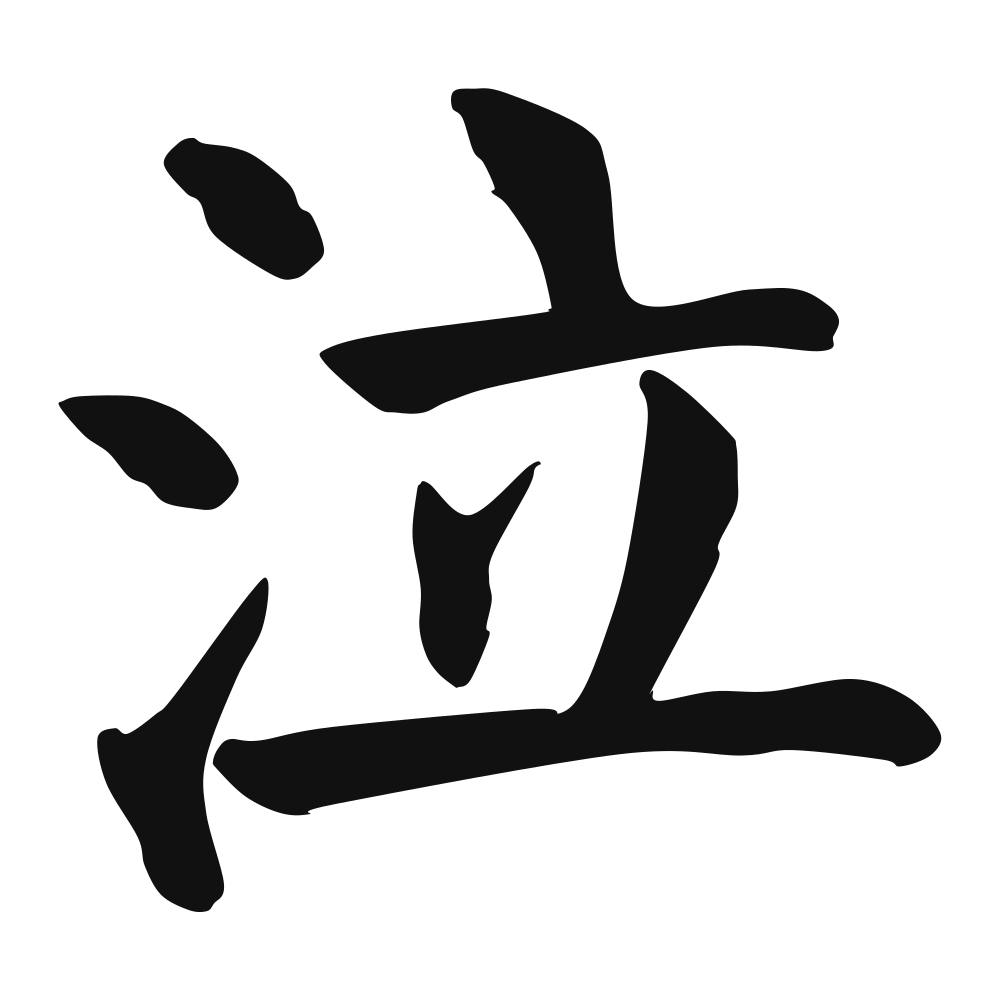
The Calligrapher — Yán Zhēnqīng 颜真卿
Tang master of robust regular script; co-creator of the enduring 'Yan style'.
Tang calligrapher (709–784), master of regular script/running script — the Tang moral paragon whose upright, muscular regular script became the model of Chinese integrity in writing. Tang dynasty
Cultural Story
泣 means to weep silently, without loud wailing; the 說文 gives to weep. The 楚辭 voices a 泣 for the fallen prince. Mourners 泣血 at a sage's tomb. A wronged woman would 泣诉 before the magistrate in a hushed, breaking, tearful voice.
Common words & phrases
- 哭泣 cry · weep
- 抽泣 sob
- 泣诉 accuse with tears
- 泣血 weep blood
Read the story behind the character
The child 哭泣 (cries, weeps) after a fall. She 抽泣 (sobs) into her pillow at night. A witness 泣诉 (accuses with tears) about the accident. The poem says the exile 泣血 (weeps blood) for home. At the film's end the audience quietly 泣 (weeps).
Why this character belongs on skin
It is not the loud grief, not the wailing at the gate. 泣 is the quiet weep, the tears that fall without sound while the face stays composed, the sob held in the throat. Men in the old histories wept at parting, at loyalty betrayed, at the grave of a friend; the word carries honor, not shame. To weep like this is to feel precisely, to let the salt run without apology and then go on. A tattoo of 泣 is for the one who has learned that tears are not weakness but witness. Place it where only you will see it, a private rite. The ink will not cry for you, but it will remember that you did, and that the feeling was true.
Own this character
Purchase delivers the original SVG of this glyph, brushed by Yán Zhēnqīng 颜真卿, ready to place on skin, paper, or screen.