
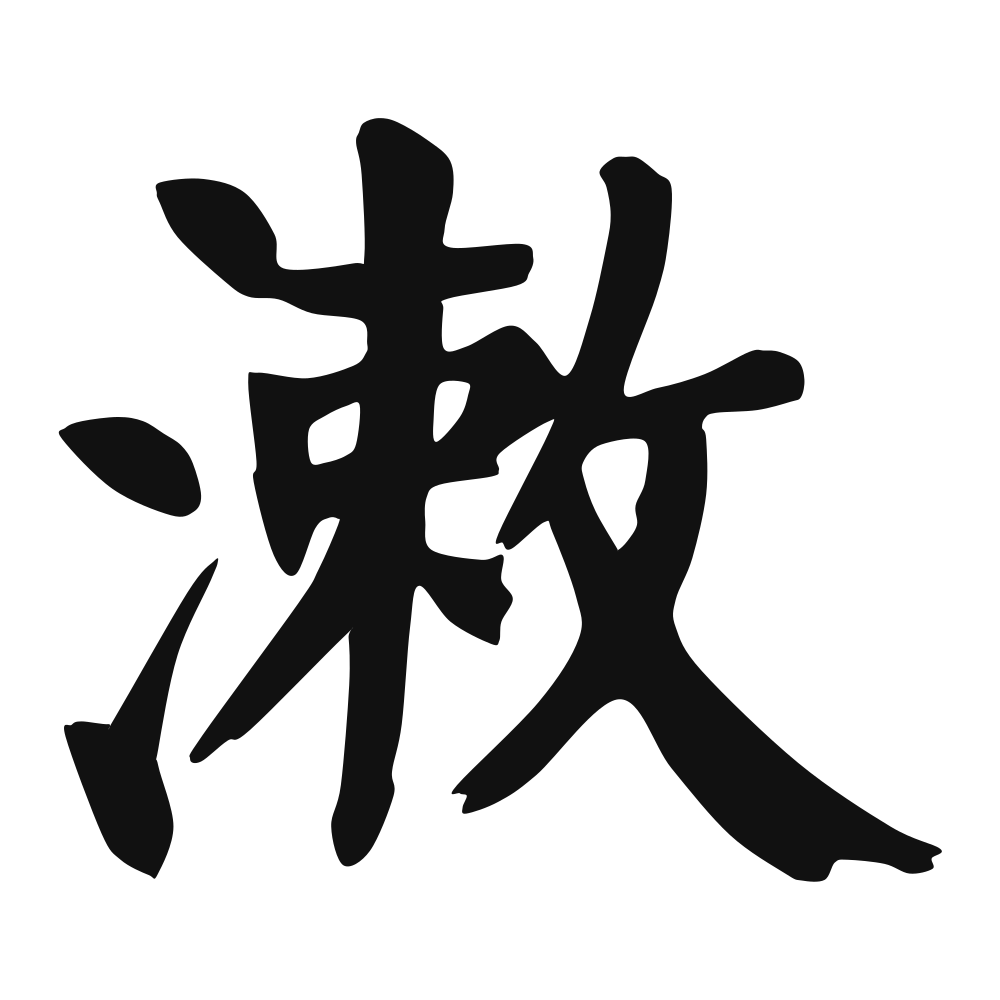
漱
to rinse one's mouth with water; to gargle
Closest English meanings
gargle·rinse
The Calligrapher — Yán Zhēnqīng 颜真卿
Tang master of robust regular script; co-creator of the enduring 'Yan style'.
Tang calligrapher (709–784), master of regular script/running script — the Tang moral paragon whose upright, muscular regular script became the model of Chinese integrity in writing. Tang dynasty
Cultural Story
漱 is an old, cleanly built character: water plus 欶 (to suck in), meaning to rinse the mouth and spit. The Analects records Confucius 漱酒 (rinsing with wine) after a meal, and medical texts from the Tang onward prescribe 漱口 (rinsing the mouth) with salt or tea to protect the teeth. Morning and evening 漱 was part of gentlemanly hygiene and Buddhist monastic discipline alike. Though small, the word carried real weight in a culture that judged self-care and ritual cleanliness as marks of an ordered, respectful life.
Common words & phrases
- 漱口 rinse mouth · gargle
- 漱口水 mouthwash
- 洗漱 wash up · wash
Read the story behind the character
漱 is a morning routine word. You 漱口 (rinse mouth, gargle) after brushing, maybe with store-bought 漱口水 (mouthwash) that leaves a mint burn. The whole wash-up is 洗漱 (washing up), face, teeth, the lot, before dashing to work. A parent reminds a child to 漱口 properly, not just swish and spit. From the bathroom shelf to a hotel's free 漱口水, 漱 is the tiny, daily act of clearing the mouth that starts and ends the day neatly.
Why this character belongs on skin
Water radical beside a mouth with air moving through it: 漱 is to rinse, to swill, to gargle clean. The ancients practiced it as ritual—漱口 at dawn, and for scholars the lovelier phrase: 漱石枕流, to rinse the mouth with stones and pillow on the stream, a recluse's absurd, proud badge of choosing nature over court. To rinse is intimate hygiene elevated to philosophy: what passed through you today—words, gossip, the taste of that argument—can be washed before it settles. Monks rinse more than mouths. The confessionals of Europe, the ablutions before prayer, the long exhale after the phone call you dreaded—all one verb, all 漱. And there is the morning ritual in it, almost sensual: cold water, the shock, the fresh mouth, the day approached as something worth being clean for. We cannot unswallow our years, but we can refuse to keep them swished around. This character is small and daily, and that is its whole point: purity as maintenance, not miracle. Ink it near the jaw, if you like—washed daily, worn always—a tiny vow to meet tomorrow with a clean mouth and no bitterness left in it.
Own this character
Purchase delivers the original SVG of this glyph, brushed by Yán Zhēnqīng 颜真卿, ready to place on skin, paper, or screen.