
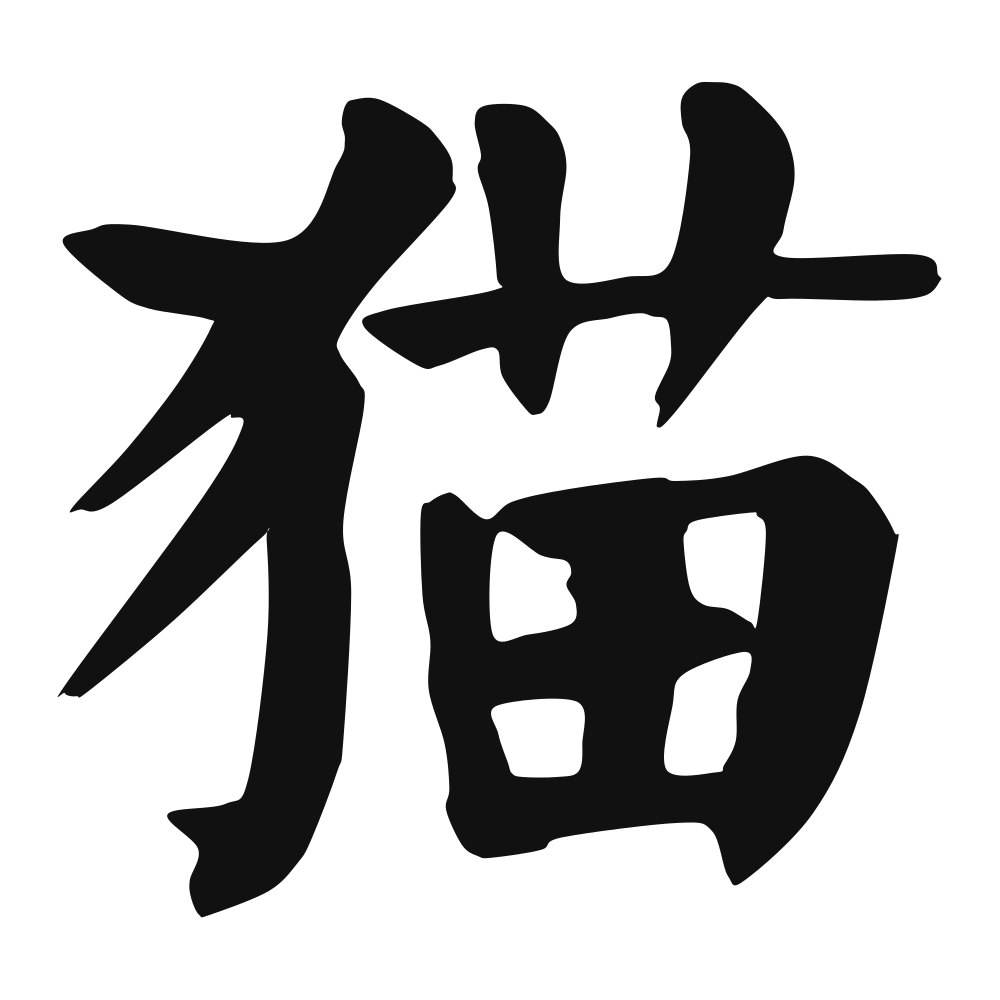
猫
cat (CL:隻|只[zhi1]); (dialect) to hide oneself; (loanword) (coll.) modem
Closest English meanings
cat
The Calligrapher — Yán Zhēnqīng 颜真卿
Tang master of robust regular script; co-creator of the enduring 'Yan style'.
Tang calligrapher (709–784), master of regular script/running script — the Tang moral paragon whose upright, muscular regular script became the model of Chinese integrity in writing. Tang dynasty
Cultural Story
貓 entered Chinese life as the mouse-hunter; 詩經 already complains of rats, and cats earned their keep in granaries. 狸猫换太子 is a famous tale of a royal baby swapped for a cat. By the Tang, cats were pampered pets of ladies in the palace, cherished for company.
Common words & phrases
- 熊猫 panda
- 野猫 wild cat · stray cat
- 猫眼 cat's eye · peephole
- 狸猫 civet cat · leopard cat
Read the story behind the character
Kids love the 熊猫 (panda), China's national treasure, while a stray 野猫 (wild cat) meows at the door for food. A 猫眼 (cat's eye) peephole lets you check who knocks, named for the round, glowing lens. From pets to proverbs, the cat curls through daily life.
Why this character belongs on skin
The cat is the only animal the Buddhists let into the monastery and the only one the witch never fully owned. 猫 walks the line between the hearth and the unknown, a small tiger domesticated into companionship and mystery at once. To watch one fold itself into the dark and reappear untouched is to witness a mastery of disappearance the Daoist sage would envy. To tattoo 猫 is to claim that feline independence—the right to be warm on your own terms, to vanish when the world gets loud, to return only when you choose. There is a sensual confidence in the creature's refusal to perform. Let this character curl at your ankle or your shoulder as a charm of sovereign solitude: you are loved, but never owned. The door stays open. You decide when to cross it.
Own this character
Purchase delivers the original SVG of this glyph, brushed by Yán Zhēnqīng 颜真卿, ready to place on skin, paper, or screen.