
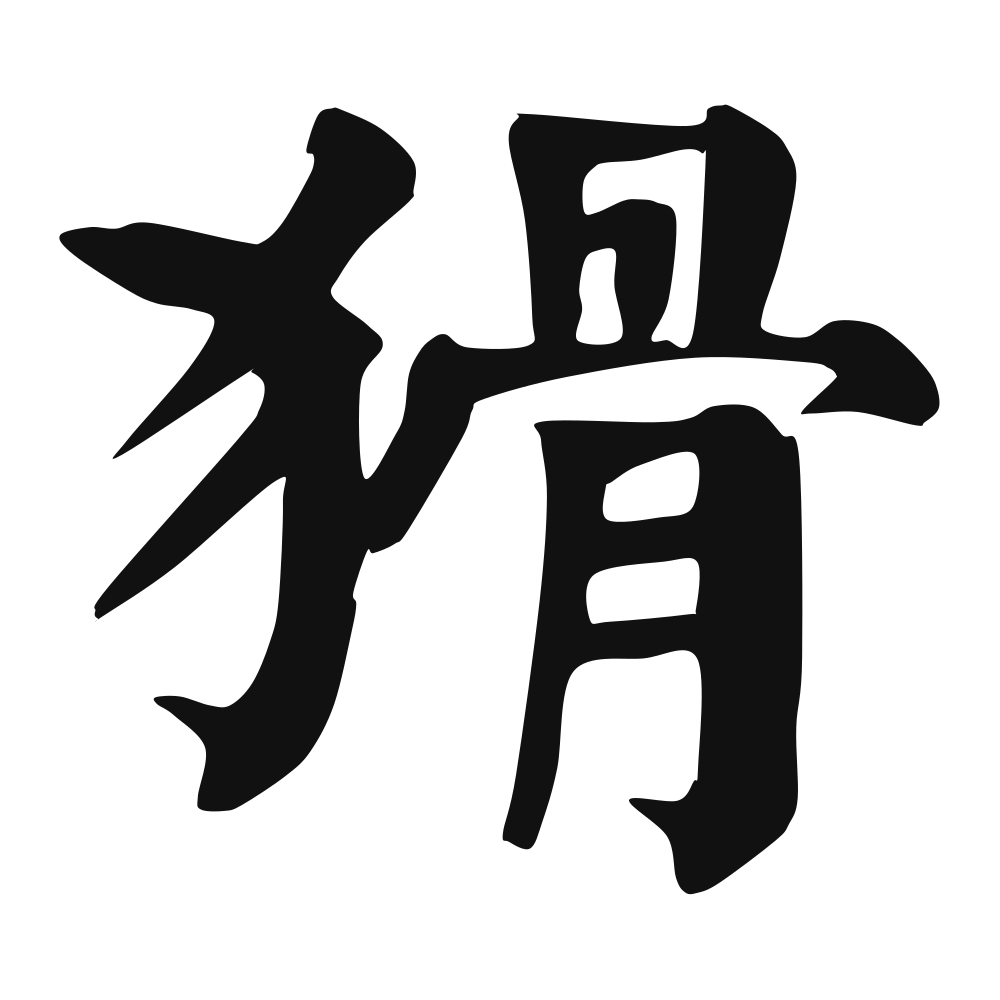
The Calligrapher — Yán Zhēnqīng 颜真卿
Tang master of robust regular script; co-creator of the enduring 'Yan style'.
Tang calligrapher (709–784), master of regular script/running script — the Tang moral paragon whose upright, muscular regular script became the model of Chinese integrity in writing. Tang dynasty
Cultural Story
猾 means cunning or sly; the 說文 links it to 乱 and 點. Histories denounce 猾吏 (crafty officials) who bend law for profit, and 戰國策 warns of 狡猾 advisors. The word paints the smooth operator who slips through every rule that others obey without question.
Common words & phrases
- 狡猾 cunning · sly
- 猾吏 crafty official
- 刁猾 wily
Read the story behind the character
We call a cheating classmate 狡猾 (cunning), and a 猾吏 (crafty official) takes bribes behind a smile. The 刁猾 (wily) salesman hides fees in fine print. 猾 is the slippery intelligence that bends the system, admired in a rival, resented in someone who wrongs you.
Why this character belongs on skin
The fox gets the stories, but cunning gets things done. 猾 means sly, crafty — the animal radical over bone: wit with a skeleton in it, intelligence with edges. This is the character of the trickster the whole world knows — Reynard, Loki, Sun Wukong before he earned his halo — the one who wins not by force but by reading the room faster than the room can read him. Chinese storytellers both scolded and adored such figures, because everyone secretly admires the mind that slips the trap. Yet the character keeps its warning: cunning without loyalty curdles into treachery, and the clever are the first to be alone. To wear 猾 knowingly is to claim the blade's edge and the responsibility for it — to be sharp on purpose, quick on purpose, never naive again. Ink it where you'd reach for it: the forearm, the side of the hand. The world is full of traps. Be the one who walks out of them.
Own this character
Purchase delivers the original SVG of this glyph, brushed by Yán Zhēnqīng 颜真卿, ready to place on skin, paper, or screen.