
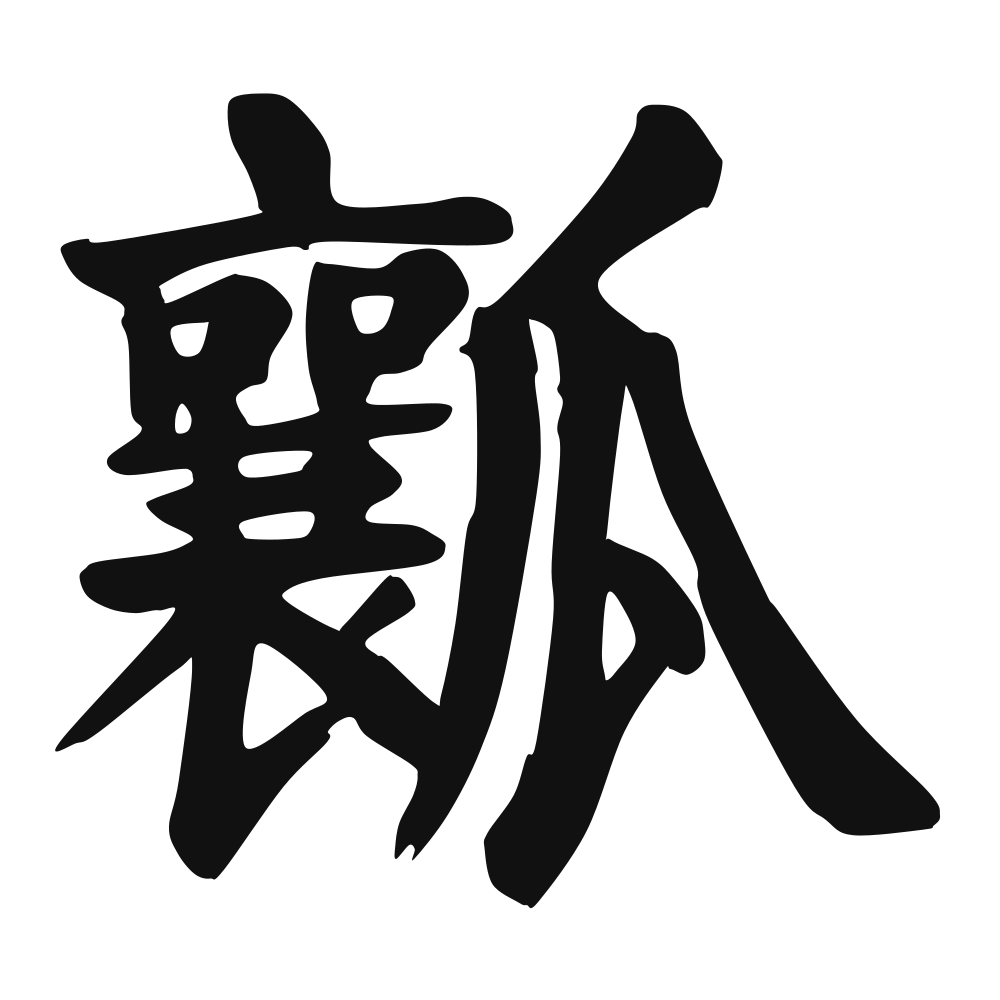
瓤
pulp (of fruit); sth inside a covering; bad; weak
Closest English meanings
pulp·flesh·inner part
The Calligrapher — Yán Zhēnqīng 颜真卿
Tang master of robust regular script; co-creator of the enduring 'Yan style'.
Tang calligrapher (709–784), master of regular script/running script — the Tang moral paragon whose upright, muscular regular script became the model of Chinese integrity in writing. Tang dynasty
Cultural Story
Rang is the inside of things — the sweet flesh of a melon against its rind, the soft heart of a fruit, and, by a natural leap, what fills a padded jacket. Old writers relished the contrast: gold rind, ruby 瓤, the measure of whether a melon was worth buying.
Common words & phrases
- 瓜瓤 melon pulp · melon flesh
- 信瓤 letter contents
- 瓤子 pulp · flesh · inner part
Read the story behind the character
Shoppers still thump watermelons and argue about their 瓜瓤 — red or yellow, seedless or not. Old-timers may call the inside of a letter the 信瓤. The word says plainly that what counts is not the skin but the sweetness within.
Why this character belongs on skin
Cut a melon open on a July afternoon and you are looking at 瓤—the pulp, the juicy flesh, everything inside the rind that makes the rind worth carrying. The melon radical sits above; below is a phonetic of softness. The word reaches beyond fruit: what is 瓤 in a thing is its real interior, the sweet truth hidden by the outer wall. Gossip is said to have pulp; a persimmon ripens to it. There is a quiet sensuality here the Chinese language never apologizes for—flesh that yields to the tongue, flesh that feeds. And there is a test in it too: you cannot know the 瓤 until the skin is broken. To wear it is to side with interiors, to promise that whatever your rind shows the world, the inside is sweet and ripe and real. Some people are all peel. Be the part worth eating. ripen deliberately.
Own this character
Purchase delivers the original SVG of this glyph, brushed by Yán Zhēnqīng 颜真卿, ready to place on skin, paper, or screen.