
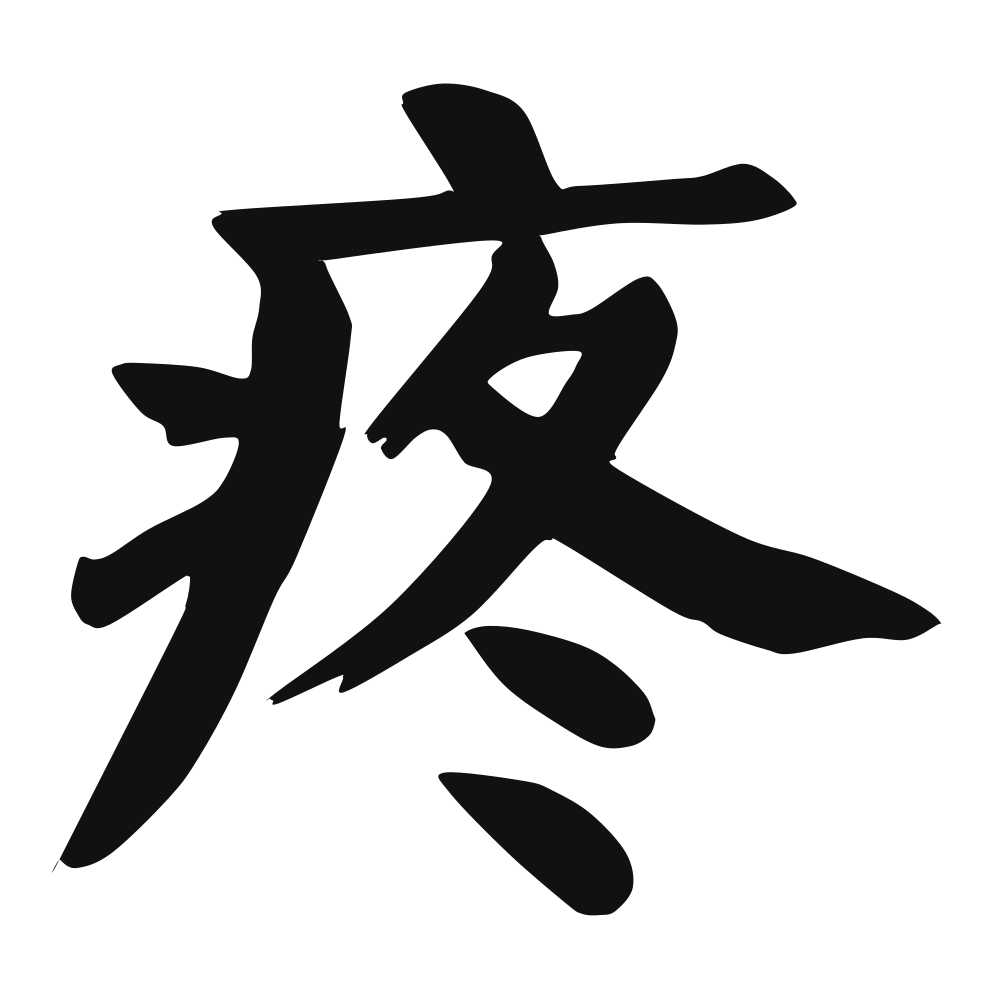
疼
(it) hurts; sore; to love dearly
Closest English meanings
to ache·pain·to love
The Calligrapher — Yán Zhēnqīng 颜真卿
Tang master of robust regular script; co-creator of the enduring 'Yan style'.
Tang calligrapher (709–784), master of regular script/running script — the Tang moral paragon whose upright, muscular regular script became the model of Chinese integrity in writing. Tang dynasty
Cultural Story
疼 pairs sickness with 冬, winter — an ache like cold biting into bone. It belonged to the speech of the street more than the classics: farmers said a limb 疼s, mothers said a heart 疼s. From bodily ache grew its tender second life: to love, to cherish, to hurt for someone.
Common words & phrases
- 疼痛 pain
- 头疼 headache
- 心疼 to feel sorry for
- 疼爱 to love dearly
Read the story behind the character
A kid shouts 头疼 (headache) over homework; the dentist promises the 疼痛 (pain) will fade by evening. But 疼 also means to dote: parents 心疼 (feel for) children caught in exam drudgery, and 疼爱 (loving dearly) describes the grandma who always saves you the best dumpling.
Why this character belongs on skin
Winter settles into an old wound and the bone remembers what the mind had forgiven. That is the oldest Chinese word for pain — sickness roofed over the sign for winter, cold that has taken up residence in the flesh. But listen to a grandmother say it of a child, and the same character warms: to ache for someone is to love them past bearing. Pain and tenderness are carved from one bone. We are most ours when we hurt, and most given when we ache for another. Wear it where you have been broken and chosen, anyway, to care. Let the ink be the winter you survived and the love that made the surviving worth it — a small, fierce weather kept close to the heart.
Own this character
Purchase delivers the original SVG of this glyph, brushed by Yán Zhēnqīng 颜真卿, ready to place on skin, paper, or screen.