
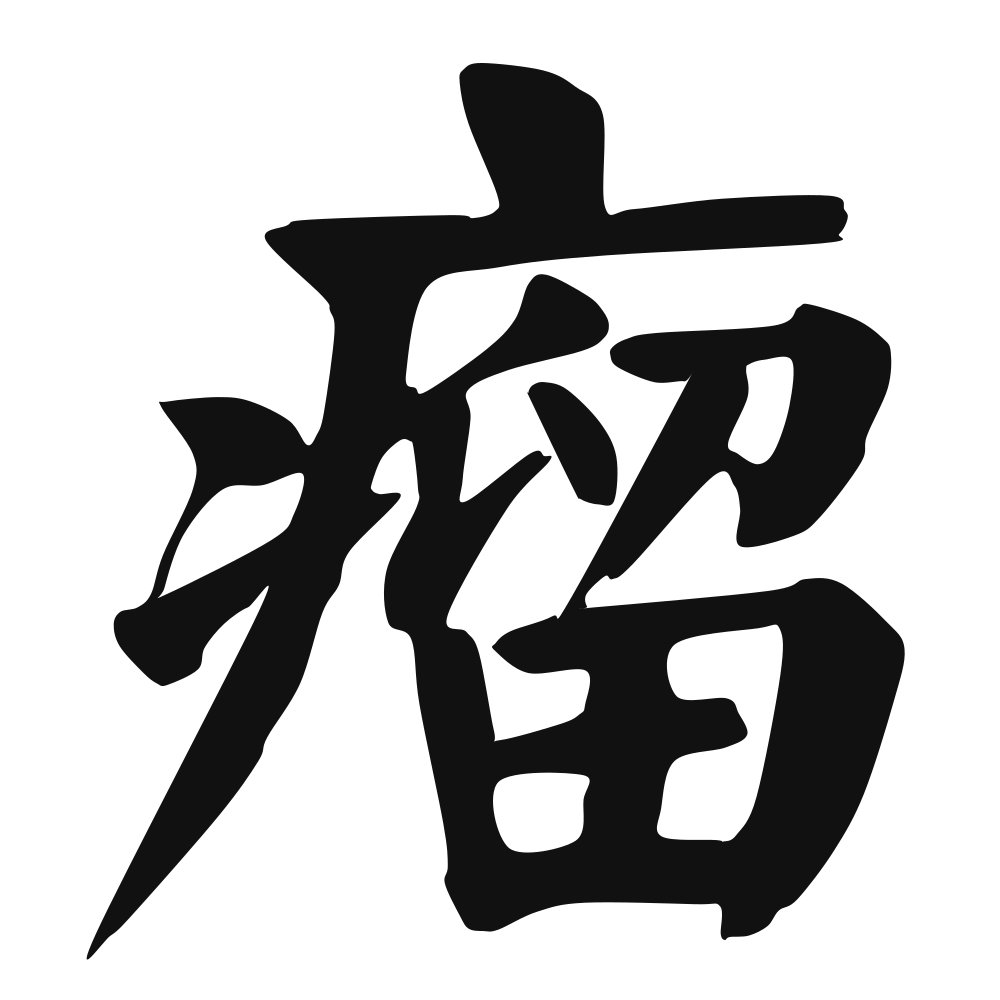
The Calligrapher — Yán Zhēnqīng 颜真卿
Tang master of robust regular script; co-creator of the enduring 'Yan style'.
Tang calligrapher (709–784), master of regular script/running script — the Tang moral paragon whose upright, muscular regular script became the model of Chinese integrity in writing. Tang dynasty
Cultural Story
The ancient glossary Shiming reasoned: 瘤 is 流, flow — blood pooling where it should have moved, congealing into a lump. Surgeons of the Tang distinguished rising and sinking 肿瘤, lanced some, left others alone, and recorded with honest care how little they truly knew.
Common words & phrases
- 腫瘤 tumor · neoplasm
- 肉瘤 sarcoma · fleshy lump
- 毒瘤 malignant tumor · cancer · evil growth
Read the story behind the character
Physical-exam season runs on one dread word: 腫瘤 (tumor, neoplasm). Pathology names 肉瘤 (sarcoma) precisely; surgeons separate the benign from the 毒瘤 (malignant growth) with scans and calm voices. Columnists borrow the word for corruption — a 毒瘤 on public trust — and keep the shudder.
Why this character belongs on skin
Stay, says the radical inside this word—瘤 is a thing that stays, a growth that refuses to leave. Chinese medicine named tumors centuries before microscopes: 瘤者,留居也, the ancients wrote, that which remains and dwells. The character does not flinch. It is the body's stubbornness turned against itself, and also the word for any burden that implants itself in a life—an obsession, a debt, a grief that swells quietly year over year. Facing it on skin is a specific, fearless act: the survivor's witness. Those who have felt a lump and lived past it, who carry the surgery's map of scars, sometimes choose exactly this character—naming the thing, rendering it merely a word, no longer a haunting. It is ink as exorcism. What is written is what has been, finally, removed.
Own this character
Purchase delivers the original SVG of this glyph, brushed by Yán Zhēnqīng 颜真卿, ready to place on skin, paper, or screen.