
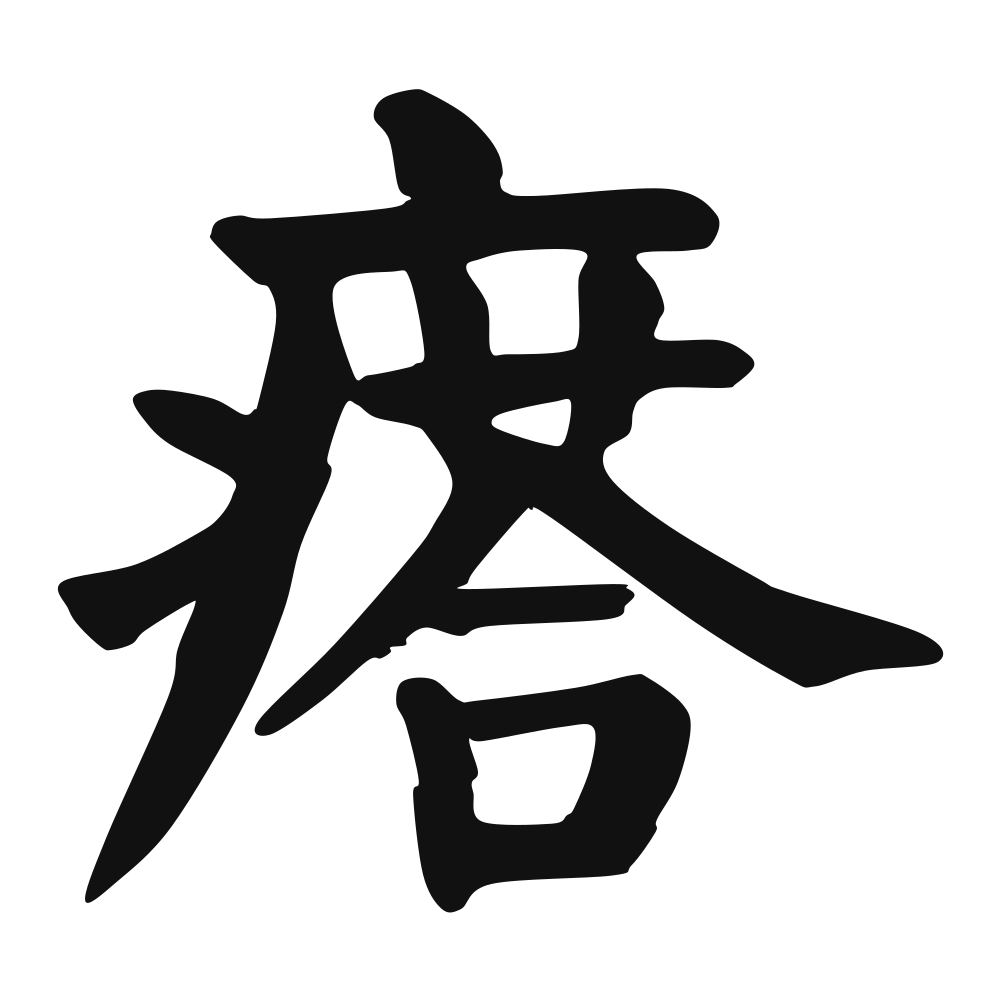
The Calligrapher — Yán Zhēnqīng 颜真卿
Tang master of robust regular script; co-creator of the enduring 'Yan style'.
Tang calligrapher (709–784), master of regular script/running script — the Tang moral paragon whose upright, muscular regular script became the model of Chinese integrity in writing. Tang dynasty
Cultural Story
瘩 never travels alone — it exists to complete 疙瘩. Vernacular novelists of the Ming and Qing kneaded the pair into every kind of knot: dumplings of dough, bundles of cloth, blisters of anger, and the wordless lumps that two proud relatives carry in silence across a wedding banquet.
Common words & phrases
- 疙瘩 lump · knot · pimple · problem
Read the story behind the character
Unpack the box and untangle the 疙瘩 (lump, knot, problem): a tangle of cables, a pimple before a date, an unresolved 疙瘩 with a roommate. Families cheer when the knot finally unties — 疙瘩解开了 — the ending of half the reconciliation texts sent in China every night.
Why this character belongs on skin
It arrives as a pair—疙瘩—and means the lump, the knot, the blemish the body raises against the world. 瘤 carries its illness radical, a field of ailment where something hard has decided to stay. The word is humble, almost folksy: a knot in the wood, a scab on a knee, the bump left when a lover's ring catches. Chinese uses it for the mind too—心里有个疙瘩, a knot in the heart, some grudge or grief that will not smooth itself out. We are all a map of these. The callus on a guitarist's fingers. The scar from the summer you were eleven. Bonesetters in old villages read the body's lumps like a novel, knowing where the blow landed and how long ago. There is no need to prettify this one; its honesty is the beauty. Ink becomes a way of choosing your marks—of saying, this knot is mine, this bump is a chapter, and I will sign the page rather than tear it out. The body keeps score. Let it keep it in a good hand.
Own this character
Purchase delivers the original SVG of this glyph, brushed by Yán Zhēnqīng 颜真卿, ready to place on skin, paper, or screen.