
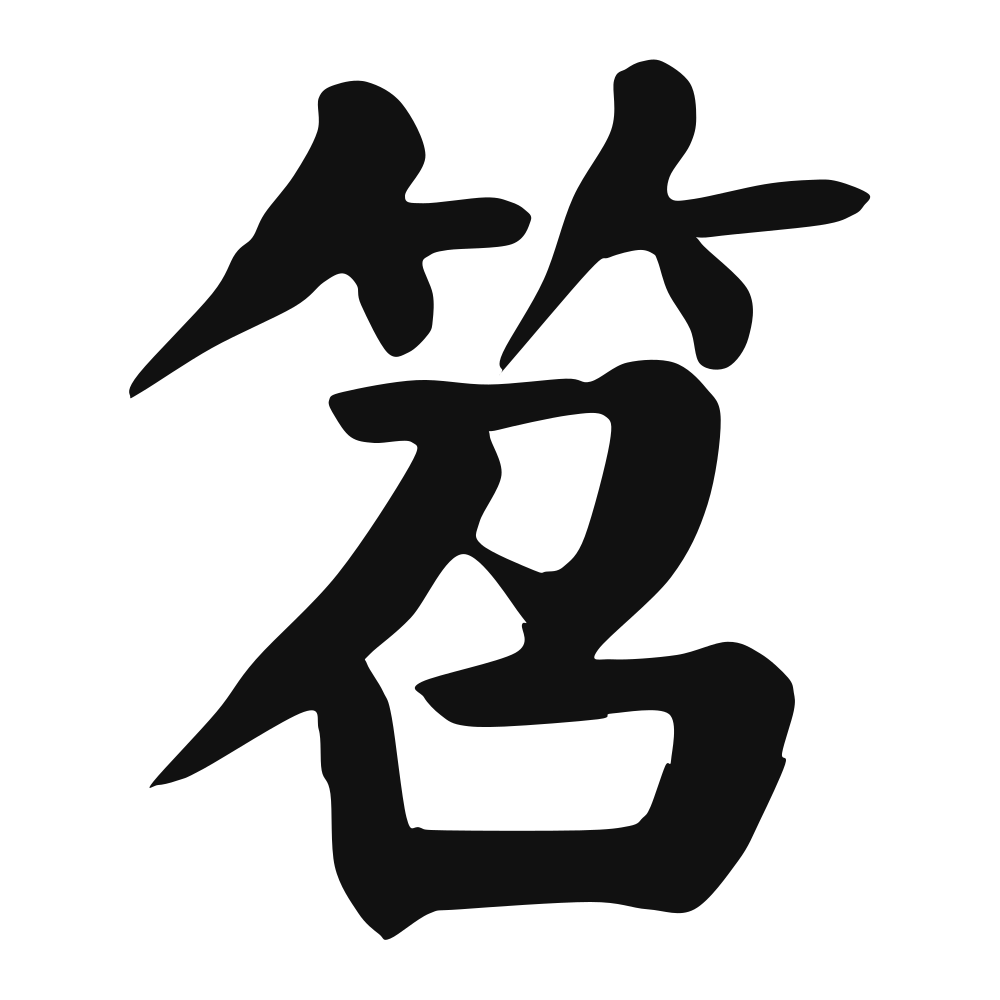
The Calligrapher — Yán Zhēnqīng 颜真卿
Tang master of robust regular script; co-creator of the enduring 'Yan style'.
Tang calligrapher (709–784), master of regular script/running script — the Tang moral paragon whose upright, muscular regular script became the model of Chinese integrity in writing. Tang dynasty
Cultural Story
笤 is the broom character, tied to the everyday work of sweeping with bundled twigs. Early vocabulary books and farmhand manuals listed the 笤帚 among the humble tools of any courtyard — alongside the winnowing basket and the well rope, the objects that actually ordered household life.
Common words & phrases
- 笤帚 broom
Read the story behind the character
Every home still owns a 笤帚 (broom), though robot vacuums steal the chores; corner shops sell plastic ones beside mops, and teachers keep a soft-bristle one for chalk dust. In nostalgic essays, grandma's sorghum 笤帚 stands for an era when sweeping the yard began each day.
Why this character belongs on skin
The humble broom of bound twigs — 笤帚 — sweeping courtyards, temple steps, the dust from a grave, the grit from a stranger's doorstep. In the monastery, sweeping is not chores; it is meditation with a handle, the oldest koan in the building: keep moving the dust and notice, eventually, that you are also the dust being moved. The novice complained of boredom; the master handed him the broom and said nothing at all, and twenty years later the man finally understood, weeping over a perfectly clean floor. Every morning the courtyard is dirty again — leaves, petals, the ordinary fall of things. Every morning we sweep anyway, and this fidelity, this unglamorous return, is the whole secret the poets keep circling. Pick up the broom. Begin at the corner nearest the door. The courtyard you are cleaning is the one inside you.
Own this character
Purchase delivers the original SVG of this glyph, brushed by Yán Zhēnqīng 颜真卿, ready to place on skin, paper, or screen.