
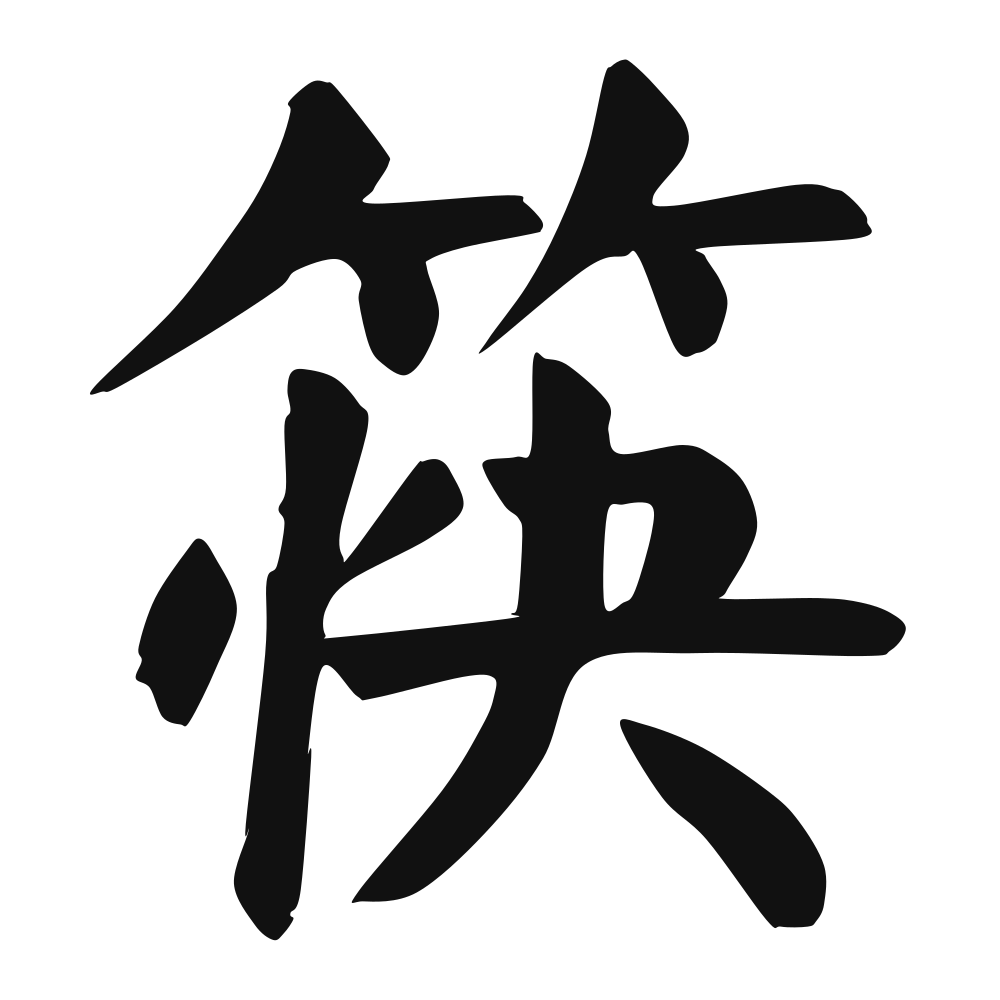
The Calligrapher — Yán Zhēnqīng 颜真卿
Tang master of robust regular script; co-creator of the enduring 'Yan style'.
Tang calligrapher (709–784), master of regular script/running script — the Tang moral paragon whose upright, muscular regular script became the model of Chinese integrity in writing. Tang dynasty
Cultural Story
Chopsticks were classical 箸, and boat crews of the lower Yangtze, dreading 住 'to stop,' flipped the word to 快 'swift' — hence 筷. On it traveled through the dynasties: bronze and lacquer for the wealthy, plain bamboo for everyone else, the pair lifting every grain since.
Common words & phrases
- 筷子 chopsticks
- 碗筷 bowls and chopsticks
- 竹筷 bamboo chopsticks
Read the story behind the character
Meals run on 筷子 (chopsticks): grandma sets 碗筷 (bowls and chopsticks) before anyone sits, restaurants hand out bamboo 竹筷 in paper sleeves, and kids wrestle noodles until wrist strength wins. Taboos persist — never stand chopsticks upright in rice — and souvenir shops sell lacquered pairs by the million.
Why this character belongs on skin
There is an intimacy in 筷 that forks never learned. Two plain sticks, no hinge, no blade, and yet they move with the precision of a calligrapher's brush—lifted, crossed, patient. The word borrows its sound from 快, quick, a taboo-flattering pun from the boatmen of the south who would not say slow on the water. Thousands of years of meals have passed through these instruments; the old rules say never plant them upright in rice, for that is food for the dead. This is a character about sufficiency—two simple things, working as one. A child spends years learning them, fumbling through banquets, and one day the sticks simply answer—and something in that mastery feels like being handed the culture itself, two slips of wood at a time. Some inks are chosen to mark the body; this one marks a way of being at the table of the world.
Own this character
Purchase delivers the original SVG of this glyph, brushed by Yán Zhēnqīng 颜真卿, ready to place on skin, paper, or screen.