
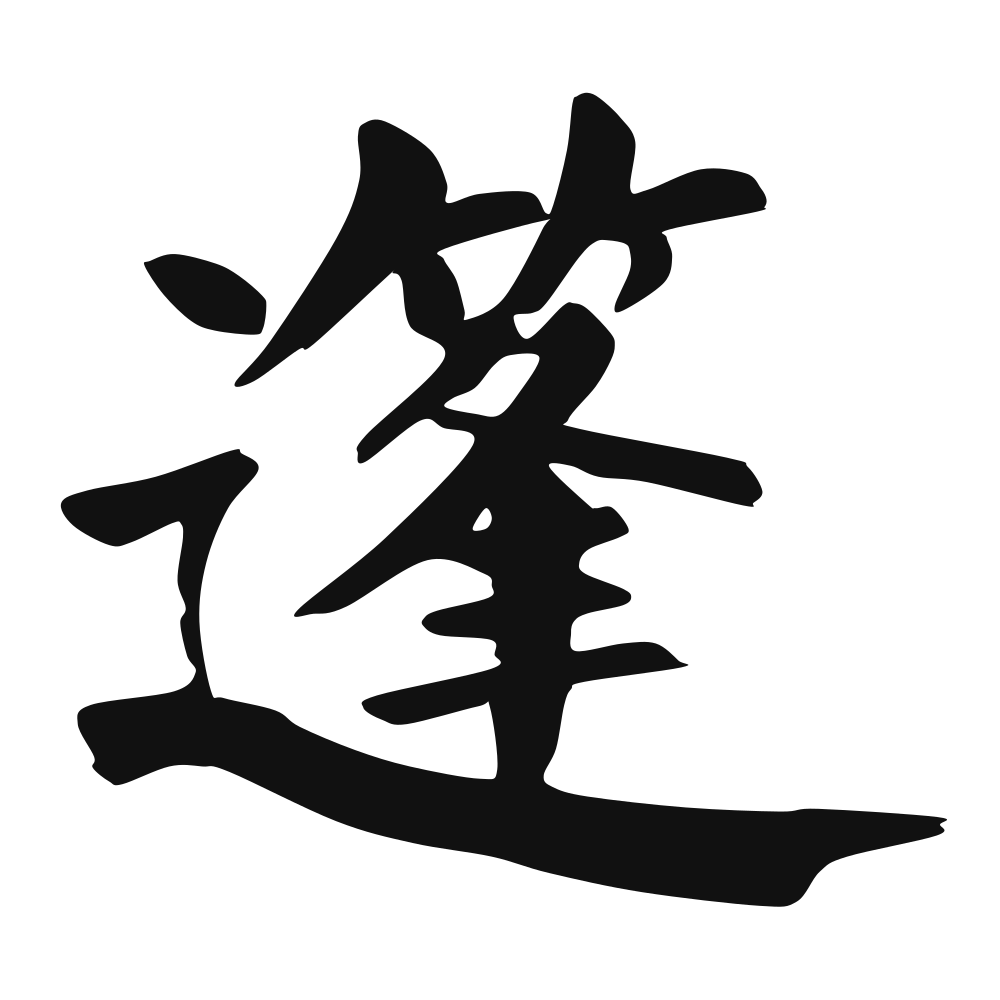
The Calligrapher — Yán Zhēnqīng 颜真卿
Tang master of robust regular script; co-creator of the enduring 'Yan style'.
Tang calligrapher (709–784), master of regular script/running script — the Tang moral paragon whose upright, muscular regular script became the model of Chinese integrity in writing. Tang dynasty
Cultural Story
篷 is the covering stretched over a boat or cart — matting or cloth arched on a frame. The curved 船篷 sheltered river travelers who slept to the sound of rain drumming overhead, lamplight glowing beneath; the 斗篷 cloak wrapped pilgrims against wind. Song travel sketches are full of such canopied nights on the water.
Common words & phrases
- 帐篷 tent
- 船篷 boat awning
- 斗篷 cloak · cape
Read the story behind the character
帐篷 means camping: families pitch them at lakesides and music festivals, gear shops sell ultralight models weighed to the gram. 斗篷 capes return each autumn on fashion racks, and sightseeing boats still offer a covered 船篷 seat — though canvas, plastic and synthetics have long replaced the woven bamboo of the old awnings.
Why this character belongs on skin
A roof you can carry—that is the genius of 篷. The bamboo radical shelters a frame that folds: the canvas awning over a night market, the tarp strung between two trees in rain, the sail bellied full with wind that pulls a hull toward horizon. Nomads invented it first, a hundred centuries back, because a fixed roof is a kind of surrender. To have a canopy is to refuse to be rained on and refuse to be rooted, both at once. There is a freedom in that which no deed to a house can match: your shelter travels with you, your sky changes nightly. The character holds rain out the way a lover's coat held over your head does—improvised, sufficient, a little romantic. Ink this on skin that has slept in strange beds and woken glad, and let it say what you already live: home is wherever you pitch it.
Own this character
Purchase delivers the original SVG of this glyph, brushed by Yán Zhēnqīng 颜真卿, ready to place on skin, paper, or screen.