
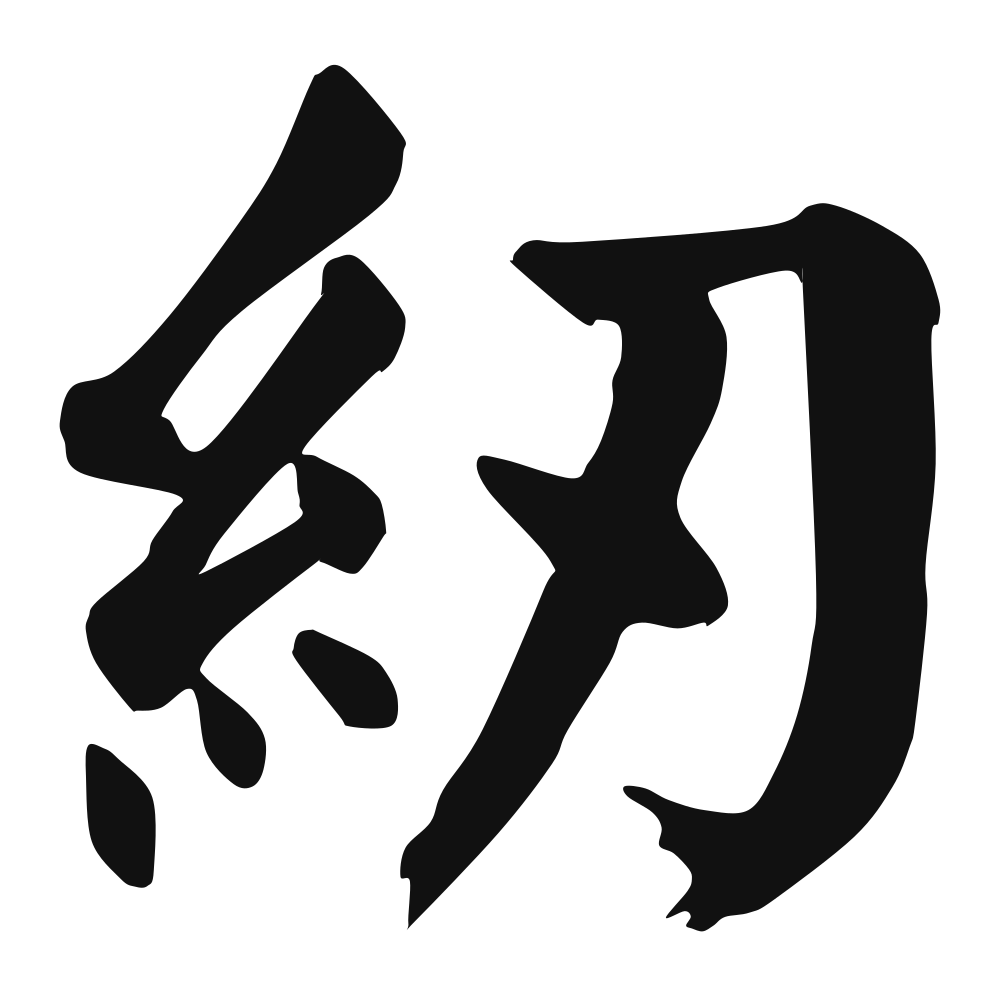
纫
to thread (a needle); (bound form) to sew; to stitch; (literary) very grateful
Closest English meanings
thread·sew·twist
The Calligrapher — Yán Zhēnqīng 颜真卿
Tang master of robust regular script; co-creator of the enduring 'Yan style'.
Tang calligrapher (709–784), master of regular script/running script — the Tang moral paragon whose upright, muscular regular script became the model of Chinese integrity in writing. Tang dynasty
Cultural Story
纫 is the wristy motion of twisting a thread and pushing it through the eye of a needle. Qu Yuan, in the Lisao, uses it poetically: he 纫秋兰以为佩, threading fragrant autumn orchids onto a cord to wear at his belt, a picture of virtue strung together bead by bead. Later letters used 感纫 for a gratitude tied like a knot.
Common words & phrases
- 缝纫 sewing · stitching
- 纫针 thread a needle
Read the story behind the character
You still meet 纫 wherever clothes get mended. A tailor runs her 缝纫机, the sewing machine, through a pile of trousers, muttering when a thread will not behave; at home, a grandmother licks the end of the cotton and patiently 纫针, threads the needle, so a torn schoolbag gets one more year of life.
Why this character belongs on skin
To draw the thread through the eye — that is 纫, the patient work of sewing, the small labor that holds a life together one stitch at a time. We have outsourced the making, and lost the sacrament of the needle: the focus, the breath held, the quiet triumph of the joined seam. To wear 纫 is to reclaim that patience, the part of you that mends rather than discards. It is a vow against the throwaway age. Put it where your hands work, a reminder that what is torn can be made whole by attention alone. The mark doesn't promise speed. It promises care — the slow thread, the steady hand, the belief that repair is a kind of love. Some ink is a weapon. This one is a needle, and the needle, in the end, is the stronger thing.
Own this character
Purchase delivers the original SVG of this glyph, brushed by Yán Zhēnqīng 颜真卿, ready to place on skin, paper, or screen.