
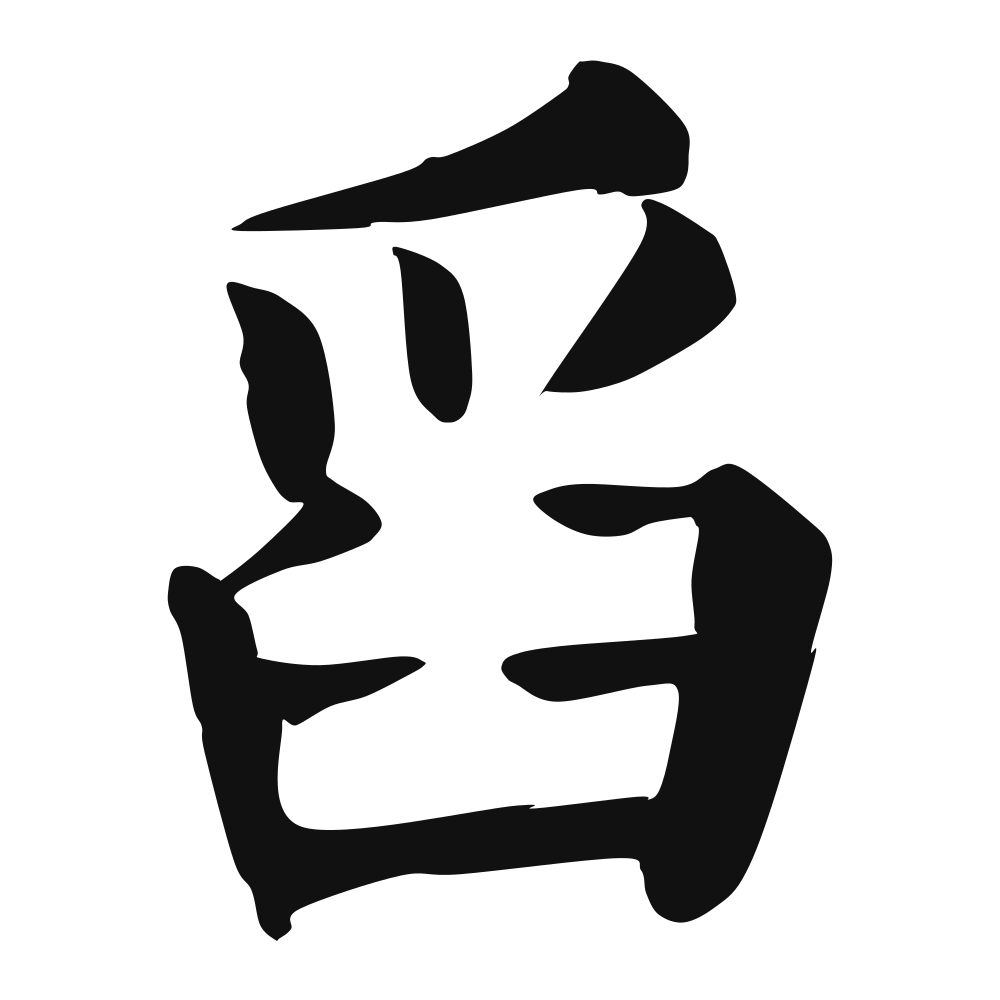
舀
to ladle out; to scoop up
Closest English meanings
to ladle·to scoop
The Calligrapher — Yán Zhēnqīng 颜真卿
Tang master of robust regular script; co-creator of the enduring 'Yan style'.
Tang calligrapher (709–784), master of regular script/running script — the Tang moral paragon whose upright, muscular regular script became the model of Chinese integrity in writing. Tang dynasty
Cultural Story
舀 is a hand (爪) above a 臼, mortar — the picture of fingers dipping in to scoop something out. It belongs to the oldest kitchen verbs: to 舀水, ladle water from the jar, to 舀出 a measure of grain, to serve porridge bowl by bowl. Long before ladles were factory-made, every household had its gourd cut and curved precisely for the 舀 motion.
Common words & phrases
- 舀水 to ladle water · to scoop water
Read the story behind the character
You 舀水 — ladle water — from the dispenser into the kettle, then 舀 out three spoonfuls of rice to wash. At the hotpot your uncle keeps 舀, scooping, extra broth into your bowl long after you've said you're full. The soup pot's ladle has a short handle, so every serving ends with your sleeve dunked and everyone laughing.
Why this character belongs on skin
There is an old kindness in the dipping of a ladle. The character 舀 shows a hand drawing water from a vessel, the small daily miracle of scooping what sustains. Before pipes and pride, this was how the family drank, one measured motion, taken and given. The Daoists saw the whole teaching in a bowl: empty it and it holds, fill it and it spills; 舀 is the act of taking only what the moment needs. The Christian fed thousands from a boy's lunch; the Buddhist offered water to the thirsty ghost. To scoop well is to know the difference between thirst and greed. Wear this as the ink of the one who serves, who fills another's cup before his own. Let it mark the hand that gives without ceremony, the quiet labor that keeps everyone alive. Ink it where your own palm opens to receive and to pour.
Own this character
Purchase delivers the original SVG of this glyph, brushed by Yán Zhēnqīng 颜真卿, ready to place on skin, paper, or screen.