
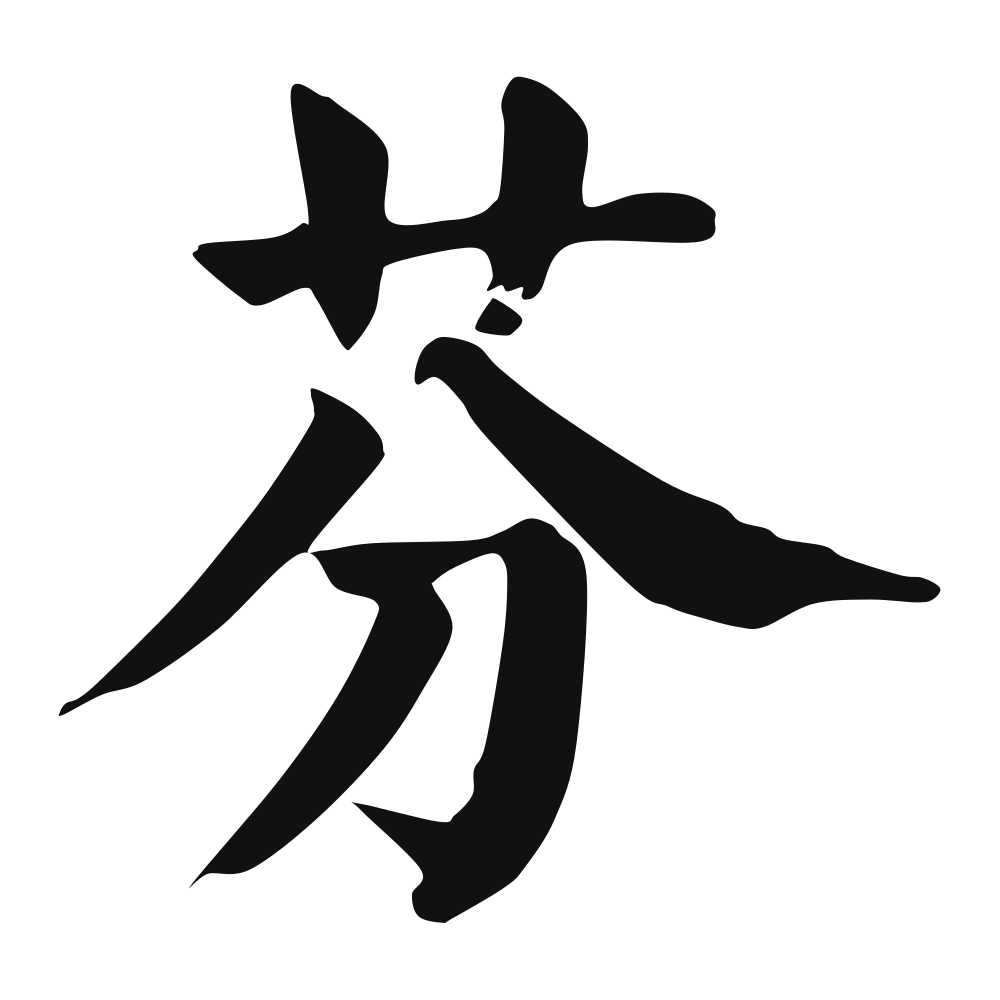
芬
perfume; fragrance
Closest English meanings
fragrance·sweet smell
The Calligrapher — Yán Zhēnqīng 颜真卿
Tang master of robust regular script; co-creator of the enduring 'Yan style'.
Tang calligrapher (709–784), master of regular script/running script — the Tang moral paragon whose upright, muscular regular script became the model of Chinese integrity in writing. Tang dynasty
Cultural Story
The Songs of Chu are saturated with perfume as moral grammar: a fragrant nature, a fragrant belt of herbs worn to mark an unstained heart. Eulogists and elegists borrowed the scent for virtue itself, so that a writer's pure fragrance could outlast his body, and later epitaphs still praise ancestral repute as a lingering aroma.
Common words & phrases
- 芬芳 fragrant · sweet-smelling
- 清芬 fresh fragrance
Read the story behind the character
A bakery pipe the smell of butter croissants onto the sidewalk, a tea shop steams jasmine-scented air over the counter, a memorial essay praises the professor's pure fragrance of scholarship, and a perfume ad in the subway borrows the classical compound for its copy. A humidifier diffuses fragrance into a stuffy studio flat.
Why this character belongs on skin
Some scents do not leave when the flower does. Fēn is that kind of fragrance — not the loud perfume you buy, but the smell that clings to a room long after the door has shut. The ancients used it for the air around virtuous people, as if goodness gave off a scent you could not name but always recognized. Think of walking into a house where someone you loved once lived. The place is empty. Something still hangs in the wood. That is fēn: a presence that outlasts presence. To put it on your skin is to say you intend to be the kind of person remembered not for noise but for the trace you leave behind. Quiet, uncalled-for, impossible to wash out. A good name is only scent that learned how to stay.
Own this character
Purchase delivers the original SVG of this glyph, brushed by Yán Zhēnqīng 颜真卿, ready to place on skin, paper, or screen.