
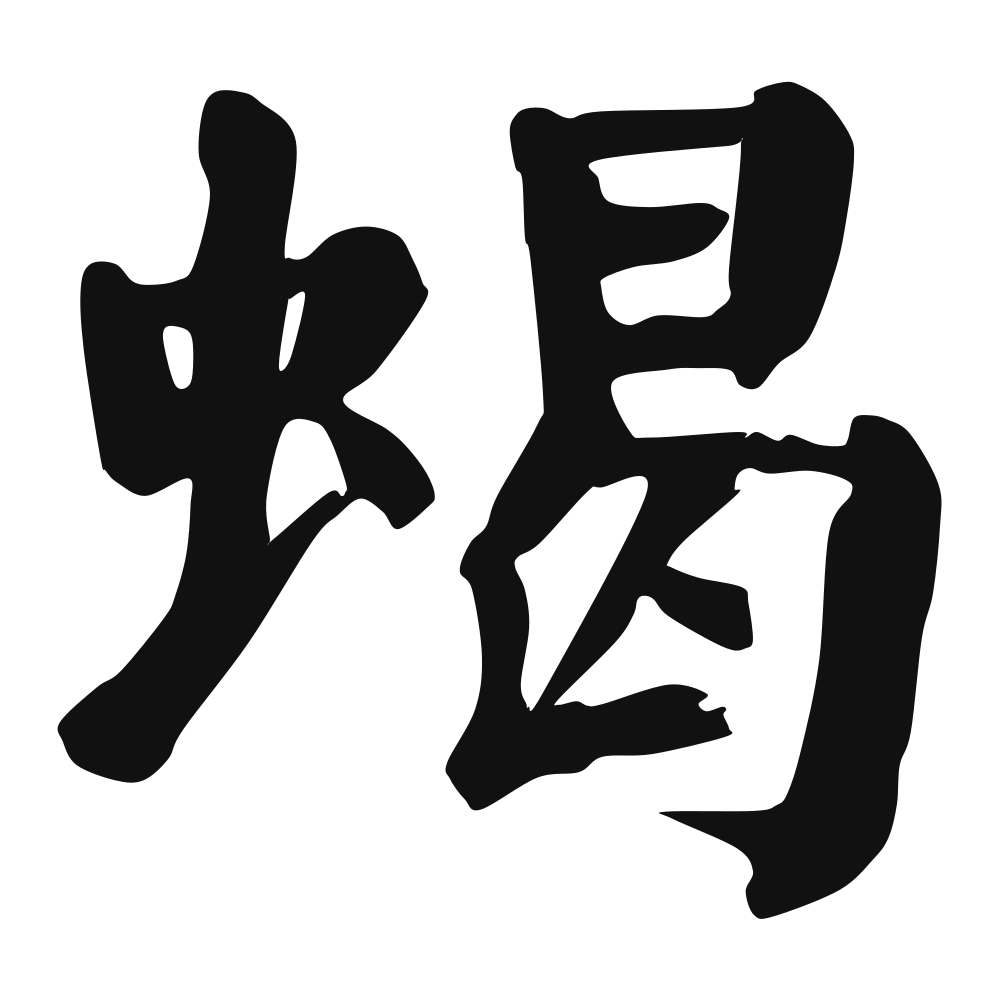
The Calligrapher — Yán Zhēnqīng 颜真卿
Tang master of robust regular script; co-creator of the enduring 'Yan style'.
Tang calligrapher (709–784), master of regular script/running script — the Tang moral paragon whose upright, muscular regular script became the model of Chinese integrity in writing. Tang dynasty
Cultural Story
In 西游记, a scorpion spirit dwelling at 琵琶洞 of 毒敌山 once turned her tail on the Buddha himself and left him stinging, until the rooster-spirit came to break her curse. The 蝎子 of that tale was no garden pest but a demon of desire and poison. Long before the novel, physicians dried 毒蝎 into powders said to cure fits and tighten the sinews. The character carries both the folk dread of the sting and the old faith that the venom could be turned, by art, into medicine.
Common words & phrases
- 蝎子 scorpion
- 毒蝎 venomous scorpion
Read the story behind the character
At a night market in a southern town, a vendor lifts a live 蝎子 from a basket and drops it, still wriggling, into the fryer for a dare-eating snack. In a traditional pharmacy, packets of dried 毒蝎 sit labeled for rheumatic pain, the same venom now sold as cure. A horror-film fan scrolls past a scorpion tattoo design, and a desert hiker checks his boots for the curved tail before sleep. From the stall to the dispensary to the trail, 蝎 keeps its old double nature: danger and remedy.
Why this character belongs on skin
There is a creature that wears its warning on its back, curled and ready, beautiful the way danger is beautiful. The scorpion is one of the five poisons, the 五毒—snake, scorpion, centipede, toad, gecko—sewn onto children's clothes at the Duanwu festival to teach them the world's teeth by name. Respect first, the festival says; know what can hurt you before it does. The language leans on the image for human weather: 蛇蝎心肠, a heart of snake and scorpion—cruelty with a face. Fables everywhere repeat the scorpion's one confession, the frog on its back, the sting, the shrug: it is my nature. Everyone has a sting somewhere—an anger curled at the ready, a venom for the ones who get closest. The character does not ask you to amputate it. It asks you to know it, the way the embroidered shirt teaches the child: named, faced, worn openly. To wear 蝎 is that honesty: not the cruelty—never that—but the admission of the barb, the beauty of the curled tail, the vow that my nature will be known by me first, before it ever has to be discovered by someone I love.
Own this character
Purchase delivers the original SVG of this glyph, brushed by Yán Zhēnqīng 颜真卿, ready to place on skin, paper, or screen.