
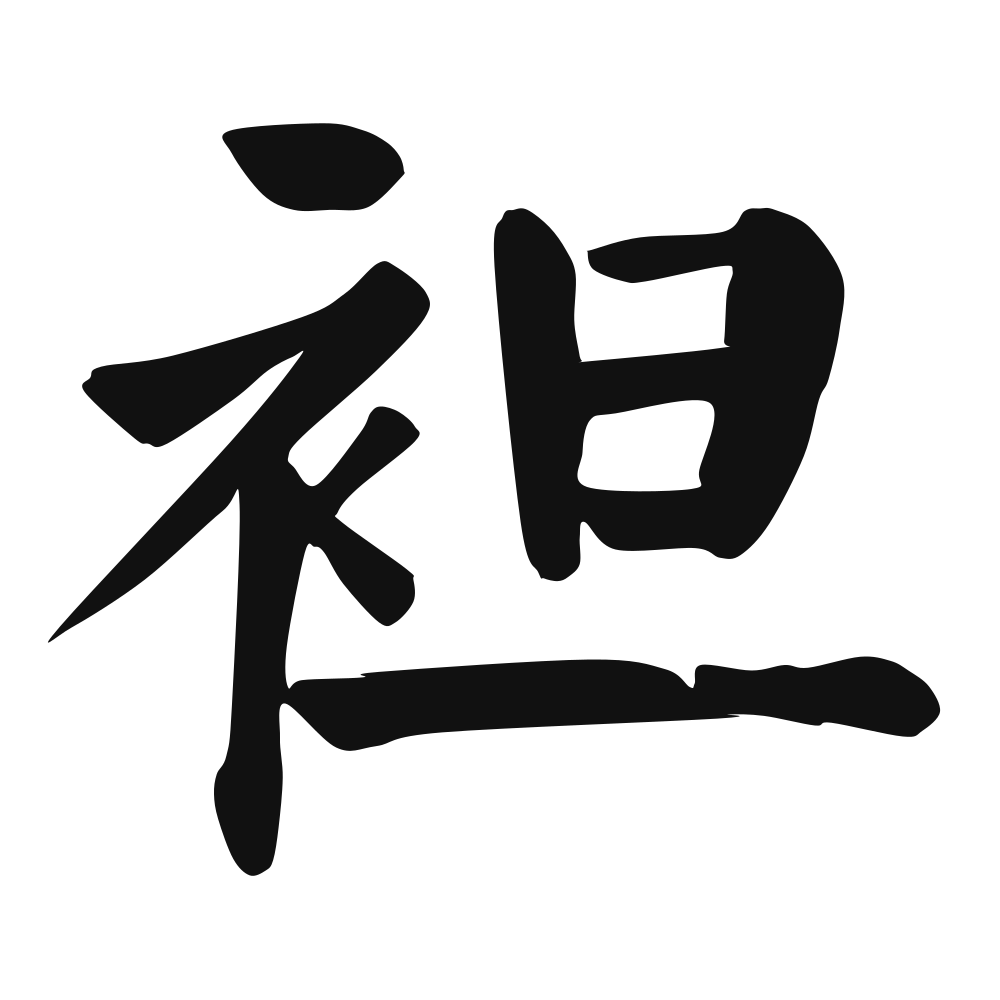
The Calligrapher — Yán Zhēnqīng 颜真卿
Tang master of robust regular script; co-creator of the enduring 'Yan style'.
Tang calligrapher (709–784), master of regular script/running script — the Tang moral paragon whose upright, muscular regular script became the model of Chinese integrity in writing. Tang dynasty
Cultural Story
The Records of the Grand Historian tell how, when the Lü clan fell, the general Zhou Bo asked the army to bare an arm, zuo you tan, right for the Liu house, left for the Lü, and the naked limb decided the coup. The tan was a bodily vote, a sleeve thrown back to show allegiance. The gesture settled an empire in an afternoon.
Common words & phrases
- 袒露 expose · bare · reveal
- 袒护 shield · take sides
- 袒胸 bare one's chest
Read the story behind the character
On the beach a sunbather tanlu, bares, one shoulder, and a mother tanxiong to feed her child. A friend tanhu, takes the side of, a sibling in a quarrel, refusing to be neutral. The character names the exposed arm and the exposed partiality, the moment one shows what one usually keeps covered.
Why this character belongs on skin
To bare the shoulder — that is the oldest sense, and history made it a gesture of radical honesty. Lian Po, the great general, stripped to the waist and carried thorns on his back to beg forgiveness of the minister he had wronged; the bared skin meant I hide nothing, judge me truly. The word also means simply to expose, to take the armor off. There is vulnerability here, yes, but also a kind of power that only the brave manage: most people die with their armor on. Sensuality itself begins in this character — the shoulder revealed at a collar's edge, the moment concealment ends. To tattoo it is to make an oath of openness, a permanent unbuttoning. You have nothing left that you need to cover.
Own this character
Purchase delivers the original SVG of this glyph, brushed by Yán Zhēnqīng 颜真卿, ready to place on skin, paper, or screen.