
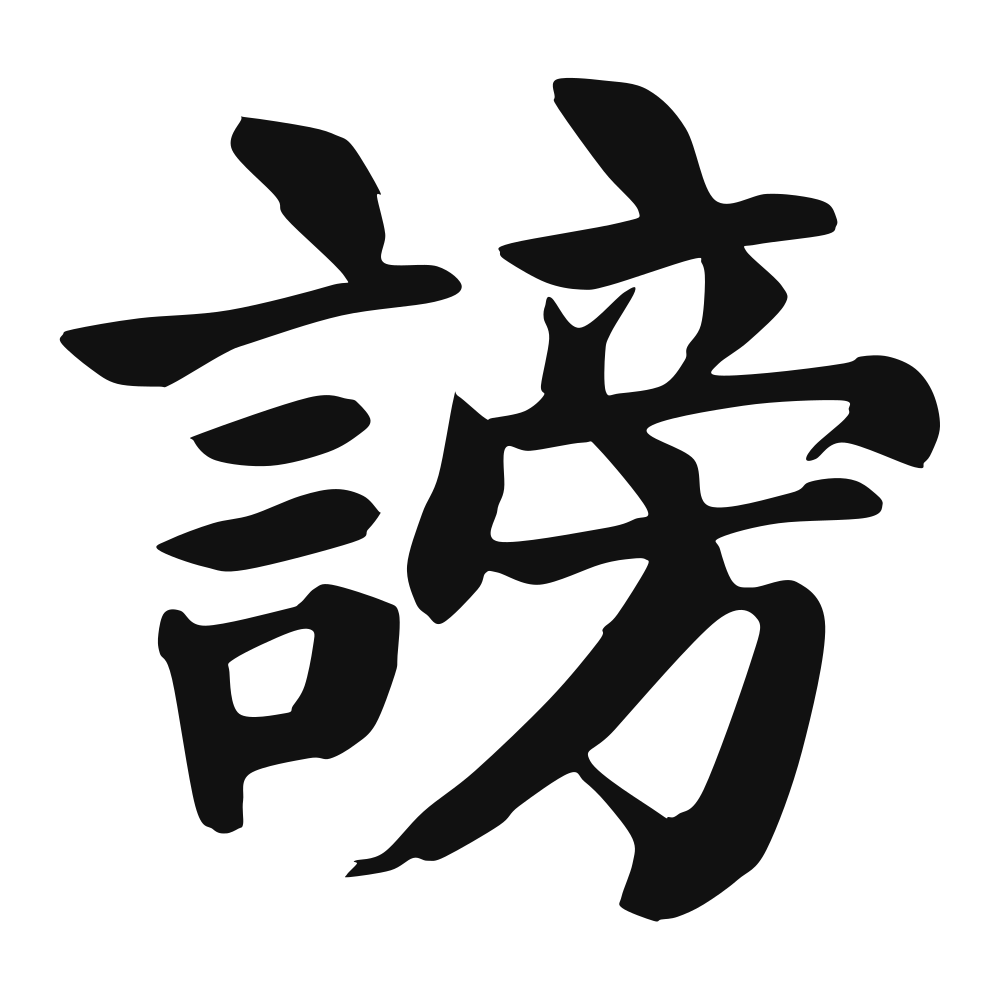
谤
to slander; to defame; to speak ill of
Closest English meanings
slander·defame
The Calligrapher — Yán Zhēnqīng 颜真卿
Tang master of robust regular script; co-creator of the enduring 'Yan style'.
Tang calligrapher (709–784), master of regular script/running script — the Tang moral paragon whose upright, muscular regular script became the model of Chinese integrity in writing. Tang dynasty
Cultural Story
Master Zou Ji warned his prince that only by letting subjects bang ji in the market and the court could a ruler hear his own faults, and so he urged the open scold. The character bang is that public censure, the voice raised against power in the square. It hardened later into slander in the law court, but Zou Ji prized it as the mirror a king too seldom meets.
Common words & phrases
- 诽谤 slander · libel · defame
- 毁谤 slander · calumniate
- 谤议 censure · criticize
Read the story behind the character
A forum fills with bang yi after a official's blunder, and a rival sues for bang in the district court. The editor weighs whether the post is criticism or fei bang, and a citizen bang in the comment thread against the fee. The character bang still rides the line between censure and defamation.
Why this character belongs on skin
Words radical beside 旁, the side—谤 is talk delivered from the flank, not to your face. Slander is old as courts and new as feeds; the Book of Songs called blame from the people a mirror rulers were wise to read, and Confucius endured it unhurried, certain that character outruns commentary. There is a warrior's calm in that: let the arrows fly; your posture is the shield. But there is also a mirror held to the self—do you, too, speak sideways? To wear 谤 is to claim the scars as provenance. Every good name has survived a fire to be readable. Ink it where only you need see it, and walk forward with the serene thick skin of the tested.
Own this character
Purchase delivers the original SVG of this glyph, brushed by Yán Zhēnqīng 颜真卿, ready to place on skin, paper, or screen.