
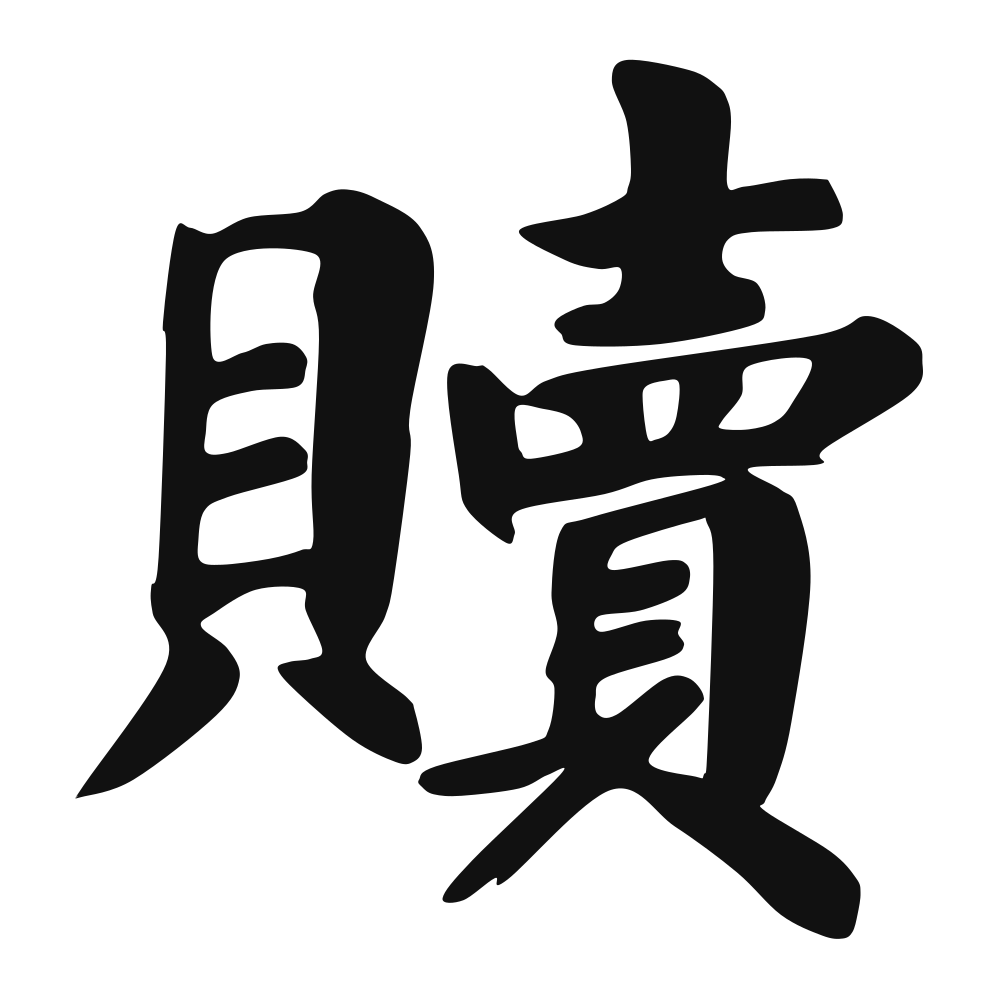
The Calligrapher — Yán Zhēnqīng 颜真卿
Tang master of robust regular script; co-creator of the enduring 'Yan style'.
Tang calligrapher (709–784), master of regular script/running script — the Tang moral paragon whose upright, muscular regular script became the model of Chinese integrity in writing. Tang dynasty
Cultural Story
When the girl Tiying pleaded with the Han emperor to 赎, redeem, her father from mutilation by offering herself as a slave, the ruler was so moved he repealed the cruel punishments. 赎身 and 赎罪 entered the language from that petition. To 赎 is to buy back what was lost, a life or a fault.
Common words & phrases
- 赎回 redeem · buy back
- 赎罪 atone for sin · expiate
- 赎金 ransom
- 赎身 redeem oneself
Read the story behind the character
At a pawnshop, a man 赎回, buys back, his grandmother's watch before the deadline, while a kidnap movie turns on a 赎金, a ransom, paid in a parking garage. A believer speaks of 赎罪, atoning for a wrong. The character that moved an emperor now settles a ticket and a conscience. The pawnshop counter and the ransom note are the two faces of the same word.
Why this character belongs on skin
Beneath the character runs 贝, the ancient shell of currency, and above it a hand reaching down. 赎 is to redeem—to buy back what was lost, ransomed, or surrendered. It is the word at the beating heart of both Buddhist merit and Christian grace: the debt acknowledged, the price paid, the prisoner walking free. No one redeems what they never valued. The very existence of 赎 admits you strayed and insists you can return—bigger, wiser, cleaner. There is a fierceness in that, a refusal to let a mistake be the last word. Redemption is not given to the innocent; it is won by the ones who come back for themselves, hungering to make it right. Wear 赎 as the receipt of your own rescue.
Own this character
Purchase delivers the original SVG of this glyph, brushed by Yán Zhēnqīng 颜真卿, ready to place on skin, paper, or screen.