
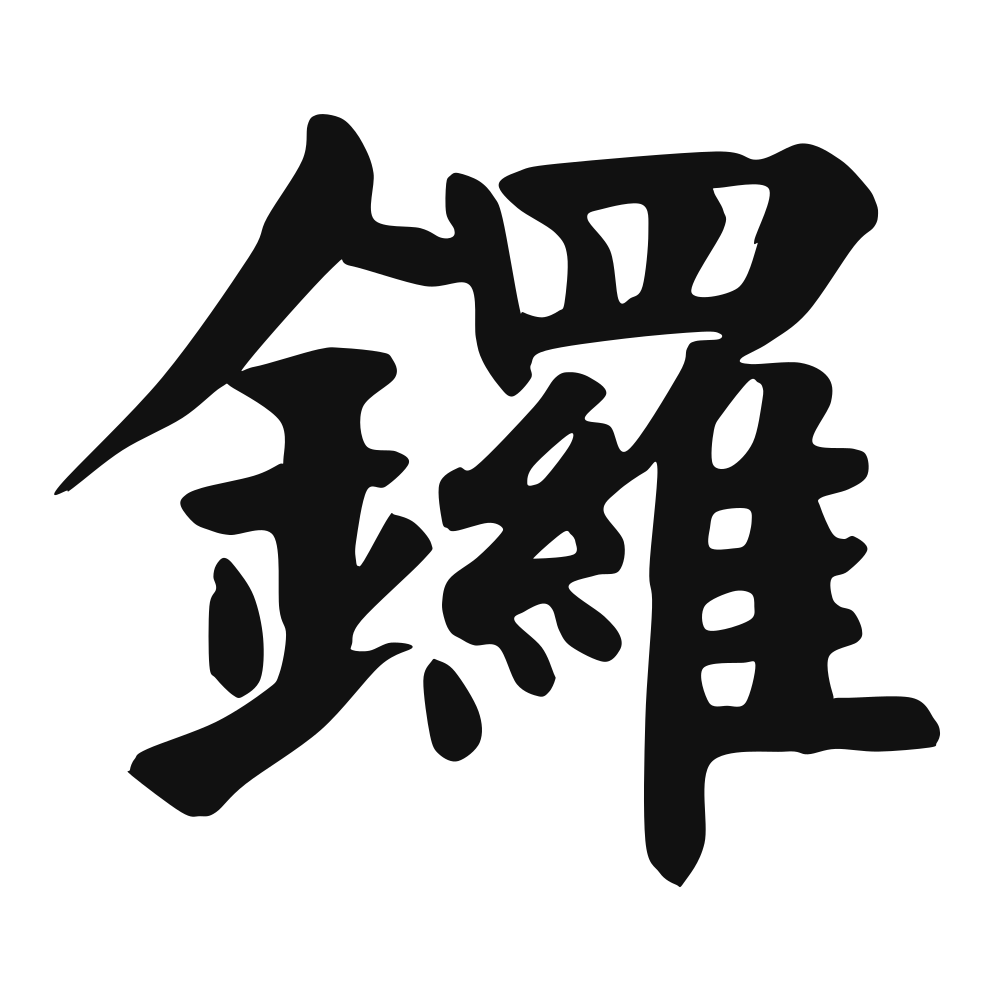
The Calligrapher — Yán Zhēnqīng 颜真卿
Tang master of robust regular script; co-creator of the enduring 'Yan style'.
Tang calligrapher (709–784), master of regular script/running script — the Tang moral paragon whose upright, muscular regular script became the model of Chinese integrity in writing. Tang dynasty
Cultural Story
锣 joins metal with 罗 and names the flat gong struck with a padded stick. Born of the foundry, it is the voice of alarm and celebration alike, the single booming note that rallies a crowd, opens a lion dance, or warns a village of coming danger.
Common words & phrases
- 敲锣 beat a gong
- 锣鼓 gongs and drums
Read the story behind the character
We 敲锣 to announce a show or clear a street, and 锣鼓 thunder at festivals and operas. The 锣's single booming note still rallies a crowd, opens a lion dance, or warns a village of coming danger.
Why this character belongs on skin
Some sounds are not heard but survived. 锣 is metal plus a phonetic of wicker trays—the flat bronze gong of operas and temple processions and village nights, the instrument that begins everything. Strike it and the air itself shudders; the note does not end so much as wander off into the dark, still faintly ringing when you've stopped listening. A gong is an announcement: the play is starting, the bride is coming, the gods are passing through. In an opera the percussion doesn't accompany the drama—it is the drama, the crash that makes your pulse agree. There is something magnificent about an instrument with no notes, only presence. We all need one moment in our lives marked like that—the door, the yes, the first day. This character is that strike, fixed in ink: the sound that says, over the noise of everything, now it begins.
Own this character
Purchase delivers the original SVG of this glyph, brushed by Yán Zhēnqīng 颜真卿, ready to place on skin, paper, or screen.