
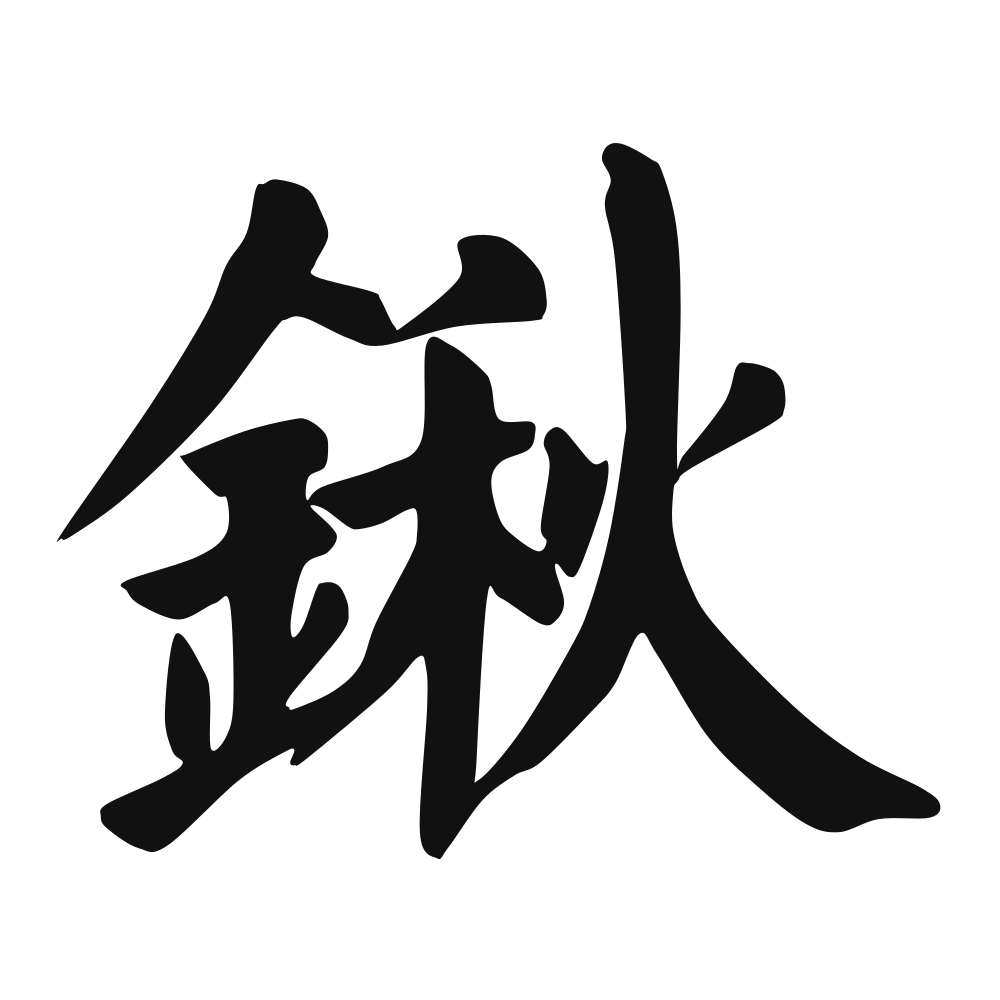
The Calligrapher — Yán Zhēnqīng 颜真卿
Tang master of robust regular script; co-creator of the enduring 'Yan style'.
Tang calligrapher (709–784), master of regular script/running script — the Tang moral paragon whose upright, muscular regular script became the model of Chinese integrity in writing. Tang dynasty
Cultural Story
锹 joins metal with 秋 and names the spade or shovel for digging, the deeper cousin of the scoop. It is the tool that opens the earth: a 铁锹 digs the trench and the grave, and first takes the measure of the ground beneath our feet.
Common words & phrases
- 铁锹 shovel · spade
- 木锹 wooden shovel
Read the story behind the character
A 铁锹 digs the trench and the grave; a 木锹 moves grain or snow. On farms and battlefields alike, the 锹 is the first instrument of making or unmaking the ground beneath our feet.
Why this character belongs on skin
There is an honesty in the first cut of earth. The spade does not flatter the ground; it opens it. In old China, this character carried metal in its hand — the metal radical married to a blade that turns soil, digs graves, plants orchards. It is the tool of the patient worker who knows that everything worth having lies beneath the surface, waiting for someone strong enough to break ground. The Daoists taught that the sage is like the farmer: he moves with the grain of things, not against them, and he is never ashamed of labor. A tattoo of 锹 is for the one who digs — into earth, into work, into themselves — and trusts that what they uncover will be worth the turning. Ink it where the arm bends, the way a tool fits a hand, and carry the promise that you are unafraid of what lies buried in you.
Own this character
Purchase delivers the original SVG of this glyph, brushed by Yán Zhēnqīng 颜真卿, ready to place on skin, paper, or screen.