
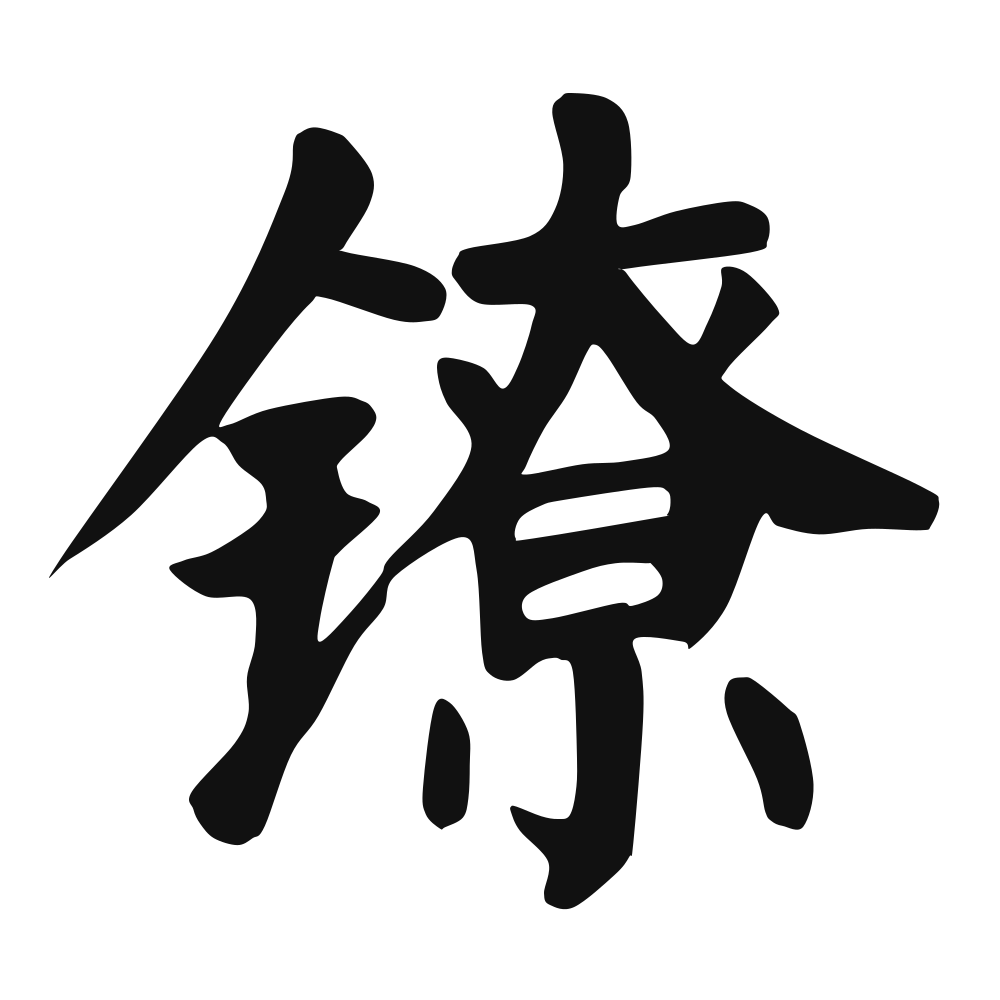
镣
fetters; leg-irons; shackles
Closest English meanings
fetters·shackles
The Calligrapher — Yán Zhēnqīng 颜真卿
Tang master of robust regular script; co-creator of the enduring 'Yan style'.
Tang calligrapher (709–784), master of regular script/running script — the Tang moral paragon whose upright, muscular regular script became the model of Chinese integrity in writing. Tang dynasty
Cultural Story
《説文解字》 gives 镣 as 白金也, “white metal,” that is, pure silver, a sense preserved in old accounts of tribute and coinage. Over centuries the word shifted toward iron bindings, since both were metal and both restrained. This later meaning, heavy shackles, overtook the silver sense in everyday speech, though the original gloss still appears in classical commentaries and early dictionaries.
Common words & phrases
- 脚镣 leg irons · fetters
- 镣铐 shackles · fetters and handcuffs
Read the story behind the character
Now 镣 means shackles above all: 脚镣 are the leg irons clamped on prisoners in court and custody, and 镣铐 the fuller set of fetters and handcuffs that bind a convict in transit. Police and prison footage make the clinking sound of 镣 familiar to viewers. The old silver meaning survives only in scholarly notes, while the image of restraint defines the character today.
Own this character
Purchase delivers the original SVG of this glyph, brushed by Yán Zhēnqīng 颜真卿, ready to place on skin, paper, or screen.