
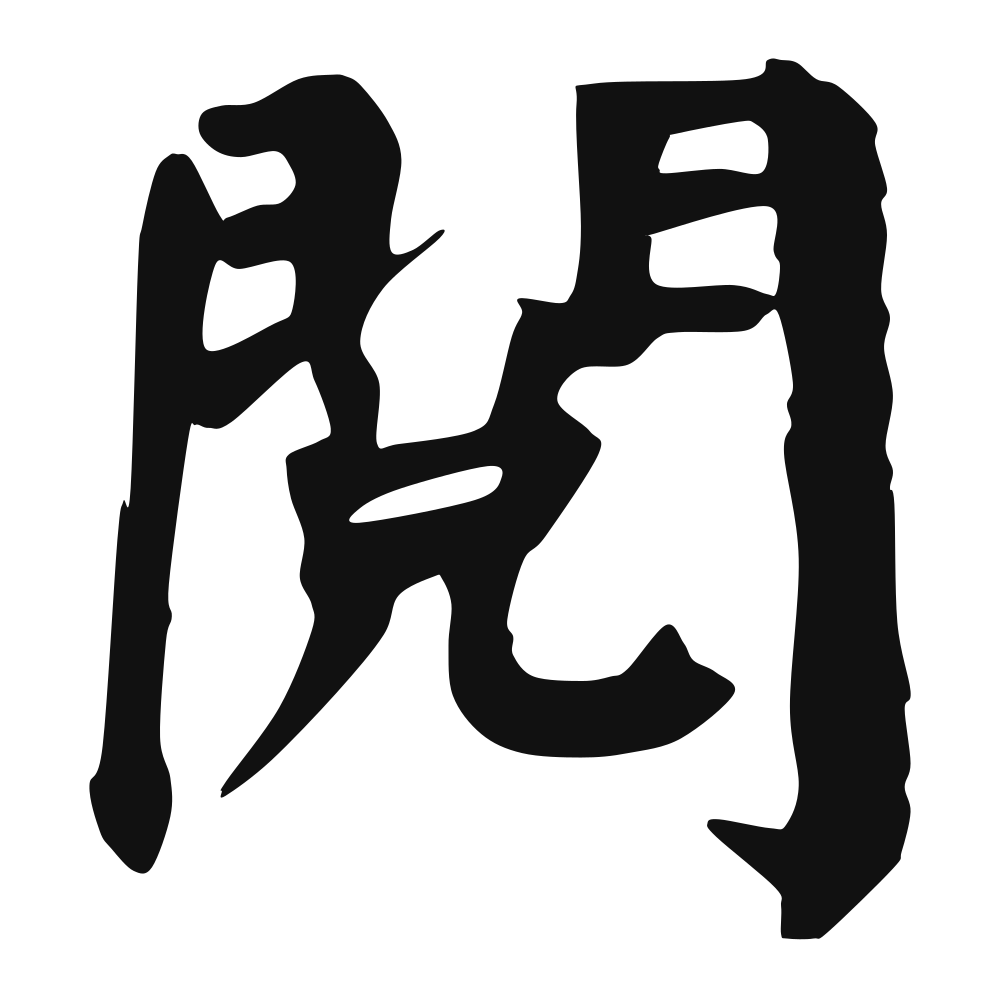
阅
to inspect; to review; to read; to peruse; to go through; to experience
Closest English meanings
read·review·experience
The Calligrapher — Yán Zhēnqīng 颜真卿
Tang master of robust regular script; co-creator of the enduring 'Yan style'.
Tang calligrapher (709–784), master of regular script/running script — the Tang moral paragon whose upright, muscular regular script became the model of Chinese integrity in writing. Tang dynasty
Etymology & Meaning · 字义溯源
### Soundyuè — yuè (4th tone). Free-standing morpheme ### Original meaningYuè (4th tone). The Shuowen Jiezi defines it as 「具數於門中也。从門,說省聲」 — 'to set out and count the numbers within the gate', with a second gloss 「一曰察也。出門者,察而數之也」 — 'to examine: those who go out through the gate are inspected and counted'. Duan Yucai spells out the development: 周禮大閱 is 簡軍實, a review of troops and equipment; from that comes 閱歷, experience; and from that 明其等曰閥,積其功曰閱 — rank displayed is 閥, merit accumulated is 閱. The classical citations are plentiful: 《周禮·夏官·大司馬》「中冬教大閱」; 《春秋·桓六年》「秋八月壬午,大閱」; 《左傳·襄九年》「商人閱其禍敗之釁」 with the note 閱,猶數也; 《書·呂刑》「閱實其罪」 — examine and verify the crime; 《漢書·文帝紀》「閱天下之義理多矣」 where 閱 means 更歷, to have passed through; and the Daodejing's 「以閱眾甫」 — 'by which I review the many beginnings'. In 《詩·邶風》「我躬不閱」 the gloss is 閱,容也 — 'my own person is not received'. Kangxi 15 strokes. The 五行 readings genuinely conflict: Earth (土) in one school, Metal (金) in another, Wood (木) in a third — verify before you print any of them. ### The structure (形聲 · 从門,說省聲 — the gate (門) where things are counted, with 說 abbreviated for the sound)①門méngatethe gate the counting happens at②兌duìto open / exchangethe abbreviated phonetic (說省聲)③數shǔto count具數 — to set out and count, the root act④歷lìto pass through閱歷 — the extension: experience, what one has been through ### In use todayItemReading / meaningNoteReadingyuè (4th tone)single syllableCore senseto read / to review / to have passed through阅读 · 阅历 · 阅兵 · 查阅Grammartransitive verb; also noun in 閱歷阅卷 to grade papers; 已阅三月 three months have passedTattoo fityes-standalone — clean, literate, uncontroversialreads as reading and experience, not as a demand ### Closest words in English — and what each misses - Wisdom — 智 holds wisdom; 閱 is the act of reading and reviewing, not its result - Study / Learn — 學 is study; 閱 is looking through what is already there - Inspect (officially) — 檢 / 察 hold inspection; that is only the Shuowen's second gloss of 閱 - Experience (as adventure) — 閱歷 is experience accumulated and counted, closer to a record than to thrillsAn honest note on grammar. Free morpheme — 阅读 to read, 阅历 experience, 阅兵 to review troops, 查阅 to consult; as a verb it takes an object (阅卷 to grade papers)Where a Western reader can stand: 阅 (yuè) means 'to read' and, underneath that, 'to review and count' — the Shuowen's image is of things being counted as they pass through a gate. That is why 閱歷 means experience: what you have been through and kept. It is a clean, literate, uncontroversial character with real classical weight (the Rites' winter
Cultural Story
閱 sets 兑 within 門 and means to pass through a gate and inspect, hence to review, read, and experience. Ancient rulers 阅兵, reviewed their troops at the gate, and the character kept the sense of examining something that comes before one. To 阅 a text is to let it pass through the mind's gate and weigh it, a quiet act of judgment.
Where a Western reader can stand: 阅 (yuè) means 'to read' and, beneath that, 'to review and count' — things tallied as they pass a gate, which is why 閱歷 means experience. Yan Zhenqing's upright, public hand makes it attentive order. Read it without cliché: it is clean and literate, not 'wisdom' (that is 智), and its element is genuinely disputed.
Common words & phrases
- 阅读 read
- 阅兵 military review
- 阅历 experience
- 阅览 read · browse
- 查阅 consult · look up
Read the story behind the character
We 阅读 a novel on the train, 阅览 a magazine in a library, and 查阅 a manual to fix what broke. A general still 阅兵, reviewing ranks on a holiday, and a life's 阅历 is the sum of what one has seen and endured. 阅 gathers all these into one image, the gate through which things are admitted, weighed, and made one's own.
Why this character belongs on skin
Every face you have weathered is a page you did not know you were writing. The old word for reading sets a gate before the sign for exchange, as if experience were a threshold you pass through and, in passing, come to understand. Chinese speaks of a life's richness not in years but in the road it has traveled — the things seen, survived, and finally made sense of. The unread man has eyes; the read man has witness. Buddhism goes further: the sutras insist that wisdom is not collected but lived, ground smooth by contact, the way a riverbed stone gets its shine. Nothing you have survived is wasted on you; it is all marginalia. Wear it where the years have left their annotations, a quiet honor of having been through the gate. Let the ink be the book your life became — proof that you did not merely look, but read, and what you read, you became.
Own this character
Purchase delivers the original SVG of this glyph, brushed by Yán Zhēnqīng 颜真卿, ready to place on skin, paper, or screen.