
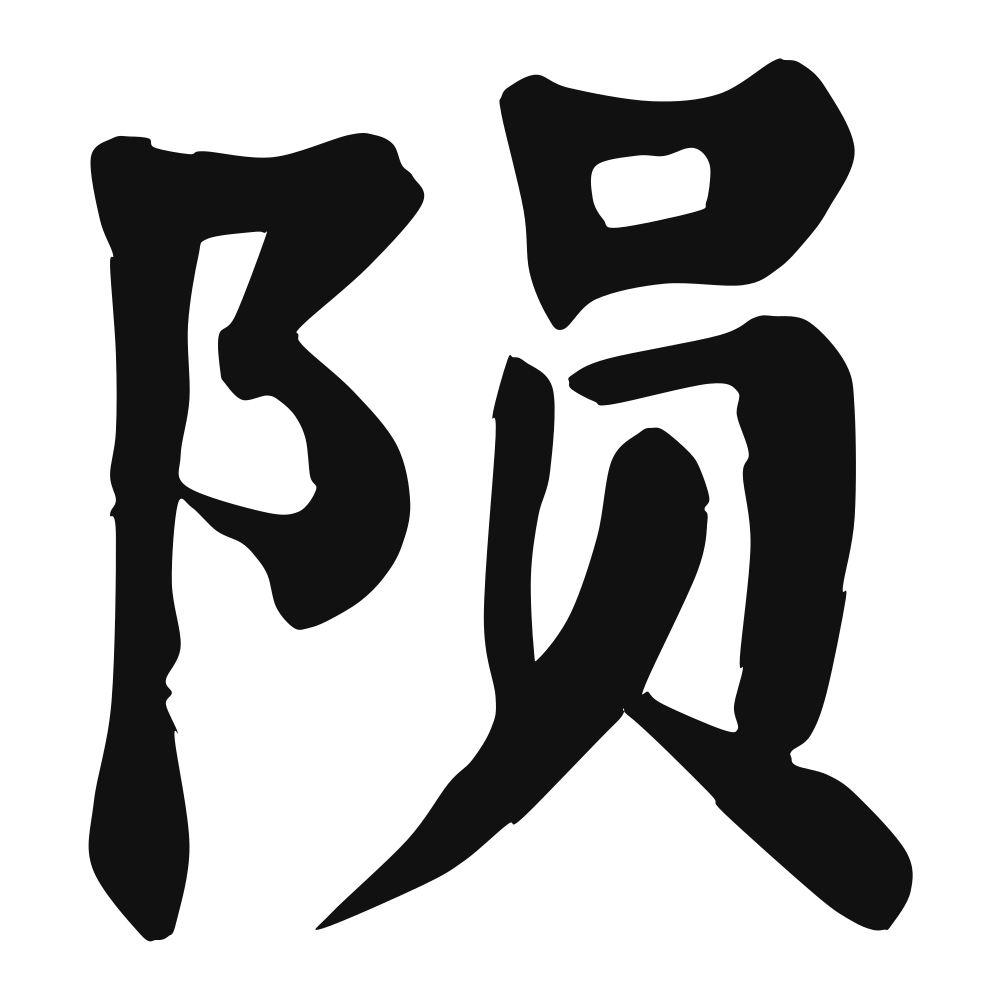
陨
(bound form) to fall from the sky
Closest English meanings
fall·meteor
The Calligrapher — Yán Zhēnqīng 颜真卿
Tang master of robust regular script; co-creator of the enduring 'Yan style'.
Tang calligrapher (709–784), master of regular script/running script — the Tang moral paragon whose upright, muscular regular script became the model of Chinese integrity in writing. Tang dynasty
Cultural Story
陨 pairs the hill radical 阝 with 员. The Shuowen defines it as to fall, especially stars or stones dropping from the sky. Ancient records noted 陨石, stones fallen from heaven, read as omens. The Shijing speaks of stars 陨 as falling, a celestial descent.
Common words & phrases
- 陨石 meteorite
- 陨落 fall
- 陨灭 perish
Read the story behind the character
A 陨石 (meteorite) draws crowds to museums, and a celebritys career may 陨落 (fall) overnight. The word 陨灭 means to perish entirely. News of a fallen star or a meteor shower uses 陨, linking sky-stones to sudden loss.
Why this character belongs on skin
陨 is to fall from the height—a star loosed from the vault, a meteor burning across the dark and gone. The character bears the stone-radical and the sense of something lofty brought low, a hero or a heaven cast down. The Greeks wept for Icarus; the Hebrews sang of the morning star hurled from the sky. To carry 陨 is to honor the splendor of the fall, the beauty of the thing that burned too bright to last. It is the tattoo of one who has risen and fallen and risen again, who knows glory is fleeting and still worth the plunge. There is a melancholy freedom in accepting the descent, in loving the arc more than the landing. Let this character rest where it can catch the light, a fallen star kept on the body. The ink is your brief and brilliant passage, marked before the dark takes it back.
Own this character
Purchase delivers the original SVG of this glyph, brushed by Yán Zhēnqīng 颜真卿, ready to place on skin, paper, or screen.