
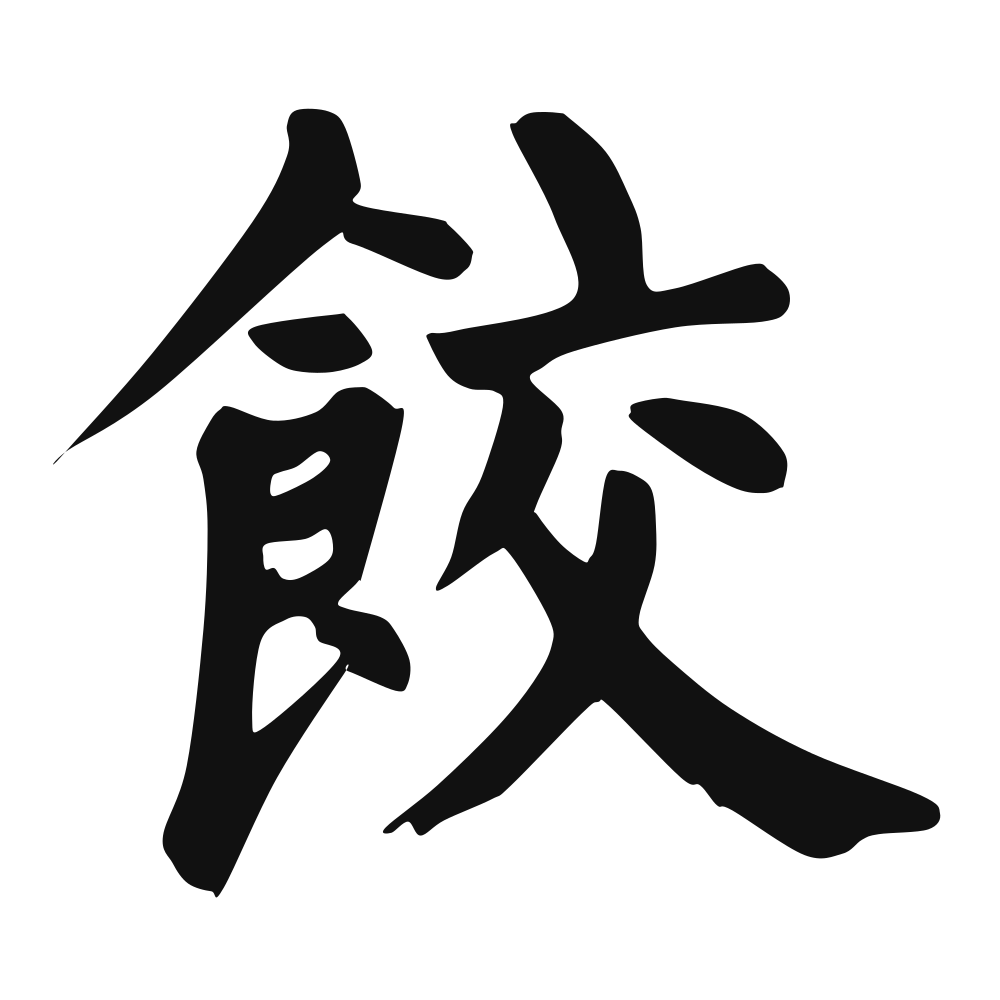
饺
dumplings with meat filling
Closest English meanings
dumpling
The Calligrapher — Yán Zhēnqīng 颜真卿
Tang master of robust regular script; co-creator of the enduring 'Yan style'.
Tang calligrapher (709–784), master of regular script/running script — the Tang moral paragon whose upright, muscular regular script became the model of Chinese integrity in writing. Tang dynasty
Cultural Story
饺 (jiǎo) pairs 食 with the phonetic 交, a later character for the stuffed dumpling once written 角子. By the Ming and Qing it named the crescent parcel eaten at the New Year, a shape like ancient coin.
Common words & phrases
- 饺子 dumpling
- 水饺 boiled dumpling
- 蒸饺 steamed dumpling
- 煎饺 fried dumpling
Read the story behind the character
饺 is comfort food. Families fold 饺子 (dumplings), boil 水饺 (boiled dumplings), steam 蒸饺 (steamed dumplings), and fry 煎饺 (fried dumplings). At Spring Festival a plate of 饺子 seals the reunion table.
Why this character belongs on skin
Steam lifts from the bamboo tray and for a moment the whole cold year is forgiven. This is food folded by hand, a crescent of dough holding warmth against the winter—eaten at the turn of the year, when families gather and the old hide coins inside for the lucky child. There is a domestic sacrament here, a love expressed not in words but in the press of fingertips sealing dough. The Daoists might call it effortless action made edible: effort so gentle it looks like nothing at all. To carry this character is to honor the small hearth, the table set for more than yourself, the quiet feast that outlasts every empire. It is an unlikely tattoo, and therefore the truest—a mark of the one who finds the sacred in the ordinary mouthful. Let it rest near your heart, a charm against loneliness, a promise that somewhere a pot is always on, and you are welcome to the seat that was saved.
Own this character
Purchase delivers the original SVG of this glyph, brushed by Yán Zhēnqīng 颜真卿, ready to place on skin, paper, or screen.