
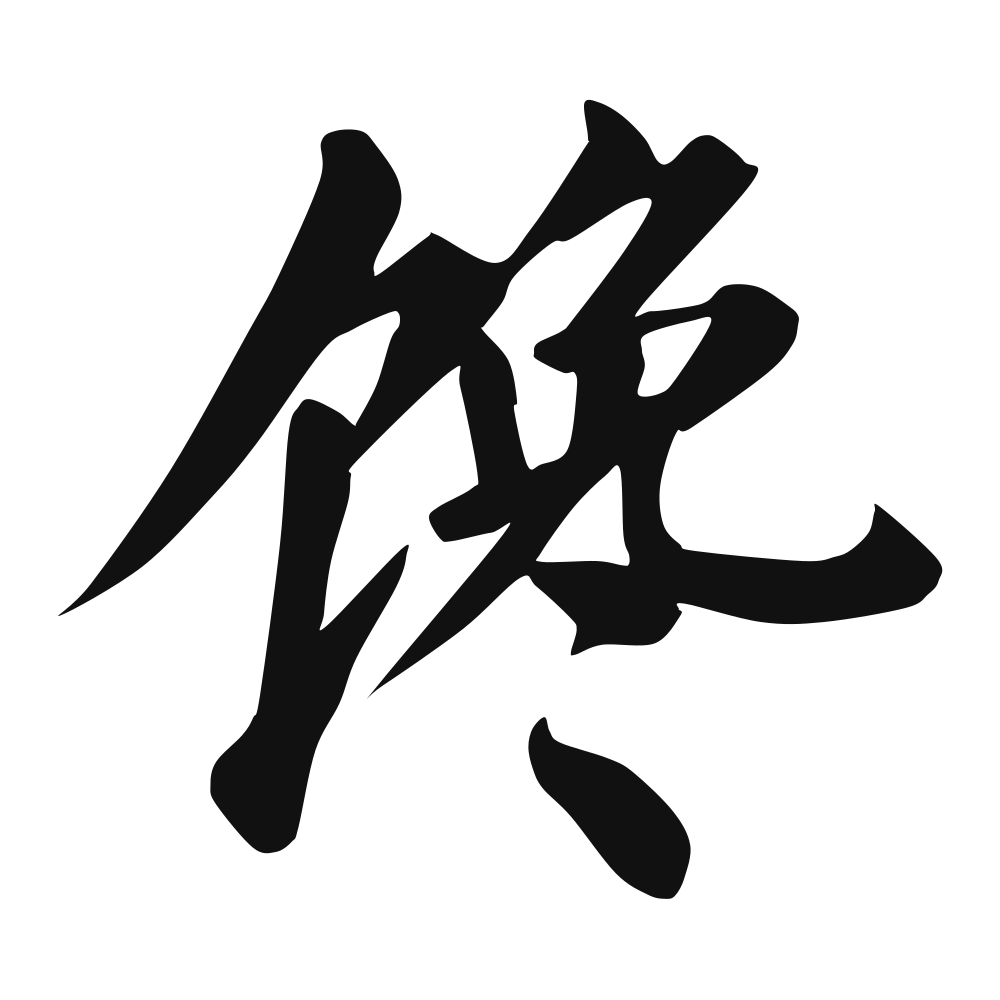
馋
gluttonous; greedy; to have a craving
Closest English meanings
greedy·covetous·gluttonous
The Calligrapher — Yán Zhēnqīng 颜真卿
Tang master of robust regular script; co-creator of the enduring 'Yan style'.
Tang calligrapher (709–784), master of regular script/running script — the Tang moral paragon whose upright, muscular regular script became the model of Chinese integrity in writing. Tang dynasty
Cultural Story
馋 (chán) combines 食 with the phonetic 毚, a later character for greed of the palate. It captures the longing look of one who wants to eat what others enjoy, a very human, hungry desire.
Common words & phrases
- 馋嘴 gluttonous mouth
- 馋猫 greedy cat
- 眼馋 covet · envious
- 馋涎 drool from greed
- 嘴馋 fond of food
Read the story behind the character
馋 is greedy appetite. A 馋嘴 (gluttonous mouth) wants every snack, a 馋猫 (greedy cat) steals food, we 眼馋 (covet) a neighbor’s dish, wipe 馋涎 (drool), and call someone 嘴馋 (fond of food).
Why this character belongs on skin
The mouth waters before the mind has finished deciding. 馋 means gluttonous craving — the eating radical over two mouths: appetite doubled, desire talking to itself. This is not simple hunger; it is the specific ache for something particular — midnight noodles in a paper box, the peach in July, a kiss you've been rehearsing in your head. Chinese cooks treat 馋 as a compliment, a national art form: the true gourmet is 馋人, one whose wanting is refined enough to deserve the world's flavors. And the character knows its kinship with the other hungers we pretend we don't have — for skin, for danger, for one more chapter at 2 a.m. To wear 馋 is to admit you're alive and hungry, that appetite is the engine and shame is the only thing that ruins a meal. Ink it somewhere delicious — the hip, the inner lip of the arm. Want loudly. The table is longer than you think.
Own this character
Purchase delivers the original SVG of this glyph, brushed by Yán Zhēnqīng 颜真卿, ready to place on skin, paper, or screen.