
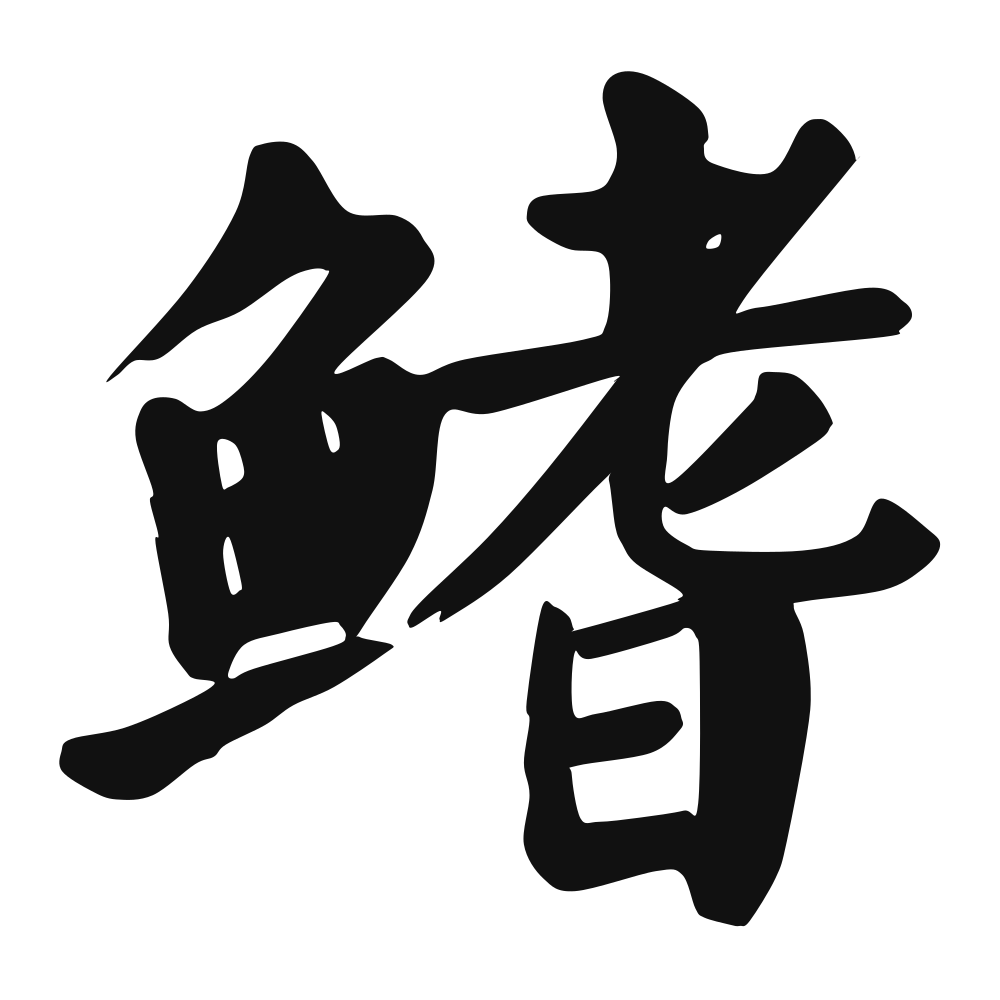
The Calligrapher — Yán Zhēnqīng 颜真卿
Tang master of robust regular script; co-creator of the enduring 'Yan style'.
Tang calligrapher (709–784), master of regular script/running script — the Tang moral paragon whose upright, muscular regular script became the model of Chinese integrity in writing. Tang dynasty
Cultural Story
鳍 pairs 鱼 with 耆 and means the fin—the thin, fan-like limb a fish uses to steer and balance. It is a straightforward body-part word built on the fish radical.
Common words & phrases
- 鱼鳍 fish fin
- 背鳍 dorsal fin
Read the story behind the character
鳍 is the fin: 鱼鳍 a fish's fin, 背鳍 the dorsal fin of a shark on a nature channel. Aquarists and anglers use it to tell species apart. The character names the part that turns a swimming body into a controlled, living arrow.
Why this character belongs on skin
A fin is the water's wing. 鳍 carries the fish radical and names the translucent blade a carp raises as it turns in dark water—thin as porcelain, strong as an oar. The Chinese watched fish for centuries and read them as emblems of effortless freedom: Zhuangzi's happiest creatures swim on and never ask what water is. A fin is also memory—sharks carry the echo of it in our own spines, in the small flippers we were before we were hands. There is something erotic in the image without trying: the glide, the flash of silver, the visible body moving through what hides it. To be finned is to belong to your element completely, to steer without struggle, to let the current do half the loving. Ink this along the shoulder blade, that vestigial fin where hands once learned to fly, and let it make a quiet claim on you: find your water, and stop apologizing for the way you move through it.
Own this character
Purchase delivers the original SVG of this glyph, brushed by Yán Zhēnqīng 颜真卿, ready to place on skin, paper, or screen.