
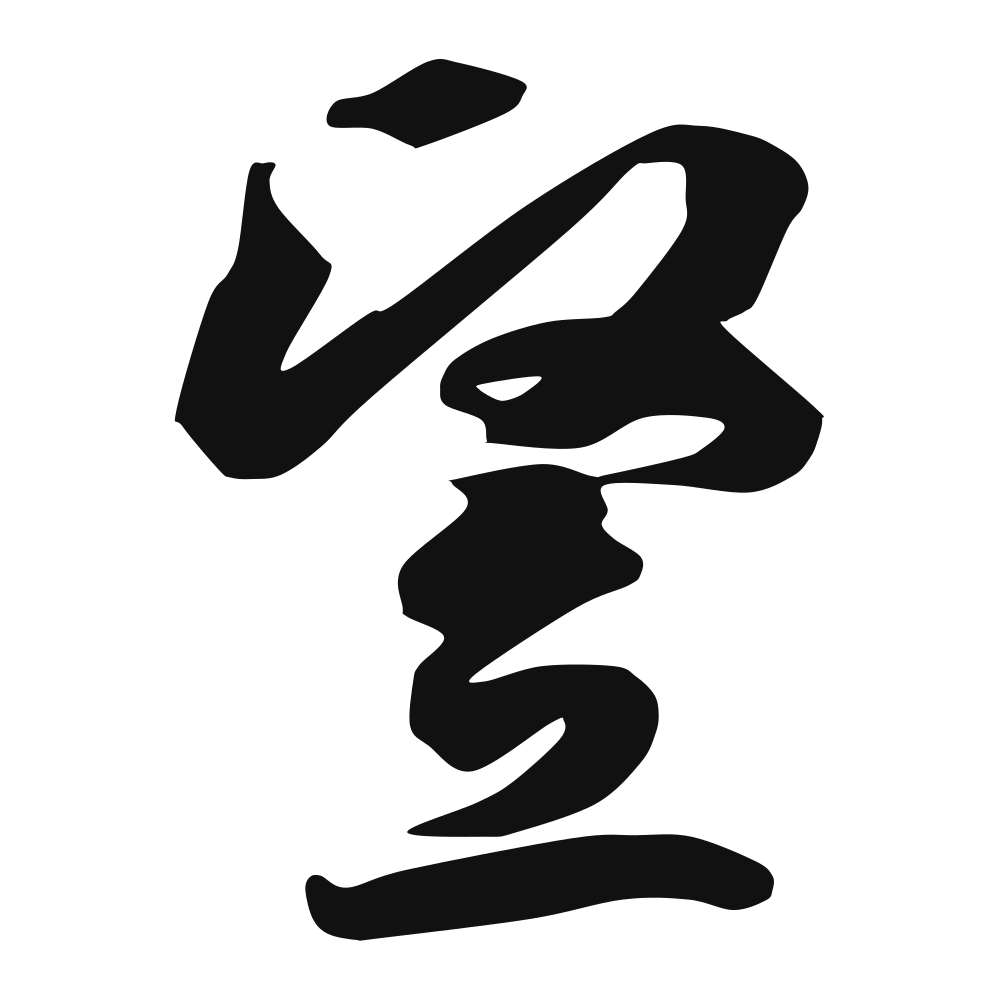
竖
to erect; vertical; vertical stroke (in Chinese characters)
Closest English meanings
vertical·erect·upright
The Calligrapher — Yǔ Jiānwú 庾肩吾
Liang scholar-critic who authored Shupin, the first systematic graded ranking of calligraphers.
南朝梁 calligrapher (), master of regular script — known for 《书品》. Liang dynasty (Southern Dynasties)
Cultural Story
In early texts 豎 meant a lowly household servant boy — in the Records of the Grand Historian, Fan Zeng fumes that '竖子不足与谋', 'one does not plan with that page.' In calligraphy the vertical stroke became 竖, the upright spine of every written column of text.
Common words & phrases
- 竖立 erect · stand upright
- 横竖 anyway · horizontal and vertical
- 竖起 raise · hold up
- 竖琴 harp
- 竖直 vertical · upright
Read the story behind the character
Today 竖 is mostly spatial: workers 竖立 (erect) a flagpole, kids 竖起 (raise) a thumb for the group photo, and teachers describe a 竖直 (vertical) line on the blackboard. In daily complaints 横竖 (anyway, 'horizontal or vertical') means 'either way, it happens,' while a concert hall's 竖琴 (harp) glitters onstage.
Why this character belongs on skin
Everything that matters in a sentence begins with a line drawn straight up. 竖 is the vertical stroke, the upright — the character is built from the act of standing, as if the word itself refused to lie down. In a script that flows sideways like water, the vertical is the spine that holds the whole composition together, the moment the brush says no, I will not lean. To wear 竖 is to claim the upright life: the back that stays straight under load, the principle that does not bend for comfort. There is quiet heroism in simply remaining vertical. Let this mark sit along your spine or your forearm like a plumb line dropped through your life. The world will press. The line answers by staying straight. Carry the upright stroke, and let it be the part of you that will not be moved.
Own this character
Purchase delivers the original SVG of this glyph, brushed by Yǔ Jiānwú 庾肩吾, ready to place on skin, paper, or screen.