
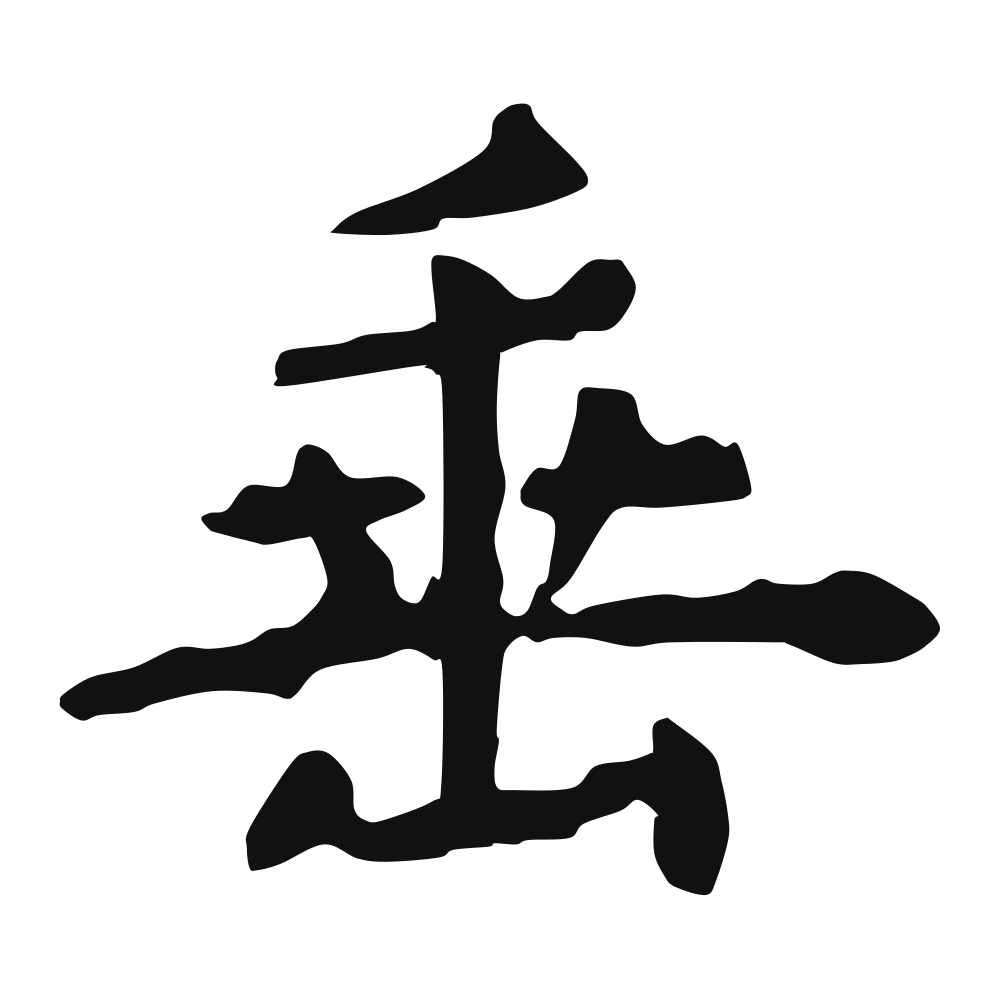
垂
to hang (down); droop; dangle; bend down; hand down; bequeath; nearly; almost; to approach
Closest English meanings
hang·droop·suspend
The Calligrapher — Yú Shìnán 虞世南
Tang court calligrapher revered for refined, restrained regular script.
Tang calligrapher (558–638), master of regular script — Tang master of quiet, inward regular script and teacher to the imperial academy. Tang dynasty
Cultural Story
:The Odes let the willow 垂 its branches over the river where the parting friend drank. The Tang frontier sent 垂死 men home from the sand. A gentleman 垂钓 by the stream as a quiet refusal of office. The character is a man and a drop — something hanging, suspended, about to fall.
Common words & phrases
- 垂直 vertical · perpendicular
- 垂下 hang down · droop
- 垂柳 weeping willow
- 垂死 dying · moribund
- 垂钓 fish · angled
Read the story behind the character
:The line must be 垂直 to the floor. The branch 垂下 into the water. The 垂柳 shades the bench. The 垂死 plant revives with water. He 垂钓 at the lake each Sunday. A sign 垂 from the awning, one corner coming loose in the wind.
Why this character belongs on skin
The willow bends its branches to the water as if mourning something it loves and cannot hold. 垂 is to hang down, to droop, the tender descending of a bough, a sleeve, a gaze. And yet the same character means to bequeath, to let something of you descend to those who come after; 永垂不朽, to be eternally transmitted, never perishing. The drooping and the enduring are one gesture: what bends low enough to touch the stream leaves a reflection that outlives the tree. To wear 垂 is to honor the gentle descent, the gift you pass down by bowing rather than towering. Let it hang on your skin like a willow branch, a small character that says you leaned toward what you loved, and in leaning you left something behind that the water will remember long after the branch has turned to quiet and ordinary dust.
Own this character
Purchase delivers the original SVG of this glyph, brushed by Yú Shìnán 虞世南, ready to place on skin, paper, or screen.