
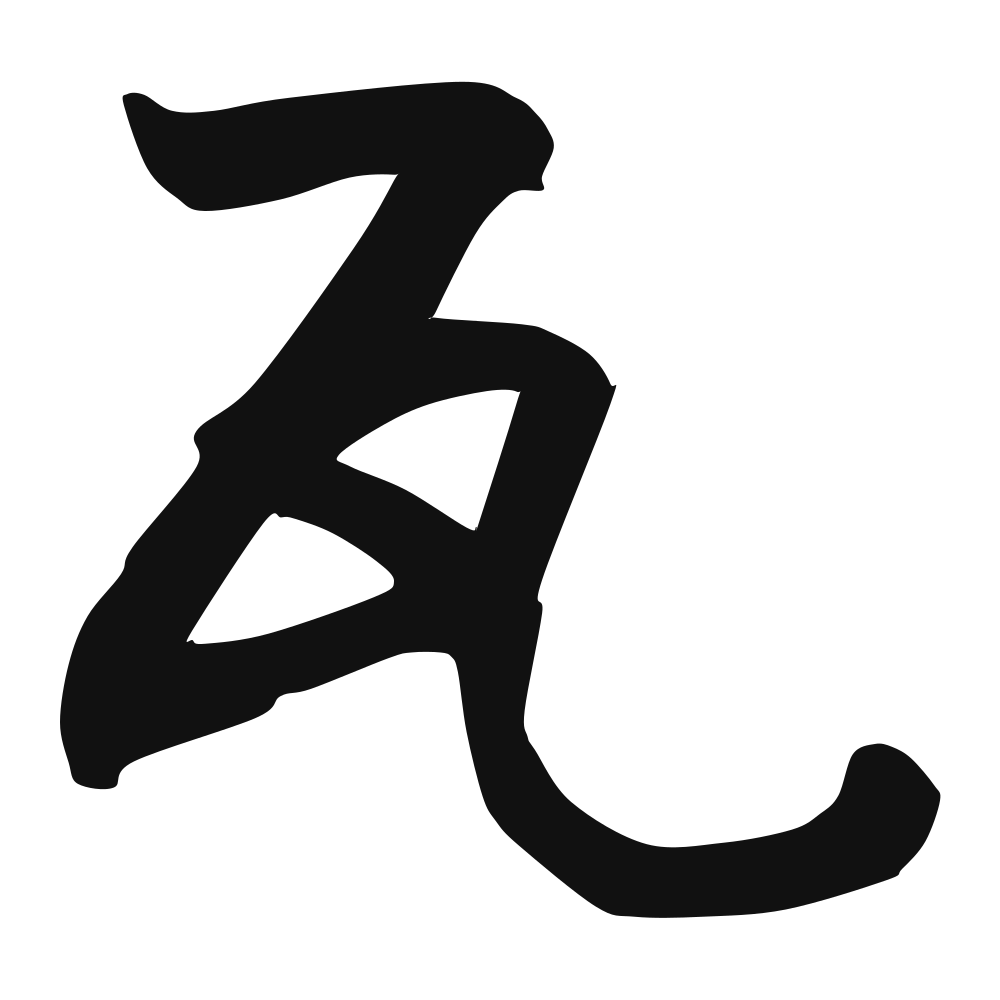
The Calligrapher — Yǔ Yì 庾翼
Jin general and calligrapher of cursive script who once rivaled Wang Xizhi.
Jin calligrapher (), master of cursive script — known for 与王羲之齐名. Jin dynasty
Cultural Story
Tile marks the moment Chinese roofs stopped leaking: fired clay tiles crowned palaces and commoners' eaves alike, and 'Qin bricks, Han tiles' remains shorthand for that age of building. The Warring States speaker who watched an enemy scatter called it 瓦解 — shattering like fired clay.
Common words & phrases
- 瓦片 tile
- 瓦房 tile-roofed house
- 砖瓦 bricks and tiles
- 千瓦 kilowatt
- 瓦解 collapse · fall apart · disintegrate
Read the story behind the character
Tiles still roof village 瓦房, tile houses, and renovation stalls sell 砖瓦 by the stack, while the physics classroom counts 千瓦, kilowatts — a word borrowed by sound. A scandal or a defense 'collapses' as 瓦解, and the humble tile has carried electricity for a century.
Why this character belongs on skin
瓦 is the tile, the fired clay that roofs a home and keeps the rain at bay. Humble, mass-made, easily broken — and yet without it there is no shelter, only sky. The ancients knew 瓦 as earthenware itself, the vessel shaped from mud and transformed by fire into something that holds water, holds grain, holds life. To carry 瓦 is to honor the ordinary made essential, the quiet craft that underlies every civilization. You need not be the monument. Be the tile. A thousand of you and the people below stay dry. Wear it as a mark of useful humility, the dignity of the thing that simply works. Let it sit where you can feel its weight and remember: the empire rests on what it cannot see. To be 瓦 is to be irreplaceable precisely because you ask for nothing.
Own this character
Purchase delivers the original SVG of this glyph, brushed by Yǔ Yì 庾翼, ready to place on skin, paper, or screen.