
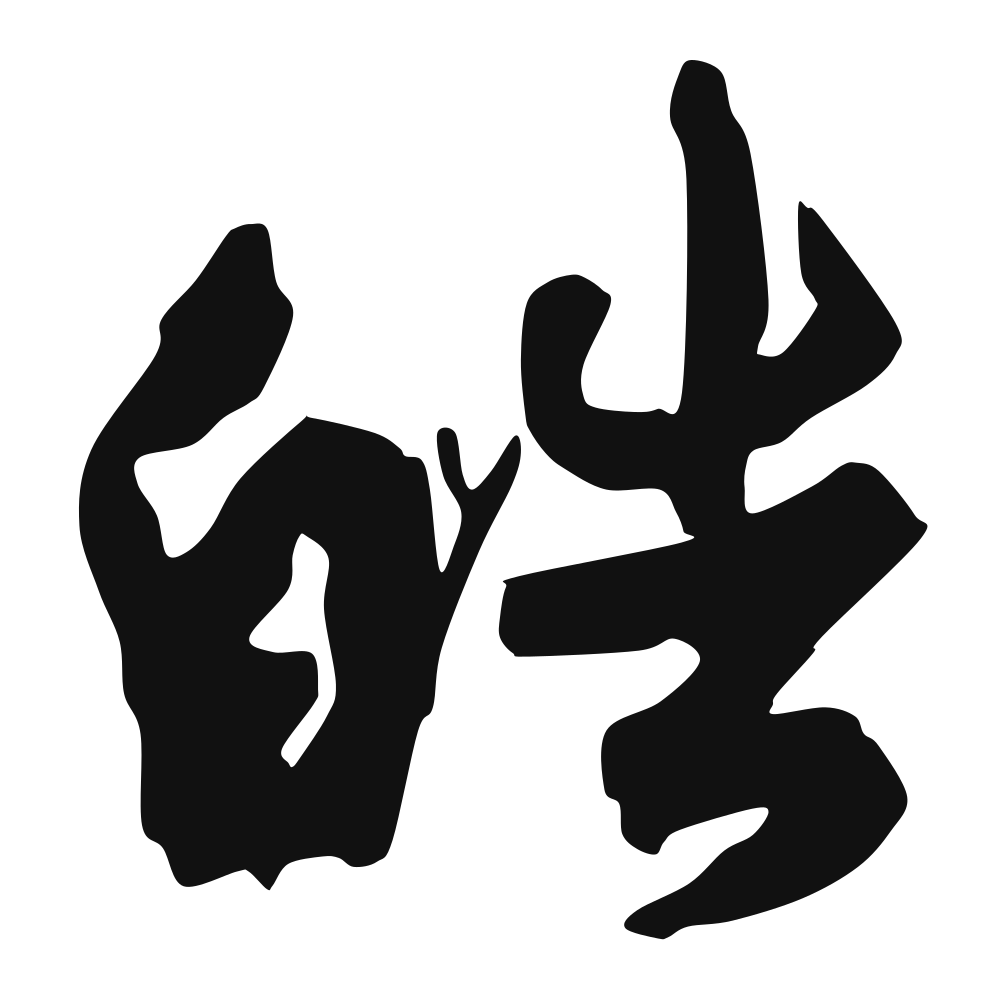
皓
(bound form) bright; luminous; white (esp. bright white teeth of youth or white hair of old age); spotlessly white
Closest English meanings
bright·white
The Calligrapher — Zhāng Jízhī 张即之
Song master of vigorous regular and running script.
Song calligrapher (), master of regular script/running script — known for 《佛遗教经》. Song dynasty
Cultural Story
皓 is brilliant white — of teeth, hair, and sky. The Chuci praises 朱唇皓齿, vermilion lips and gleaming white teeth, an ideal of beauty, while 皓首, a head gone white, marks life's late chapters. Poets extolled the 皓月 and called the bright vault of heaven 皓天.
Common words & phrases
- 皓月 bright moon
- 皓白 pure white
- 皓齿 white teeth
- 皓首 white-haired · old age
- 皓天 bright sky
- 明皓 bright and white
Read the story behind the character
Modern usage keeps the glow: Mid-Autumn posts speak of 皓月当空, toothpaste ads promise 皓齿 behind every smile, and people describe grandparents in their 皓首之年 still tending gardens. Parents also love 皓 in given names, hoping a child shines bright, clean, and upright.
Why this character belongs on skin
Moonlight on new snow; the grin of an old man who kept his teeth; 皓 is that luminous whiteness, bright and clean and unashamed. Poets reached for it when the moon swelled full over the Tang lakes, when a beloved's wrist turned in lamplight, when a scholar's integrity needed a color — and the color was always this. Whiteness here is not emptiness but clarity: a mind with nothing smudged in it, a conscience that shows no shadow under any light. There is sensuality in pure brightness, the clean sheet, the naked truth at noon. Wear 皓 and wear it like moonrise on dark water — the promise that whatever the years do, something in you stays luminous, legible, white as first light.
Own this character
Purchase delivers the original SVG of this glyph, brushed by Zhāng Jízhī 张即之, ready to place on skin, paper, or screen.