
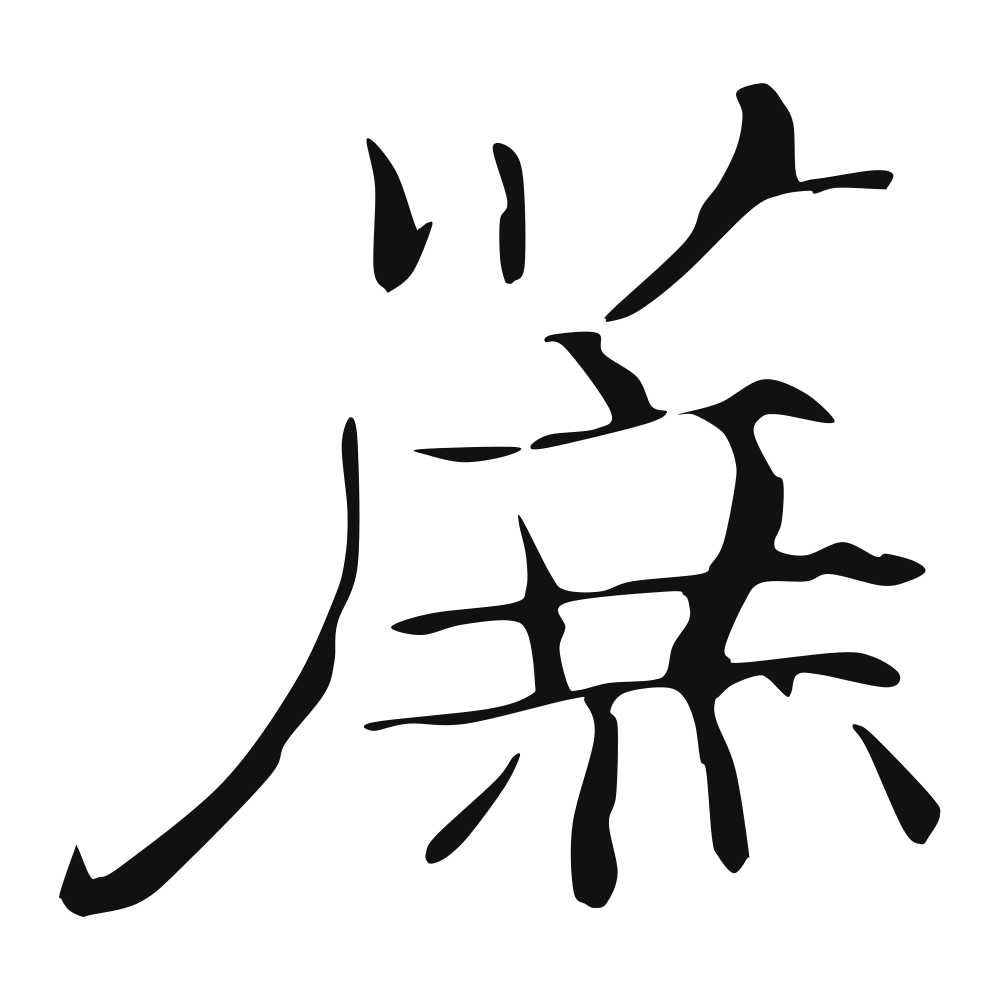
The Calligrapher — Zhāng Jízhī 张即之
Song master of vigorous regular and running script.
Song calligrapher (), master of regular script/running script — known for 《佛遗教经》. Song dynasty
Cultural Story
蔗 is sugarcane, the tall grass whose joints hold sweetness. It reached southern China centuries ago and built an industry: 蔗糖, cane sugar, pressed from the stalks in mills from Guangdong to Taiwan; poets chewed raw cane in the shade of lychee trees. The classical phrase 渐入佳境 — the story of a man eating cane from the tail end and finding it sweeter as he went — turned the vegetable into an emblem of things that improve the farther you go.
Common words & phrases
- 甘蔗 sugarcane
- 蔗糖 cane sugar
- 蔗渣 bagasse
Read the story behind the character
蔗 sweetens fields and shelves. A vendor feeds stalks into a juicing cart and pours 甘蔗, sugarcane, juice over ice for the queue; a mill grinds out 蔗糖, cane sugar, for the season's mooncakes. A startup founder jokes that her messy first year was eating the cane from the wrong end — 渐入佳境, it only gets sweeter. Even the 蔗渣, bagasse, is pressed into biodegradable plates for the canteen.
Why this character belongs on skin
蔗 is sugarcane, and the Chinese have a saying for the pleasure of it: 倒吃甘蔗, eat the cane from the thin end backward—life that gets sweeter as you go. The grass radical bends over 庶, the common folk, because cane was the people's sweetness, cheap and abundant, chewed on riverbanks while the emperor dined elsewhere. The poets noted the wisdom: sweetness stored in the plainest stalk, behind bark that looks like fence-wood, requiring teeth and patience and a willingness to spit out what gave you the sugar. There is a whole philosophy in that shape—pleasure that makes you work, reward deferred toward the back of the story, the good years not first but last. Wear it for the long game, the late bloom, the bet that the sweetness is still ahead of you. It usually is. Chew through what's in the way.
Own this character
Purchase delivers the original SVG of this glyph, brushed by Zhāng Jízhī 张即之, ready to place on skin, paper, or screen.