
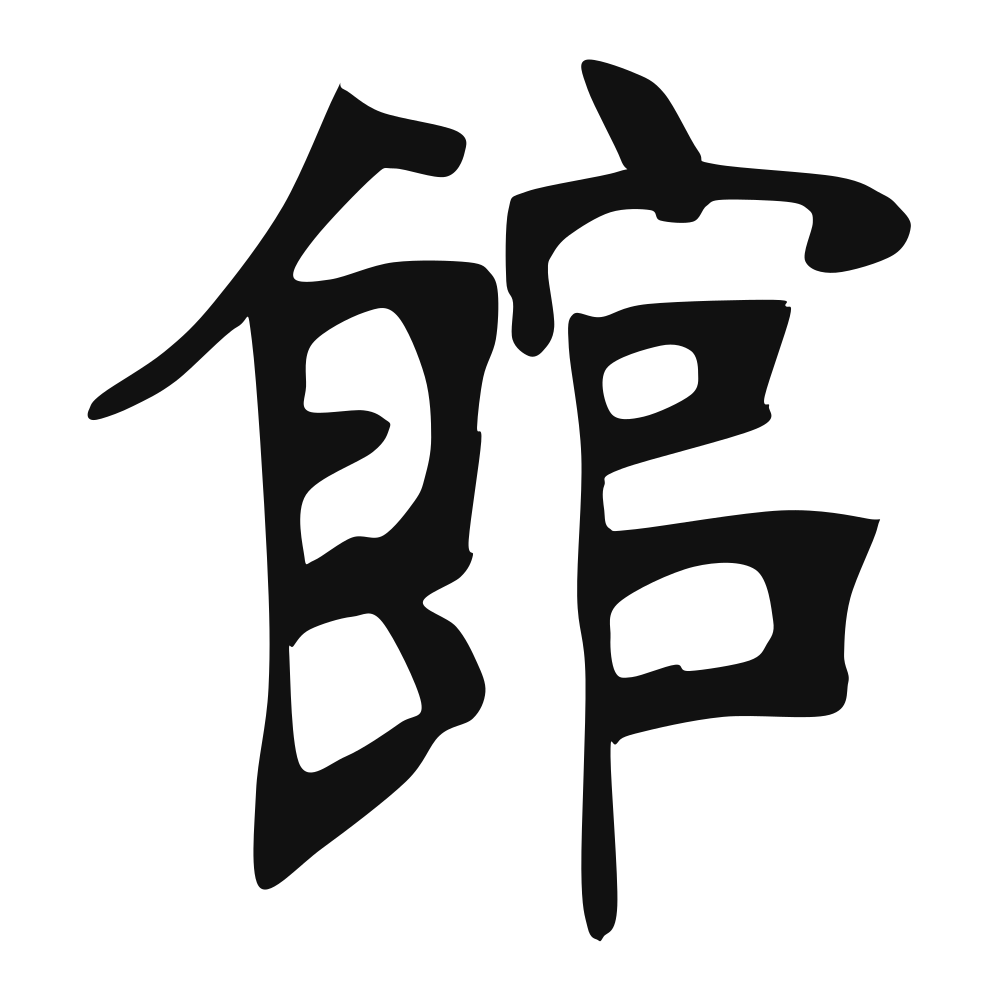
馆
building; shop; term for certain service establishments; embassy or consulate; schoolroom (old)
Closest English meanings
building·hall·museum·pavilion
The Calligrapher — Zhāng Yùzhào 张裕钊
Qing calligrapher who created the square-within-round Nangong script.
Qing calligrapher (), master of regular script — known for 南宫体. Qing dynasty
Cultural Story
馆 (guǎn) joins 食 with the phonetic 官. 《説文解字》 gives 客舍也, “a lodging house,” a place where travelers were fed and sheltered. From hostel it widened to any public hall or building.
Common words & phrases
- 宾馆 hotel · guesthouse
- 图书馆 library
- 博物馆 museum
- 餐馆 restaurant · eatery
- 茶馆 teahouse
- 体育馆 gymnasium · stadium
Read the story behind the character
馆 names public buildings. We sleep in a 宾馆 (hotel), read in a 图书馆 (library), wander a 博物馆 (museum), eat at a 餐馆 (restaurant), rest in a 茶馆 (teahouse), and exercise in a 体育馆 (gymnasium).
Why this character belongs on skin
Every city keeps one room that is not yours but welcomes you anyway. 馆 joins the food radical with the word for official, and once meant the lodge where a traveler ate and rested under the state's care—a kindness built into the architecture. Now it names the teahouse, the library, the museum where strangers share a roof with the dead and the brilliant. To tattoo 馆 is to claim yourself as a waystation: a person others replenish themselves at, a warm room in someone's hard year. The Buddhists built monasteries as 馆 for the weary soul. Let this character rest near your shoulder or your chest as a quiet vow of hospitality—that your skin, your time, your attention remain a door that opens. You are the inn. Whoever arrives, you feed.
Own this character
Purchase delivers the original SVG of this glyph, brushed by Zhāng Yùzhào 张裕钊, ready to place on skin, paper, or screen.