
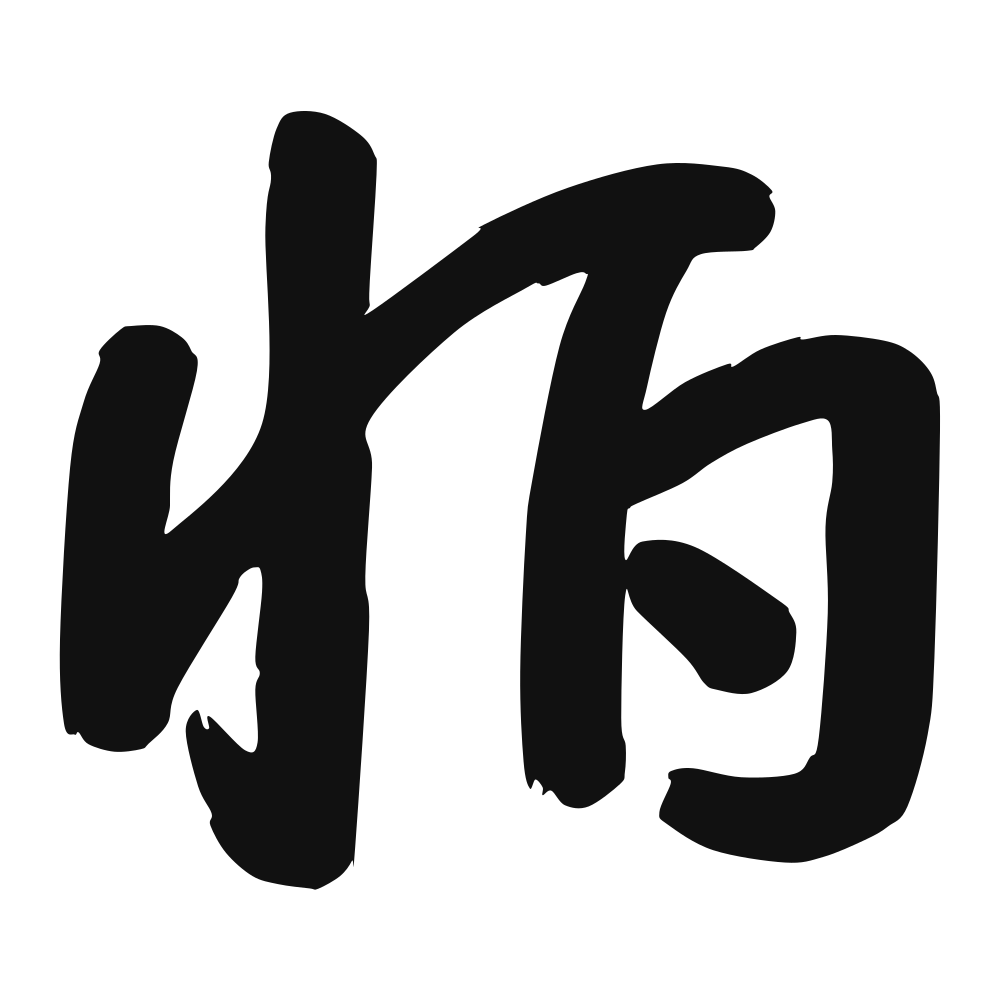
怕
surname Pa; to be afraid; to fear; to dread; to be unable to endure; perhaps
Closest English meanings
fear·afraid
The Calligrapher — Zhāng Zhī 张芝
Han 'Sage of Cursive', father of the connected-cursive style.
Han calligrapher (?–192), master of cursive script/clerical cursive — Han dynasty 'Cursive Sage' who turned rapid writing into an art form centuries before cursive peaked. Han dynasty
Etymology & Meaning · 字义溯源
2 · The Character: 怕 怕 (pà, 4th tone) is glossed by the Shuowen Jiezi as 無為也。从心白聲 — 'to do nothing, to be still; from 心 and 白 as sound,' the calm of non-action. The Shuowen cites the Laozi's 怕乎無為. But the graph was later borrowed for 怖, 'to fear,' and that is now its only everyday sense. Kangxi files it at 9 strokes. 《老子·第二十章》 uses the old meaning: 我獨泊兮其未兆 (泊/怕 interchanged) — 'I alone am still, showing no sign.' 韓愈《雙鳥詩》 shows the new: 鬼神怕嘲詠 — 'even ghosts and gods fear mockery.' Honest, critical note: to a modern reader 怕 means only 'afraid.' A tattoo of 怕 will be read as fear, not as the Laozi's serene 無為 — a serious mistranslation risk. Some modern designers, charmed by the Laozi link, try to market 怕 as 'letting go' — do not; the calm sense has been dead for a thousand years.
Cultural Story
怕 is the fear that speaks — a word that came up in the Tang tongue, plain and domestic, never the bronze's awe. It names the small dread: the dark, the stranger, the thing under the bed. The character is the everyday fright, the one a child says aloud and a grown man pretends he does not.
Where a Western reader can stand: Where a Western reader can stand: 怕 means 'afraid / to fear' — full stop; the Shuowen's 無為 (serene non-action, tied to the Laozi's 泊) has been dead for a thousand years. Honest caveat: every viewer reads it as FEAR, so never present 怕 as 'calm' or 'letting go' — use 泊 or 淡 for that calm, and pair 無 (無畏, 'fearless') if you mean to flip it. Zhang Zhi's flowing cursive can run fear into form, but he left no original: the celebrated 冠军帖 is disputed (Mi Fu and Huang Bosi read it as Zhang Xu), so you wear the legend of the Sage of Cursive, not a signed stroke.
Common words & phrases
- 害怕 afraid · fear
- 可怕 terrible · frightening
- 生怕 fear · be afraid of
- 不怕 not afraid
- 恐怕 I'm afraid · perhaps
- 怕生 shy · afraid of strangers
Read the story behind the character
害怕 is the truth a kid tells, 可怕 the clip you warn a friend off, 恐怕 the softener before bad news, 怕生 the shyness a visitor draws out. The dark is a screen now; the dread is real. We still name the small fear constantly, and call the grown version caution, which the child's word already covered.
Why this character belongs on skin
A child hides behind a leg; a general hesitates at the river; the lover checks the phone and feels the small cold stone. 怕 is fear in its common, human dress, not the grand terror but the everyday dread of loss. The word is plain and so is the feeling; we are ashamed of it and we should not be. To fear is to have something to lose, and that is its own kind of wealth. To wear 怕 is to stop pretending at invincibility, to let the soft animal truth show. Put it where only a lover would find it. You are afraid. You are still here. The ink stays, gentle as the feeling that placed it. And every morning it asks the only question worth answering: what is left that is precious enough to terrify you?
Own this character
Purchase delivers the original SVG of this glyph, brushed by Zhāng Zhī 张芝, ready to place on skin, paper, or screen.