
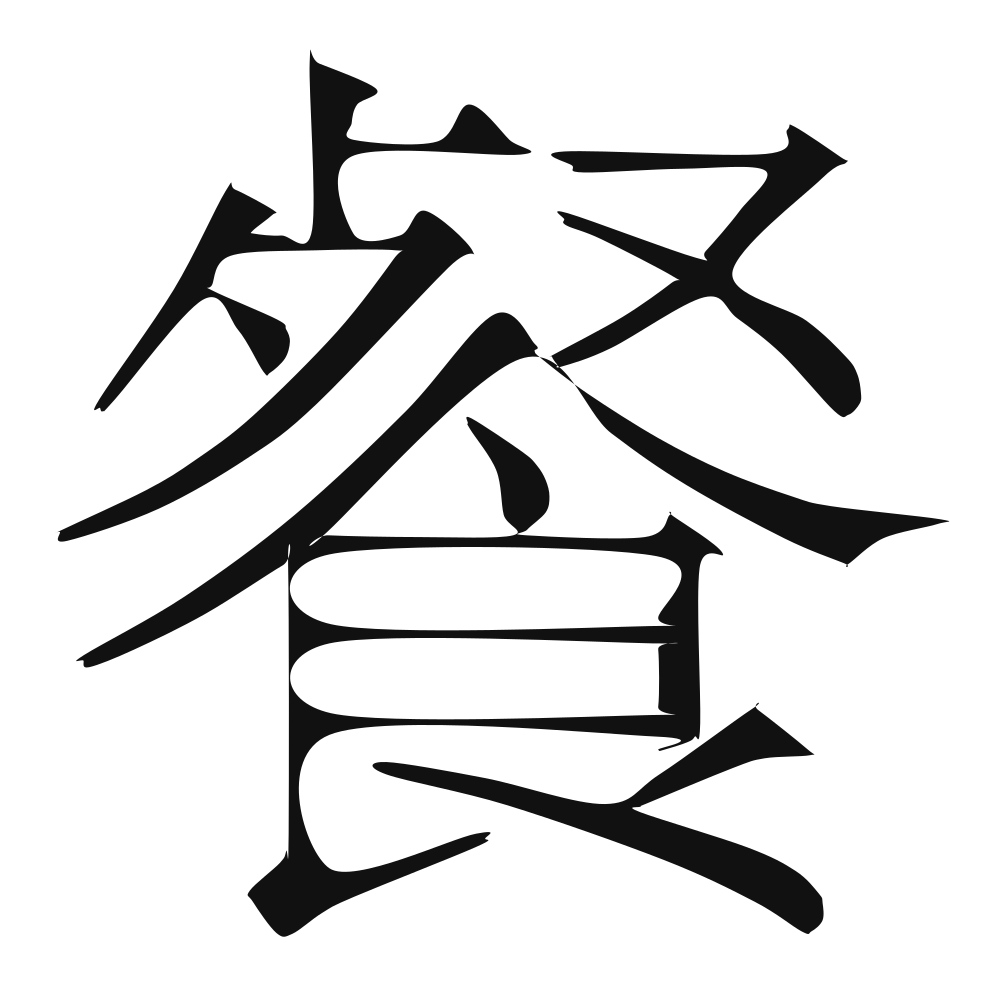
The Calligrapher — Zhāng Zhī 张芝
Han 'Sage of Cursive', father of the connected-cursive style.
Han calligrapher (?–192), master of cursive script/clerical cursive — Han dynasty 'Cursive Sage' who turned rapid writing into an art form centuries before cursive peaked. Han dynasty
Cultural Story
餐 (cān) is built from 食, “food,” with the phonetic 叄 (cān); an older form 湌 used 水, suggesting rinsing food down. 《説文解字》 reads 吞也, “to swallow,” and the word has long named a meal taken at table.
Common words & phrases
- 餐厅 restaurant
- 早餐 breakfast
- 午餐 lunch
- 晚餐 dinner
- 餐具 tableware
Read the story behind the character
餐 is everyday dining. We meet in a 餐厅 (restaurant), eat 早餐 (breakfast), 午餐 (lunch), and 晚餐 (dinner), set the 餐具 (tableware), and speak of a 三餐 (three meals) that structure the working day.
Why this character belongs on skin
The character 餐 is hunger made elegant. At its heart sits food and a hand, ringed by the sense of a meal eaten with real attention—the difference between feeding and dining. Its oldest literary home is gorgeous and strange: the Songs of Chu describe spirit journeys where the traveler feeds on dew and drinks of the flying spring, dining on light itself. So the word always carried a second appetite, the soul's. A meal is the most human of rituals: bread broken, steam rising, strangers becoming family across a table in under an hour. Every love story worth telling has at least one unforgettable dinner in it. This is a character for people who believe pleasure is a form of respect—for the food, for the cook, for the body that carries you. Wear it and live accordingly. Eat like it matters. Because it does.
Own this character
Purchase delivers the original SVG of this glyph, brushed by Zhāng Zhī 张芝, ready to place on skin, paper, or screen.