
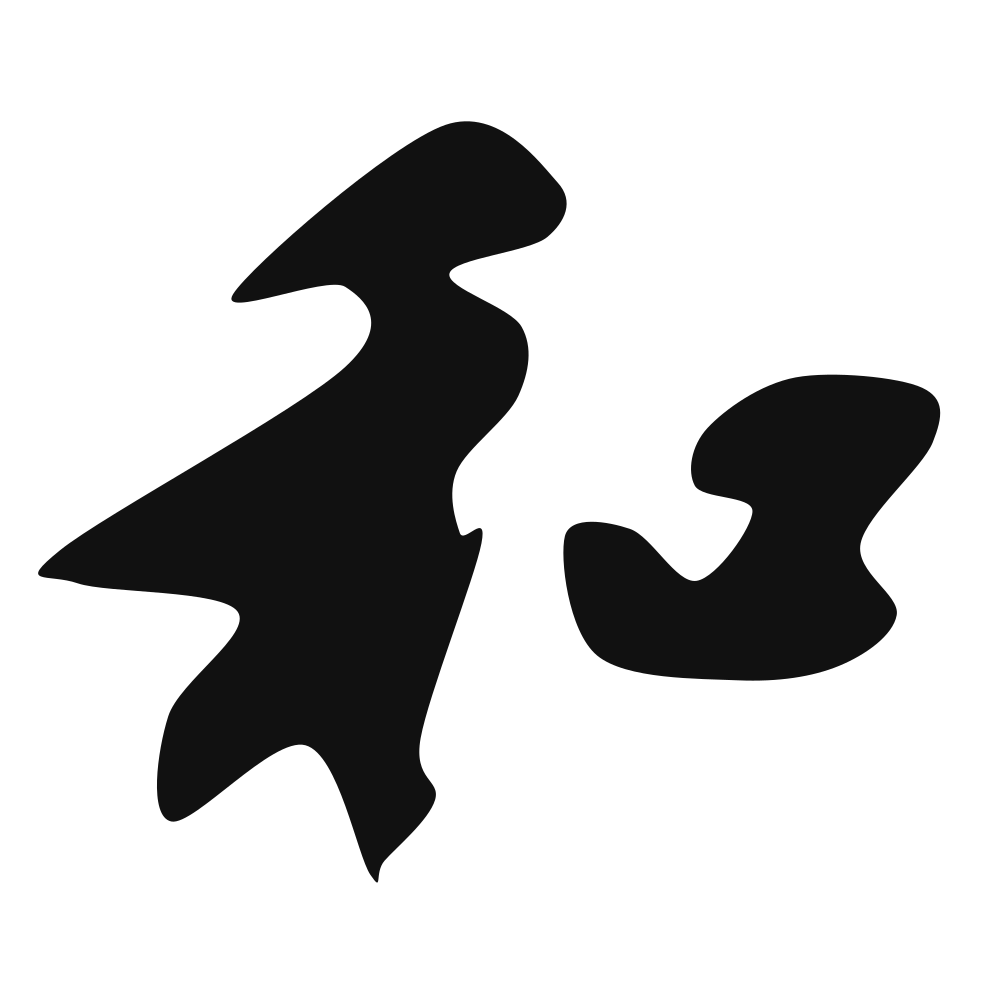
和
surname He; (joining two nouns) and; together with; with (Taiwan pr. [han4]); (math.) sum; to make peace; (sports) to draw; to tie; (bound form) harmonious; (bound form) Japan; Japanese; to compose a poem in reply (to sb's poem) using the same rhyme sequence; to join in the singing; to chime in with others; to complete a set in mahjong or playing cards; to combine a powdery substance (flour, plaster etc) with water; Taiwan pr. [huo4]; to mix (ingredients) together; to blend; (literary) harmonious (variant of 和[he2])
Closest English meanings
peace·harmony·and
The Calligrapher — Zhào Gòu 赵构
Southern Song emperor and prolific patron of running-script calligraphy.
Song calligrapher (1107–1187), master of regular script/running script — known for 《草书洛神赋》. Song dynasty
Etymology & Meaning · 字义溯源
2 · The Character: 和 Hé (2nd tone). 《说文·口部》: 「和,相譍(应)也。从口禾声。」 — 'to answer one another; from mouth, with 禾 as phonetic.' Harmony is defined as response, not as sameness: two voices that reply to each other. The older musical graph 龢 shows a mouth-organ, and the distinction became a whole ethics. 《论语·子路》 「君子和而不同,小人同而不和」 — the noble one harmonizes without being identical; the small man is identical without harmonizing. 《礼记·中庸》 defines it precisely: 「发而皆中节,谓之和」 — feelings expressed and all hitting the measure: that is harmony. 《易·乾·彖》 「保合太和,乃利贞」. Honest disclosure: 和 is also the plain everyday conjunction 'and' (你和我), which makes it slightly ordinary; and in Japanese 和 (wa) is the standard label for Japan and Japanese style, so a Japan-literate viewer reads a national marker. It is also polyphonic: hè (to echo), huó (to knead), hú (to win at mahjong).
Cultural Story
和 joins 禾 (grain) with 口 (mouth), a mouth fed by harvest—hence peace and harmony. 論語 and 樂記 prize 和 as the right blending of notes and relations; 和平 (peace) and 和睦 (harmonious) were the ruler's goals. 溫和 (gentle/mild) describes the ideal temper. The character is the ancient dream of things sounding and living together without clash—grain, family, and state all at ease in season and in spirit with one another.
Where a Western reader can stand: Different voices, one chord: 和 is harmony as response — the Analects' 和而不同. Western readers should know the plain 'and' reading and the Japanese wa; with Gaozong's brush it carries an empire's weighty choice.
Common words & phrases
- 和平 peace
- 和谐 harmonious · harmony
- 和睦 harmonious · friendly
- 温和 gentle · mild
- 和好 reconcile · make up
- 总和 sum · total
Read the story behind the character
Nations sign a 和平 (peace) treaty, and a couple 和好 (reconcile/make up) after a fight. A 温和 (gentle/mild) teacher calms the room, while a 和谐 (harmonious) neighborhood shares the courtyard. Math class adds the 总和 (sum/total). The character threads modern life—from world news to family dinners, the quiet wish that people and numbers add up without friction, gently, kindly, together at the end of a long day.
Why this character belongs on skin
和 is not the absence of conflict but its resolution — the meal shared after the argument, the grain and the vessel, the note that completes the chord without erasing the others. The Daoists saw it in the interplay of opposites: not yin swallowing yang, but the two dancing, each completing what the other lacks. We mistake harmony for agreement, for the smoothed-over silence. The Chinese knew it as something richer — difference held in balance, the symphony that needs every discordant voice. To ink it is to make peace with tension, to refuse the lie that unity means sameness. It is the quiet mark of someone who can hold contradiction without breaking, who trusts that the whole is wiser than any single note. The world hums; this character is the ear tuned to its music.
Own this character
Purchase delivers the original SVG of this glyph, brushed by Zhào Gòu 赵构, ready to place on skin, paper, or screen.