
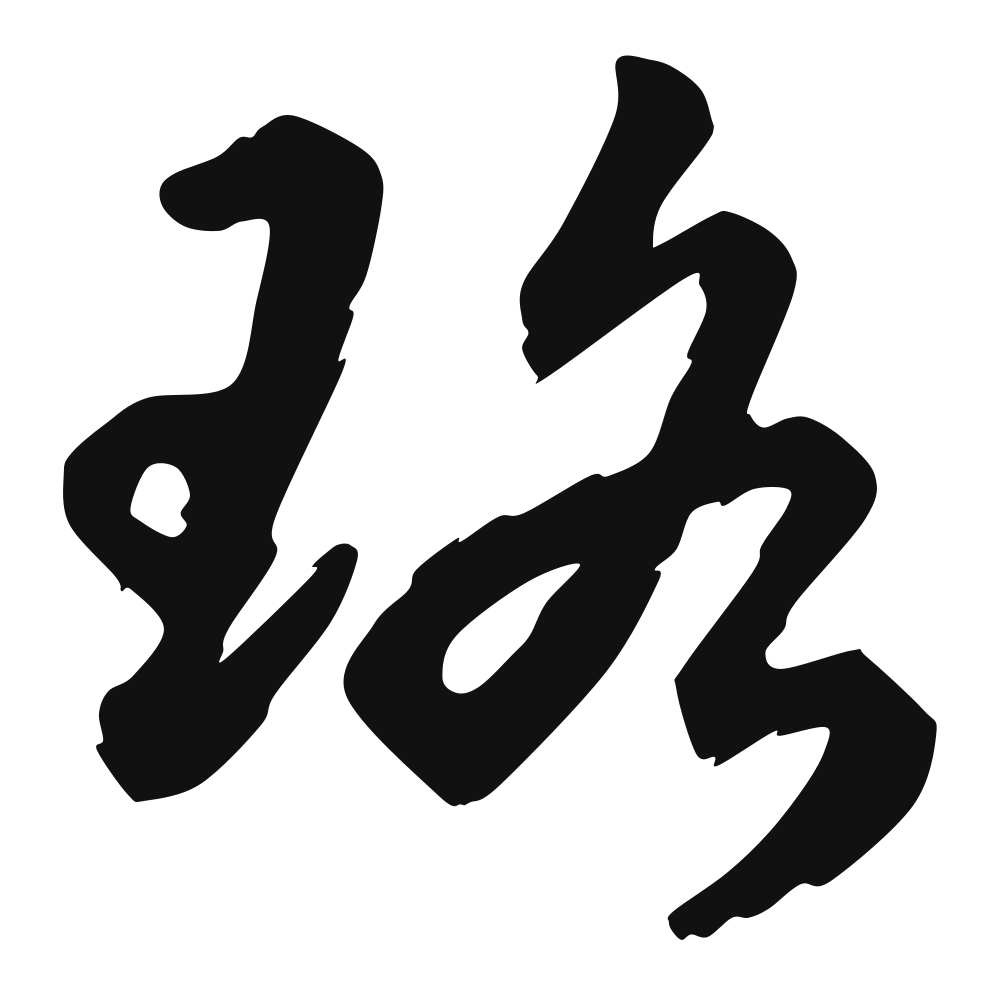
The Calligrapher — Zhào Gòu 赵构
Southern Song emperor and prolific patron of running-script calligraphy.
Song calligrapher (1107–1187), master of regular script/running script — known for 《草书洛神赋》. Song dynasty
Cultural Story
珞 names beads and jade ornaments; the 說文 gives '璎珞, 颈饰.' 瓔珞 were necklaces of beads worn by Buddhas and bodhisattvas in 敦煌 and 云冈 art, symbols of adornment and vow. The stone 珞珞, plain like uncut rock, warned against empty show and pride.
Common words & phrases
- 璎珞 necklace of beads · jeweled pendant
- 珞珞 like stone · plain
Read the story behind the character
Temple statues wear 璎珞 (beaded necklaces, jeweled pendants) of carved 珞, and tourists buy bead strands at Buddhist markets. The word 珞珞 (plain, like stone) describes someone unhurried by fashion. Rare in daily talk, 珞 survives in religious art and jewelry, where beads mark devotion and grace.
Why this character belongs on skin
Holiness, in more than one tradition, arrives wearing strands of stones. 珞 belongs to 璎珞 — the jeweled necklace, strands of jade and pearl and gold — the word Buddhist translators chose for the ornaments of bodhisattvas, those beings of perfect compassion who are nevertheless depicted in full splendor. Stone radical, jewel meaning: the character itself is a bead on a string. There is a radical theology hiding in the imagery — enlightenment is not depicted as bare renunciation but as abundance worn lightly, wealth of spirit that costs the wearer nothing because nothing owns them. The bodhisattva can wear the jewels precisely because the jewels cannot wear the bodhisattva. As a tattoo, 珞 is that freedom made visible: adornment without attachment, beauty held like water in a cupped hand. Place it along the collarbone or the line of a necklace, where such strands would actually fall. It carries the whole paradox: everything gleaming, nothing clutched.
Own this character
Purchase delivers the original SVG of this glyph, brushed by Zhào Gòu 赵构, ready to place on skin, paper, or screen.